
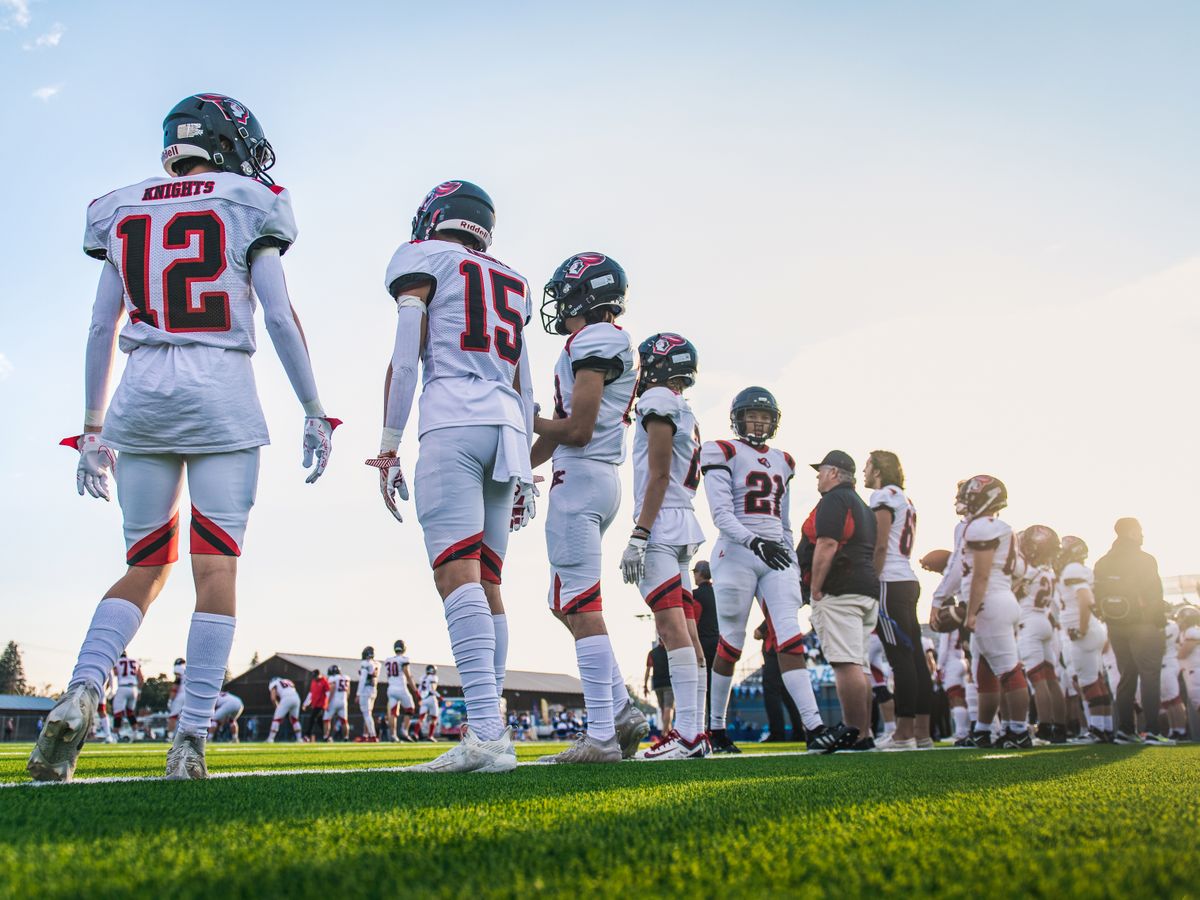
JSerra Catholic High School is located in San Juan Capistrano in southern Orange County. It was founded in 2003 by a group of Catholic families and is named after the California missionary St. Junípero Serra. It is an independent coeducational Catholic high school that is not operated by the diocese. According to the 2026-27 School Profile, the school enrolled 1,183 students that year from more than 75 middle schools, evenly divided between boys and girls. The school’s most distinctive feature is its four four-year Magnet Programs in Business, Engineering, Law and Medicine; the School Profile reports that 30% of students are enrolled, and all program courses are graded as honors courses. This page does not rate the school. It answers two questions: how to gain admission to the school, and how to plan the four years after enrolling.
UC A-G refers to the 7 subject areas (a through g) that the University of California and California State University require of high school students; only courses on a school’s A-G list are recognized by UC. AP refers to the College Board’s Advanced Placement courses, and honors courses are advanced courses designed by the school itself.
How JSerra Catholic High School Is Structured for College Preparation
The school’s published data point to four characteristics.
First, admission is based mainly on the HSPT, and placement after enrollment is finely tiered. The School Profile states that the school receives more than 1,000 applications each year with an acceptance rate of 70%, and that admission decisions are based on the HSPT, a recommendation from the current school and middle school grades. The HSPT also determines freshman placement in English, math and science; for example, Algebra 1 Honors requires an HSPT score of at least 565. After admission, students may also take Challenge Exams in math, science and world languages in April to secure a higher starting level.
Second, the Magnet Programs and the Humanities program divide the schedule into several tracks. The Business and Law programs have articulation agreements with Saddleback College, and the School Profile states that each program can earn 18 college credits. The Engineering program uses the Project Lead The Way (PLTW) engineering curriculum, and the Medical program partners with MemorialCare Saddleback Medical Center. The Humanities program pairs English and theology in a double block, caps each class at 20 students, and leads to AP English Language and AP English Literature in grades 11 and 12.
Third, the school weights far more courses than UC does. According to the school handbook, AP and honors courses earn 1 additional point for grades of C or higher, and Magnet Program courses are also graded as honors. According to the UC 2026-27 A-G list, the school has 61 UC-approved honors courses, but the grade 9 honors English, math and biology courses, the Humanities theology courses, and a number of Medical and Law program courses are not on UC’s honors list.
Fourth, most graduates attend four-year universities outside California. The 2026-27 School Profile reports that 91% of the Class of 2026 enrolled at four-year universities, 59% left the state, and 80% applied Early Action (EA) or Early Decision (ED). Official UC data show that in fall 2025, 132 students applied to the University of California and 77 were admitted to at least one campus, including 10 admitted to UC Berkeley. The 2026-27 School Profile reports an average SAT score of 1256 and an average ACT score of 28.6, and in 2025, 496 students took 1,066 AP exams.
How to Apply
The main entry point to JSerra Catholic High School is grade 9, and transfer students may apply at any time during the year. The steps below follow the school’s published calendar for entry in the 2027-28 school year (Class of 2031).
Steps for grade 9 admission
- Beginning August 21, 2026, schedule a Shadow Day (current grade 8 students only) and a campus tour, and complete the admissions inquiry form
- Beginning September 1, 2026, submit the application in the admissions system with a $75 application fee; upload middle school transcripts and the most recent standardized test scores, and send recommendation requests through the system to a math teacher, an English teacher and a school administrator
- Attend the Fall Open House on October 5; students interested in the Business, Engineering or Law Magnet Program submit a separate program application by November 1
- The early application deadline is November 1, with decisions released November 20; the regular deadline is January 15, 2027, with decisions released February 12
- After applying, register for the HSPT in the admissions system and choose either January 9 or February 6, 2027; a practice HSPT is available on November 7 (tentative)
- After admission, take the Challenge Exams in late April, meet with a counselor for course selection in May, and attend the four-day Freshman Immersion program in the summer
| Entrance exam | The HSPT (High School Placement Test, the entrance exam used by Catholic high schools) is required of all 9th grade applicants and is the primary basis for freshman course placement. Students must first submit an application for admission and then register for the test through the admissions system. The test is offered on January 9 and February 6, 2027; the school also plans a practice HSPT on November 7, 2026 (marked as tentative on the website). Students may test at another school, provided that school sends the scores to JSerra Catholic High School. Students who need testing accommodations must first apply to the school's Learning and Academic Support program |
|---|---|
| Timeline | Entry for 2027-28 (Class of 2031): Shadow Day visits (for current 8th graders only) and campus tours may be booked from August 21, 2026; the application for admission opens September 1; the tuition assistance application opens October 1; the fall Open House is October 5; the athletics information night is October 26 |
| Deadlines and decisions | The early application deadline is November 1, 2026, with decisions released November 20; the regular application deadline is January 15, 2027, with decisions released February 12 |
| Application materials | Online application, with a $75 application fee; Middle school transcripts: all middle school grades through the first grading period of 8th grade, uploaded as an unofficial PDF; Most recent standardized test scores, such as STAR, IOWA, or MAP; Three recommendations: from a mathematics teacher, an English teacher, and a principal, assistant principal, or counselor; Optional: a recommendation from the student's parish priest or faith mentor; HSPT scores |
| Interview | The 9th grade application process does not list an interview; international students are interviewed in person or over Zoom after submitting an application |
| Selectivity | The School Profile states that the school receives more than 1,000 applications each year, admits 70%, and enrolls freshmen who score in the top 25% nationally; admission decisions are based on the HSPT, recommendations from the current school, and middle school grades |
| Magnet Programs and Humanities program | The four Magnet Programs and the Humanities Program each require a separate application: the business, engineering, and law programs have a deadline of November 1, 2026, with decisions released November 21; the website lists the medical program deadline as to be announced; the Humanities Program deadline is March 25, 2027, with decisions released around May 1. Admission to a program requires admission to and enrollment at JSerra Catholic High School |
| After admission | After admission: in late April, students may take Challenge Exams in mathematics, science, and world languages to qualify for higher placement; in May, each student has a course selection meeting of about 20 minutes with a counselor; over the summer, students attend the four-day Freshman Immersion (required) |
| Tuition and fees (2026-27) | Tuition for 2026-27 is $26,200. Mandatory annual fees: a $1,000 registration fee and a $750 technology fee (the school issues each student a laptop). Optional fees: an athletics fee of $2,000 per year (covering all sports across the three seasons of the school year; certain sports carry additional charges), a Magnet Program fee of $1,000 per year, online courses at $800 per course per semester, and a separate charge for the Learning and Academic Support (LAS) program. All fees are non-refundable |
| Payment options | Families may pay annually (May), semiannually (May and November), or in 10 monthly installments (May through the following February); the monthly plan carries a one-time annual processing fee of $300 and requires a credit review |
| Tuition assistance | The school awards more than $3 million in tuition assistance each year, and more than one quarter of students receive some level of aid (the School Profile states 25%). Assistance is need-based and determined by the school's Financial Grant Committee. New students must first submit an application for admission; the assistance application opens online on October 1 and requires 2025 tax returns and W-2 forms, and aid is released only after the tax documents are verified. Assistance decisions are sent by email with admission decisions (November 20 for early applicants, February 15 for regular applicants) and are not guaranteed before enrollment. Assistance applies to tuition only, not to the registration or technology fees; current students must reapply each year, and recipients must maintain a GPA of 2.0 or higher and must not be on academic probation |
| Religious requirements | Four years of Theology are required, totaling 40 credits, tied with English as the subject with the highest credit requirement; students must also complete 80 hours of Christian Service, 20 hours per year. Transfer students may have the theology requirement reduced, and their service hours are calculated at 10 hours per semester enrolled |
| Transfer students | Transfer students may apply at any time during the year, including mid-semester. Applicants submit high school transcripts (including the most recent semester), middle school grades, standardized test scores, and three recommendations from a mathematics teacher, an English teacher, and a school administrator. Applications are reviewed by the vice president of admissions based on space available in the grade, academic performance, and fit with the school; the counseling team evaluates credits against school and California requirements, and some students must take placement tests. Students transferring from schools without religion courses may be exempted from theology credits for prior years |
| International students | International students apply through ISEP, with a $150 application fee. Required materials include transcripts from the past two years translated into English, two recommendations from mathematics and English teachers, a student essay, copies of the passport and birth certificate, a bank statement in U.S. dollars, and TOEFL (iBT 60 or higher), TOEFL Junior, Duolingo, or IELTS scores. An interview follows submission; after admission, the school applies for the I-20 (the school-issued document required for an international student's F-1 visa application). The school states that students who enter through ISEP remain classified as international students, with international tuition, for their entire enrollment, even if they later obtain a green card or change to F2, L2, or another status. International Student Enrichment Program (ISEP), 2026-27: tuition of $48,500 (paid in full after the F-1 visa is approved); a $150 application fee and a $1,500 registration fee (both non-refundable); a $750 technology fee; homestay arranged through JR Education Group at $21,000 for 10 months; students must also purchase ISO Insurance medical coverage; textbooks cost approximately $500 to $700 and uniforms approximately $300 |
| School bus | The school operates two fee-based bus routes in 2026-27. The Costa Mesa (St. John the Baptist, 1015 Baker St.) - Newport Beach (Bonita Canyon, 1990 Ford Road) - Aliso Viejo (Aliso Creek, 26541 Aliso Creek Rd.) route costs $3,700 for full-year round trips, $2,200 for morning service only for the full year, and $1,700 for afternoon service only for the full year or one-way service for half a year; the Oceanside (Park-N-Ride, 1928 S. Moreno St.) route costs $2,200 for full-year round trips. Transportation fees are non-refundable. There is no stop in Irvine; the nearest is the Bonita Canyon stop in Newport Beach. On days when classes begin at 8:00, the bus departs the Bonita Canyon stop at 7:10 a.m.; on days when classes begin at 8:30, it departs at 7:35 a.m. In the afternoon, the bus leaves school at 3:30 p.m. and reaches the Bonita Canyon stop at about 4:00 p.m.; on exam days, it leaves at 12:30 p.m. |
The school also offers five scholarships that are awarded without regard to financial need or with only partial regard to it; applications for all of them must be submitted to the admissions office before the admission deadline.
| Program | Amount and conditions |
|---|---|
| Serra Scholarship | Full tuition for four years; awarded to one incoming freshman each year; the applicant must be a San Juan Capistrano resident with strong academic achievement and financial need; the application must be submitted before the admission deadline |
| McDonald Family Patriot Scholarship | For incoming freshmen from families of active-duty or veteran U.S. military members; four-year award; the application must be submitted before the admission deadline |
| President Award | For students who excel in academics, the arts, leadership, or service; up to 25% off tuition based on need and eligibility |
| Patriot Award | For families of full-time military members, firefighters, and police officers; proof of employment is required; up to 25% off tuition based on need and eligibility |
| Partner School Employee Award | For families of employees of Catholic schools and partner private schools; proof of employment is required; up to 25% off tuition based on need and eligibility |
Below are the school’s published application dates for the 2027-28 school year, followed by the EDUBUS advisors’ review of the school.
Application TimelinePublished on the school website
- Shadow Day (current grade 8 students only) and campus tour reservations openOpens
- Admission application opens ($75 fee)Opens
- Financial grant application opensOpens
- Fall Open House
- Athletics information night
- Early Decision deadline; Business, Engineering and Law magnet applications due the same dayDeadline
- Practice HSPT (listed as tentative)
- Early Decision results released
- Business, Engineering and Law magnet decisions released
- HSPT, first sitting
- Regular application deadlineDeadline
- HSPT, second sitting
- Regular decisions released
- Humanities Program application deadlineDeadline
Year-by-Year UC Data: Applicants, Admission Rates and GPA
The following data come from UC Infocenter, published by the University of California Office of the President. They are reported by source high school, with the school type set to California private high schools, and are updated annually. The data answer two questions: how many JSerra Catholic High School students apply to and are admitted by UC each year, and what GPAs admitted students hold. The GPA is the UC weighted, capped GPA, which counts only courses from grades 10 and 11. UC does not publish categories with fewer than 5 applicants or fewer than 3 admitted or enrolled students; these appear as “—” in the tables.
The ten lines are hard to tell apart where they overlap. Hover over any campus name below to highlight that campus’s trend; click to keep it highlighted, and click again to clear it.Tap any campus name below to highlight that campus’s trend; tap again to clear it.
Official UC data · By high school of origin · 2014–2025
Year-by-year data for the top six UC campuses
Parents focus most on six campuses: Berkeley, Los Angeles, San Diego, Santa Barbara, Irvine and Davis. The table lists, by year, the number of JSerra Catholic High School students who applied to, were admitted by and enrolled at each campus, along with average GPA. Use the buttons to switch metrics. Cells shown as a dash are data that UC did not publish because the counts were too small.
From 2014 to 2025, the admit rate for JSerra Catholic High School applicants to UC Los Angeles rose from 10% to 13%; the rate at UC Irvine rose from 26% to 28%.
This table has five data views. Use the buttons below to view admits, applicants, enrollees, admit GPA, and applicant GPA; the button for the current view is highlighted in yellow.
| Year | UC Berkeley | UC Los Angeles | UC San Diego | UC Santa Barbara | UC Irvine | UC Davis |
|---|---|---|---|---|---|---|
| 2025Latest | 10 (16%) | 14 (13%) | 25 (28%) | 21 (22%) | 16 (28%) | 19 (41%) |
| 2024 | 10 (15%) | 16 (17%) | 24 (25%) | 27 (27%) | 30 (47%) | 24 (44%) |
| 2023 | 6 (11%) | 8 (10%) | 15 (18%) | 15 (19%) | 21 (34%) | 12 (24%) |
| 2022 | 5 (7%) | 7 (7%) | 24 (23%) | 14 (14%) | 31 (37%) | 19 (32%) |
| 2021 | 5 (9%) | 15 (15%) | 24 (28%) | 13 (15%) | 31 (44%) | 22 (39%) |
| 2020 | 12 (20%) | 13 (15%) | 27 (33%) | 24 (29%) | 23 (28%) | 34 (50%) |
| 2019 | 6 (13%) | 12 (18%) | 16 (26%) | 17 (23%) | 8 (15%) | 21 (46%) |
| 2018 | 4 (12%) | 10 (17%) | 13 (24%) | 12 (21%) | 16 (27%) | 19 (46%) |
| 2017 | 5 (10%) | 12 (17%) | 11 (17%) | 12 (18%) | 54 (79%) | 16 (35%) |
| 2016 | 6 (12%) | 12 (17%) | 19 (28%) | 14 (25%) | 17 (29%) | 11 (26%) |
| 2015 | 7 (16%) | 9 (16%) | 9 (18%) | 12 (25%) | 14 (33%) | 18 (41%) |
| 2014 | — | 6 (10%) | 14 (23%) | 13 (24%) | 15 (26%) | 7 (16%) |
| Change, 2014–2025 | — | ▲ 10% → 13% | ▲ 23% → 28% | ▼ 24% → 22% | ▲ 26% → 28% | ▲ 16% → 41% |
| Year | UC Berkeley | UC Los Angeles | UC San Diego | UC Santa Barbara | UC Irvine | UC Davis |
|---|---|---|---|---|---|---|
| 2025Latest | 61 | 107 | 89 | 94 | 58 | 46 |
| 2024 | 68 | 95 | 95 | 101 | 64 | 55 |
| 2023 | 57 | 81 | 83 | 78 | 61 | 50 |
| 2022 | 70 | 105 | 106 | 97 | 84 | 59 |
| 2021 | 53 | 98 | 87 | 88 | 71 | 56 |
| 2020 | 59 | 88 | 81 | 82 | 82 | 68 |
| 2019 | 45 | 66 | 61 | 73 | 54 | 46 |
| 2018 | 33 | 58 | 54 | 57 | 60 | 41 |
| 2017 | 50 | 70 | 66 | 65 | 68 | 46 |
| 2016 | 50 | 70 | 67 | 55 | 59 | 43 |
| 2015 | 43 | 56 | 49 | 48 | 43 | 44 |
| 2014 | 39 | 60 | 60 | 54 | 58 | 43 |
| Change, 2014–2025 | ▲ 39 → 61 | ▲ 60 → 107 | ▲ 60 → 89 | ▲ 54 → 94 | 58 → 58 | ▲ 43 → 46 |
| Year | UC Berkeley | UC Los Angeles | UC San Diego | UC Santa Barbara | UC Irvine | UC Davis |
|---|---|---|---|---|---|---|
| 2025Latest | 4 | 8 | 9 | — | — | — |
| 2024 | 5 | 11 | 5 | 4 | 8 | — |
| 2023 | 4 | 7 | 7 | 5 | 10 | — |
| 2022 | 4 | 5 | 6 | — | 7 | — |
| 2021 | — | 8 | 5 | — | 6 | 3 |
| 2020 | 5 | 7 | 6 | 3 | 8 | 3 |
| 2019 | 4 | 8 | — | 5 | — | 4 |
| 2018 | — | 6 | — | — | 6 | 6 |
| 2017 | — | 8 | — | — | 18 | — |
| 2016 | — | 8 | — | 3 | 5 | — |
| 2015 | 4 | 5 | 3 | 4 | 4 | — |
| 2014 | — | — | — | — | — | — |
| Change, 2014–2025 | — | — | — | — | — | — |
| Year | UC Berkeley | UC Los Angeles | UC San Diego | UC Santa Barbara | UC Irvine | UC Davis |
|---|---|---|---|---|---|---|
| 2025Latest | 4.04 | 4.18 | 4.12 | 4.20 | 4.17 | 4.06 |
| 2024 | 3.98 | 3.97 | 4.15 | 4.14 | 4.11 | 4.12 |
| 2023 | 3.93 | 4.18 | 4.07 | 4.01 | 4.00 | 4.04 |
| 2022 | 4.09 | 4.01 | 4.14 | 4.17 | 4.13 | 4.08 |
| 2021 | 4.22 | 4.05 | 4.15 | 4.24 | 4.01 | 4.02 |
| 2020 | 4.01 | 4.16 | 4.05 | 4.10 | 4.02 | 3.93 |
| 2019 | 4.05 | 4.09 | 4.14 | 4.07 | 4.11 | 3.93 |
| 2018 | — | 4.21 | 4.05 | 4.07 | 3.90 | 3.87 |
| 2017 | 4.14 | 4.12 | 4.11 | 4.07 | 3.78 | 3.90 |
| 2016 | 4.06 | 4.07 | 4.12 | 3.99 | 3.97 | 4.10 |
| 2015 | 4.19 | 4.05 | 4.17 | 4.00 | 3.89 | 4.11 |
| 2014 | — | 4.10 | 4.08 | 3.84 | 3.92 | 3.95 |
| Change, 2014–2025 | — | ▲ 4.10 → 4.18 | ▲ 4.08 → 4.12 | ▲ 3.84 → 4.20 | ▲ 3.92 → 4.17 | ▲ 3.95 → 4.06 |
| Year | UC Berkeley | UC Los Angeles | UC San Diego | UC Santa Barbara | UC Irvine | UC Davis |
|---|---|---|---|---|---|---|
| 2025Latest | 3.98 | 3.96 | 3.90 | 3.88 | 3.94 | 3.88 |
| 2024 | 3.93 | 3.96 | 3.93 | 3.92 | 3.92 | 3.89 |
| 2023 | 3.88 | 3.89 | 3.85 | 3.83 | 3.85 | 3.78 |
| 2022 | 3.95 | 3.88 | 3.88 | 3.85 | 3.86 | 3.81 |
| 2021 | 3.91 | 3.82 | 3.74 | 3.72 | 3.70 | 3.70 |
| 2020 | 3.84 | 3.80 | 3.75 | 3.77 | 3.70 | 3.73 |
| 2019 | 3.84 | 3.86 | 3.78 | 3.73 | 3.73 | 3.72 |
| 2018 | 3.85 | 3.78 | 3.71 | 3.71 | 3.64 | 3.72 |
| 2017 | 3.81 | 3.78 | 3.73 | 3.69 | 3.69 | 3.68 |
| 2016 | 3.79 | 3.74 | 3.73 | 3.59 | 3.61 | 3.65 |
| 2015 | 3.90 | 3.77 | 3.72 | 3.69 | 3.65 | 3.74 |
| 2014 | 3.70 | 3.70 | 3.65 | 3.52 | 3.61 | 3.55 |
| Change, 2014–2025 | ▲ 3.70 → 3.98 | ▲ 3.70 → 3.96 | ▲ 3.65 → 3.90 | ▲ 3.52 → 3.88 | ▲ 3.61 → 3.94 | ▲ 3.55 → 3.88 |
Applications and Admissions by Campus, Most Recent Year
| UC campus (fall 2025) | Applicants | Admits | Admit rate | Enrollees | Admit GPA |
|---|---|---|---|---|---|
| UC Berkeley | 61 | 10 | 16% | 4 | 4.04 |
| UC Los Angeles | 107 | 14 | 13% | 8 | 4.18 |
| UC San Diego | 89 | 25 | 28% | 9 | 4.12 |
| UC Davis | 46 | 19 | 41% | — | 4.06 |
| UC Irvine | 58 | 16 | 28% | — | 4.17 |
| UC Santa Barbara | 94 | 21 | 22% | — | 4.20 |
| UC Merced | 10 | 9 | 90% | — | 3.60 |
| UC Riverside | 19 | 17 | 89% | — | 3.90 |
| UC Santa Cruz | 34 | 17 | 50% | — | 4.03 |
College Destinations Published by the School
All content in this section comes from the JSerra Catholic High School 2026-27 School Profile. It differs from the official UC data above in three ways: the school compiles it itself; it covers the Class of 2026, while the most recent year of official UC data covers applicants for fall 2025 entry; and it covers all colleges, not only UC. Note the scope: the school lists the institutions where members of the Class of 2026 ultimately enrolled, not an admissions list, and it does not give the number of students at each institution.
ScopeThe Class of 2026 Matriculation list shows the colleges graduates ultimately enrolled in, not the colleges that admitted them; the school lists college names only and does not publish the number of students enrolling at each. Source: JSerra Catholic High School 2026-27 School Profile ↗
College outcomes reported in the 2026-27 School Profile
- 91% enrolled at four-year universities and 9% at two-year community colleges
- 41% stayed in California and 59% went out of state
- 6% enrolled in the CSU system and 11% at Catholic universities
- 80% of graduates applied Early Action (EA) or Early Decision (ED)
Selected private research universities on the matriculation list
- Harvard University
- Yale University
- Princeton University
- Columbia University
- Stanford University
- California Institute of Technology
- Duke University
- Johns Hopkins University
- Northwestern University
- Cornell University
- Brown University
- Rice University
- University of Notre Dame
- Carnegie Mellon University
- Georgetown University
- Washington University in St Louis
- University of Southern California
- Tufts University
Selected Catholic universities on the matriculation list
- University of Notre Dame
- Georgetown University
- Boston College
- Villanova University
- Loyola Marymount University
- Santa Clara University
- University of San Diego
- Gonzaga University
- Creighton University
- Marquette University
- The Catholic University of America
- University of Portland
Two points stand out in this list. First, destinations are spread across the country: 59% of graduates left California. Second, the enrollment list includes private research universities such as Harvard University, Yale University, Princeton University and Stanford University, as well as Catholic universities such as the University of Notre Dame, Georgetown University and Boston College. These are enrollment outcomes and cannot be used to infer the number of admits or the admission rate at any single university. For UC applications, admissions and enrollment, the official UC data above are the authoritative source; twelve years of campus-level data appear on the UC admission page.
GPA Weighting: School Method and UC Method
This section addresses the question parents most often get wrong: how the school and UC each weight the same transcript. The school’s rules come first.
| School grading and weighting | The school grades on an A-F scale: A is 90-100, B is 80-89, C is 70-79, and D is 60-69; an A in a regular course earns 4 points. AP and Honors courses are weighted: A earns 5 points, B 4 points, C 3 points, D 1 point, and F 0 points, so one additional point is added only for grades of C or higher (2023-24 Parent-Student Handbook, the most recent edition published on the school website) |
|---|---|
| Weighted courses | All AP courses; All school honors courses, including Theology Honors and Humanities Theology; All courses in the four Magnet Programs: the School Profile states that all magnet courses receive honors credit |
| Two GPAs | The handbook distinguishes two GPAs: the Total GPA, used for academic probation, financial assistance, and extracurricular eligibility; and the Academic GPA, which excludes study skills, teacher assistant, student government, and physical education courses and is intended mainly for colleges' GPA calculations. Both appear on the transcript in weighted form |
| Semester grades | The semester grade consists of the two quarter grades at 40% each and the final exam at 20%; semester grades carry no plus or minus |
| Moving down a level | Students may move from an Honors or AP course to a regular course within the first quarter without penalty; students who move down during the first or third quarter lose the additional weighted point for that semester |
| Class rank | The school does not rank students (the School Profile states: JSerra does not rank students) |
| Honor roll | The Principal's Honor Roll requires a weighted Total GPA of 4.0 or higher, and the Honor Roll requires 3.50 to 3.99 (2023-24 Parent-Student Handbook) |
| UC weighting rules | UC adds honors points only for courses designated as honors on the A-G list: AP courses and UC-certified honors courses. The calculation covers courses from the summer after 9th grade through the summer after 11th grade, with no points added for D or F grades; a maximum of 8 points is allowed across 10th and 11th grades, with no more than 4 from 10th grade |
| UC-approved honors courses at this school | On the UC 2026-27 A-G list, the school has 61 UC-approved honors courses: 27 AP courses and 34 UC-certified honors courses |
The count of school honors courses that UC does not weight, shown above, is generated automatically from course titles on the UC list. After a course-by-course check against the school’s 2026-27 course catalog, the following courses are weighted as honors at JSerra Catholic High School but earn no extra points in a UC application: some are listed on the UC list as regular courses, and others are not on the list at all.
| School honors course | Subject and notes |
|---|---|
| English 1 Honors | 9th grade English; listed as a regular course on the UC list |
| Humanities 1 Honors (English) | 9th grade English; listed on the UC list as English 1 Humanities Honors |
| Algebra 1 Honors | Mathematics |
| Geometry Honors | Mathematics |
| Algebra 2/Trigonometry Honors | Mathematics; required in 10th grade for the Engineering and Medical Magnet Programs |
| Biology Honors | Science; required in 9th grade for the Medical Magnet Program |
| Spanish 1 Honors, Spanish 2 Honors | World languages |
| Spanish 3 Honors | World languages; the UC list includes both an unweighted Spanish 3 Honors and a weighted Spanish 3-H, and families should confirm with the school which entry applies |
| French 2 Honors | World languages |
| Humanities 1-4 Honors (Theology) | Theology; listed on the UC list as a regular g course |
| Theology 2 Honors, Theology 3 Honors | Theology; not on the UC list |
| Lives of the Saints Honors | 12th grade theology; not on the UC list |
| Intro to Law Honors, Legal Research and Writing Honors | Law Magnet; not on the UC list |
| Business Contract Law Honors | Law Magnet; no course with this name appears on the UC list; confirm with the school |
| Senior Capstone Project Honors | Business Magnet; not on the UC list |
| Introduction to Health Sciences Honors, Medical Ethics Honors | Medical Magnet, 9th grade; the school catalog lists these as pending UC review |
| Concepts of Genetics Honors, Introduction to Neuroscience Honors | Medical Magnet, 12th grade; the school catalog lists these as pending UC review |
| Advanced Theatre Honors, Dance Ensemble Honors, Chamber Choir (Honors) | Arts; listed on the UC list as regular courses, or no course with the same name appears |
The practical effect of this list on UC applications falls in grades 10 and 11. UC does not count grade 9 grades, so English 1 Honors, Algebra 1 Honors, Biology Honors and the grade 9 courses of each program do not affect the UC GPA. The courses that require attention are those in grades 10 and 11: Geometry Honors, Algebra 2/Trigonometry Honors, Theology Honors, Humanities Theology, and the Law and Medical program courses raise the school GPA but add nothing to the UC GPA, and courses that are not on the UC list do not count toward the UC GPA at all. EDUBUS recommends that grade 10 students give priority to UC-approved honors courses, such as English 2 Honors, Chemistry Honors, AP European History or AP Precalculus. In grade 10, UC counts at most 4 honors points, which equals two year-long honors courses; additional honors courses do not raise the UC GPA further.
Four-Year Timeline
8th grade: Applying
- From late AugustBook a Shadow Day (current 8th graders only) and a campus tour; the application for admission opens September 1
- OctoberThe tuition assistance application opens October 1; fall Open House on October 5; athletics information night on October 26
- NovemberEarly application deadline on November 1, the same day as the Business, Engineering, and Law Magnet deadlines; practice HSPT on November 7 (tentative); early decisions released November 20, and program decisions November 21
- January to FebruaryTake the HSPT on January 9 or February 6; regular application deadline on January 15; decisions released February 12
- March to MayHumanities Program deadline on March 25; Challenge Exams in mathematics, science, and world languages in late April; course selection meeting with a counselor in May
- SummerAttend the four-day Freshman Immersion; complete summer assignments
9th grade
- AugustFreshman and parent orientation and the freshman retreat; schedule changes allowed through August 28
- OctoberTake the Classic Learning Test (CLT) on testing day
- Throughout the yearComplete 20 hours of Christian Service; students aiming to move up to honors courses need an A in the first semester and third quarter this year
- MarchTake the practice PSAT; 10th grade course selection meetings begin in late March
10th grade
- Throughout the yearThe UC GPA calculation begins with the summer after 9th grade; UC counts a maximum of 4 honors points for this year
- FallLaw Magnet students begin competing in mock trial
- SpringQualify for 11th grade AP US History, AP English Language, and AP science courses: first-semester and third-quarter grades determine preliminary placement
- SummerLaw Magnet students take the summer California Real Estate Practice course
11th grade
- Throughout the yearThe final year counted in the UC GPA; hold individual college meetings with a counselor to finalize a college list and standardized testing plan
- MayTake the exams for AP courses taken this year (May 3-14, 2027)
- SummerAttend the College Admissions Bootcamp and prepare essays and an activities list
12th grade
- FallManage applications in Naviance; counselors review essays and write letters of recommendation; UC and CSU applications are submitted in the fall
- Fall early roundMost students apply Early Action (EA) or Early Decision (ED); 80% of the Class of 2026 did so
- Throughout the yearComplete 80 hours of service; Magnet Program students complete their senior courses
- JuneThe school sends final transcripts
Three points determine the student’s trajectory. The first is grade 8: the HSPT sets the starting level in English, math and science, and November 1 is the application deadline for the Business, Engineering and Law Magnet Programs, two and a half months earlier than the regular admission deadline. The second is the spring of grade 9: moving up to honors or AP courses in grade 10 requires an A (in a regular course) or a B (in an honors course) in the first semester and third quarter of the current year, with the final decision based on second-semester grades. The third is the spring of grade 10: placement in AP United States History, AP English Language and the science AP courses is settled then, and grade 11 is the last year counted in the UC GPA.
Clubs and Academic Competitions
The 2026-27 School Profile reports 74 clubs, including 7 competitive clubs, 10 academic extracurricular clubs and 42 service clubs; the clubs page states that 99% of students join at least one club. Academic and career-related clubs and honor societies include:
- Mu Alpha Theta (national mathematics honor society)
- NHS (National Honor Society): 155 members, according to the 2026-27 School Profile
- CSF (California Scholarship Federation): 99 Gold Seal Bearer graduates, according to the 2026-27 School Profile
- Math Olympiad (prepares for the American Mathematics Competitions, AMC)
- Biology Olympiad Club (competes in the USA Biology Olympiad, USABO)
- Robotics Club (competes in the VEX Robotics Competition)
- Speech and Debate Club
- DECA Club (competes in DECA)
- Chess Club
- 3D Printing Club
- Girls Who Code
- Future Generation of Health Care Club
- Lion Finance Club
- The Writers' Block (poetry and writing club)
Academic competitions are organized mainly through the Magnet Programs and the competitive clubs:
- Mock Trial: Law Magnet students in grades 10 through 12 compete in the fall, including in the competition sponsored by the Constitutional Rights Foundation; the school hosts a mock trial competition each year and writes its own case materials
- DECA: Business Magnet students compete at the district, state, and international levels
- VEX Robotics Competition: the Engineering Magnet Robotics course and the Robotics Club compete, and the course requires participation in at least one off-campus competition
- USA Biology Olympiad (USABO): the Biology Olympiad Club administers the on-campus qualifying exam
- American Mathematics Competitions (AMC): the Math Olympiad club organizes preparation; the 2026-27 club list shows the faculty advisor as to be determined
- Speech and Debate: competes as a club
The school’s competition resources are concentrated in team events and program-based competitions, such as Mock Trial, DECA business competitions and the VEX Robotics Competition. Individual science competitions are organized through clubs, and the faculty advisor of the math competition club for the 2026-27 school year is still listed as to be determined. Students who want to demonstrate ability through individual results in competitions such as the American Mathematics Competitions (AMC) or the USA Biology Olympiad (USABO) need systematic training outside school.
Signature Programs
- Four Magnet Programs: The school describes these four programs as the first of their kind in Orange County. Each is a four-year program that requires a separate application and an additional $1,000 per year; the School Profile states that 30% of students are enrolled. All program courses are graded as honors courses and are open only to program students
- Business (DuPont Business Magnet, established 2011)9th grade: AP Business with Personal Finance; 10th grade: Business Communications and Speech and Debate; 11th grade: Accounting and Sales and Marketing; 12th grade: Business Law and the Senior Capstone Project (an off-campus internship plus a business plan presented to a panel of executives). Students compete in DECA, and the program's articulation with Saddleback College allows students to earn college credit
- Engineering (Tevora Engineering Magnet)Uses the PLTW (Project Lead The Way) engineering curriculum, and the school is a PLTW Distinguished School. 9th grade: Computer Integrated Manufacturing; 10th grade: Principles of Engineering, taken with Algebra 2/Trigonometry Honors; in 11th and 12th grade, students choose one course each year from Aerospace Engineering, Digital Electronics, and Robotics (which competes in the VEX Robotics Competition)
- Law (Patrick Ahle Law Magnet, established 2012)Directed by a former Anaheim city prosecutor, with a mock trial courtroom on campus. The four-year sequence is Speech and Debate with Intro to Law; Legal Research and Writing with California Real Estate Principles; a summer course in California Real Estate Practice; Criminal Law with Legal Aspects of California Real Estate; and Business Contract Law with Constitutional Law. Students compete in mock trial, and the school hosts a mock trial competition each year
- Medicine (Project A-Pulse® Medical Magnet, established 2010)Offered in partnership with MemorialCare Saddleback Medical Center in Laguna Hills, with a medical simulation classroom on campus. 9th grade: Biology Honors, Geometry Honors, Introduction to Health Sciences, and Medical Ethics; 10th grade: AP Biology, Chemistry Honors, and Algebra 2/Trigonometry Honors; 11th grade: Anatomy and Physiology Honors and AP Precalculus; 12th grade: Concepts of Genetics and Introduction to Neuroscience
- Humanities Program: A four-year honors sequence of English and theology scheduled as a double period, with readings from antiquity to the postmodern era, classes capped at 20 students, and Socratic seminar discussion. English in 11th and 12th grade is AP English Language and AP English Literature, respectively. The 12th grade class travels to Rome over Easter break. The program requires a separate application and an HSPT score meeting the English 1 Honors standard; the application deadline for 2027-28 is March 25, 2027
- Learning and Academic Support: Offered at two levels: the Student Educational Resource Program (SERP) serves students with a diagnosed learning disability, providing an individual learning plan and classroom and testing accommodations, and requires a psychoeducational evaluation or 504 plan from within the past three years; the Academic Coaching Program (ACP) serves students who need guidance in time management and study skills. The School Profile reports 150 students in comprehensive support programs. Learning support carries a separate fee
- House System: All students are placed in one of 6 houses for all four years and meet three times a week in advisory (Den) with the same advisor, in groups organized by gender and mixing all four grades; houses compete for points throughout the year for the JSerra Cup
- Seal of Biliteracy: Students who earn a four-year English GPA of 3.0 or higher and meet the score threshold on the PSAT, SAT, ACT, or an AP English exam, and who complete at least two years of a world language with a GPA of 3.0 or higher and a score of 3 or higher on the corresponding AP language exam (American Sign Language uses a separate assessment), receive the Seal of Biliteracy at graduation, noted on the transcript
- Online Education: The school offers online courses through JSerra Online Education for remediation or acceleration, at an additional $800 per course per semester; the online course catalog includes AP Psychology, AP Art History, AP Statistics, and AP Computer Science A, among others
School Selection: Total Tuition, Commute and Campus Visits
This section answers five questions Irvine families commonly ask before deciding whether to apply: how much four years will cost, how a student gets to school from Irvine, what kind of family the school suits, how it differs from similar schools nearby, and what to confirm during a campus visit.
Total Tuition for Four Years
Based on 2026-27 fees, tuition of $26,200 plus the mandatory $1,000 registration fee and $750 technology fee comes to $27,950 per year, or $111,800 for all four years from grade 9 through grade 12. This figure is based on 2026-27 rates and does not include later tuition increases. Magnet Program students pay an additional $1,000 per year, or $4,000 over four years; varsity athletes pay an additional $2,000 athletic fee per year; and a full-year round-trip bus pass costs $3,700. International students are charged separately under ISEP fees.
Commuting from Irvine
The table below shows the straight-line distance from several Irvine neighborhoods with large Chinese American communities to the school (26351 Junipero Serra Road, San Juan Capistrano), measured by EDUBUS from each neighborhood’s center point to the school address. Actual driving times depend on navigation and are noticeably longer during the morning rush; families should test the drive once during school hours on the day of a campus visit.
| Starting neighborhood | Straight-line distance |
|---|---|
| Woodbury | 13.1 miles |
| Northwood | 14.2 miles |
| Turtle Rock | 11.5 miles |
| Portola Springs | 12.9 miles |
The school runs two fee-based bus routes, and neither has a stop in Irvine. The closest stop to Irvine is Bonita Canyon in Newport Beach (1990 Ford Road). On days when classes begin at 8:00, the bus leaves at 7:10 a.m. and returns to that stop at about 4:00 p.m. For the 2026-27 school year, a full-year round trip costs $3,700 and morning-only service costs $2,200.
Which Families the School Suits
JSerra Catholic High School suits three kinds of families. The first is families whose students already have a clear area of interest and are willing to apply to the Business, Engineering, Law or Medical Magnet Program in grade 8; the programs are continuous over four years, and the Business and Law programs also earn college credit from Saddleback College. The second is families who can prepare for the HSPT in grade 8: the HSPT determines both admission and placement in English, math and science. The third is families who accept a Catholic education: theology is required all four years, students must complete 80 hours of Christian service, and the all-school Mass each Wednesday is treated as a class for attendance purposes. The school offers Chinese courses through AP Chinese. The one-way distance from Irvine exceeds 11 miles and there is no bus stop in Irvine, so daily transportation should also be planned before applying.
Comparison with Similar Schools Nearby
The table below lists several private high schools near JSerra Catholic High School that also serve grades 9 to 12. Tuition figures are the 2026-27 standard rates for local students, and distances are straight-line distances between the two campuses measured by EDUBUS.
| School | Religious affiliation | Entrance exam | 2026-27 tuition | Distance from JSerra |
|---|---|---|---|---|
| JSerra Catholic High School | Catholic | HSPT | $26,200 | — |
| Santa Margarita Catholic High School | Catholic | HSPT | $23,600; $22,000 for registered Catholic parishioner families | 9.9 miles |
| Crean Lutheran High School | Lutheran | No written exam | $23,575 | 13.1 miles |
| Mater Dei High School | Catholic | HSPT | $21,150 for Catholic families; $22,800 for non-Catholic families | 18.8 miles |
All three Catholic high schools admit students on the basis of the HSPT. JSerra Catholic High School accepts HSPT scores earned at other schools, provided the host school forwards the scores. Crean Lutheran High School is located in Irvine and does not require a written exam for grade 9 admission. The main difference between JSerra Catholic High School and the others is its four Magnet Programs, which require a separate application and charge an additional annual program fee.
Questions to Confirm During a Campus Visit
The following points are either not stated clearly on the school website or described inconsistently across pages. Families should confirm them in person at an open house or campus tour.
- Which AP courses are actually offered that year: the school does not publish an AP count; the 2026-27 course catalog lists 23.
- Average class size and student-teacher ratio: the About page states an average of just over 20 students; the School Profile gives a student-teacher ratio of 15:1, while the Academics page gives 18:1.
- The tuition assistance deadline: the website states that applications open on October 1, 2026, but gives no deadline.
- The application deadline for the Medical Magnet Program: the website lists it as to be announced.
- The specific arrangements for non-Catholic students in theology courses and at Wednesday Mass.
- Seat availability on the bus at the Bonita Canyon stop, and whether a stop in Irvine may be added.
Schools to CompareNearby private high schools, nearest first
 Santa Margarita Catholic High SchoolRancho Santa Margarita · 9-12
 Sage Hill SchoolNewport Beach · 7-12
 Pacific Academy (Irvine Campus)Irvine · 7-12
 Crean Lutheran High SchoolIrvine · 9-12
 St. Margaret's Episcopal SchoolSan Juan Capistrano · K-12
 Capistrano Valley Christian SchoolsSan Juan Capistrano · K-12
Using the School’s College Counseling
This section describes what the school’s counseling team provides and when to use each service.
| Counseling team | The school website and the 2026-27 School Profile list one Director of College Counseling and six Academic and College Counselors, plus a registrar and an administrative assistant; each student has an assigned counselor, and the school states that 100% of students receive individual college counseling. A school-based psychotherapist is also on staff |
|---|---|
| College planning platform | The college planning platform is Naviance; courses and grades are available in Schoology and PowerSchool |
| Four-year process | Counseling is organized by grade: in 9th grade, students build a four-year academic plan; in 10th grade, they explore interests and direction; in 11th grade, they finalize a college list and plan standardized testing and application strategy; in 12th grade, counselors guide each application, review essays, and write individual letters of recommendation. Students have individual college meetings in 11th and 12th grade, and a College Admissions Bootcamp is held in the summer before 12th grade |
| College admission events | A college fair is held each September (September 28, 2026, with more than 185 colleges participating, according to the school); admission officers from more than 130 colleges visit the school each year; the school also holds grade-level parent and student nights and college admission case study workshops |
| On-campus testing | October 13, 2026, is testing day for grades 9 through 11, with 9th graders taking the Classic Learning Test (CLT); on March 9, 2027, 9th graders take a practice PSAT |
| Transcripts | Final transcripts for seniors are sent in June; courses taken outside the school are not recorded on the JSerra transcript |
Naviance is a college planning platform used by many American high schools, where students build college lists, search for scholarships and manage recommendation letters. For the grade levels and prerequisites of each course, see Courses and Course Selection; for math pathways, see Math Pathway; and for AP courses and prerequisites, see AP Courses and Strategy.
Frequently Asked Questions
What entrance exam do Irvine families need for JSerra Catholic High School?
Applicants take the HSPT (High School Placement Test), the entrance exam used by Catholic high schools. It is required of every grade 9 applicant and is also the main basis for freshman course placement. For entry in the 2027-28 school year, the two test dates are January 9 and February 6, 2027; families must first submit the admission application and then register for the test in the admissions system. The school has also scheduled a practice HSPT on November 7, 2026 (listed as tentative on the website). Students may test at another Catholic high school instead, provided the host school forwards the scores to JSerra Catholic High School.
How much does it cost per year for an Irvine family to send a student to JSerra Catholic High School?
Tuition at JSerra Catholic High School for the 2026-27 school year is $26,200 per year, plus a mandatory $1,000 registration fee and a $750 technology fee. Varsity athletes pay an additional $2,000 athletic fee per year, Magnet Program students pay an additional $1,000 per year, and online courses cost $800 per course per semester. The school awards more than $3 million in need-based tuition assistance each year, and more than one quarter of students receive aid. The assistance application opens on October 1, 2026 and requires the 2025 tax return and W-2 forms.
How does school bus transportation work for Irvine students attending JSerra Catholic High School?
JSerra Catholic High School runs two fee-based bus routes, and neither has a stop in Irvine. The closest stop to Irvine is Bonita Canyon in Newport Beach (1990 Ford Road), which shares a route with stops in Costa Mesa and Aliso Viejo. For the 2026-27 school year, a full-year round trip costs $3,700, morning-only service for the full year costs $2,200, and afternoon-only or half-year one-way service costs $1,700; fees are nonrefundable. On days when classes begin at 8:00, the bus leaves Bonita Canyon at 7:10, and the afternoon bus leaves campus at 3:30.
Irvine families often ask: are all honors courses at JSerra Catholic High School weighted for UC admission?
No. JSerra Catholic High School weights all AP, honors and Magnet Program courses on its own transcript, with an A earning 5 points. UC adds weight only to the 61 courses designated as honors on the school's A-G list: 27 AP courses and 34 UC-certified honors courses. English 1 Honors, Algebra 1 Honors, Geometry Honors, Algebra 2/Trigonometry Honors, Biology Honors, the four Humanities Theology courses, Theology Honors, and Medical Magnet courses such as Concepts of Genetics Honors and Introduction to Neuroscience Honors are weighted at the school but count as regular courses, or do not count at all, in a UC application.
Can non-Catholic Irvine families apply to JSerra Catholic High School, and how are theology courses handled?
Yes. JSerra Catholic High School states that it welcomes families of all faith backgrounds and offers Introduction to Catholic Principles for students new to Catholicism. However, theology is a four-year graduation requirement for all students, totaling 40 credits, and students must also complete 80 hours of Christian service; the all-school Mass each Wednesday is treated as a class for attendance purposes. Among theology courses, only the four Humanities Theology courses and the grade 12 Social Justice course are approved by UC as g-category electives. The standard theology sequence is not on the UC A-G list.
Irvine families want to know: which colleges do JSerra Catholic High School graduates attend?
According to the JSerra Catholic High School 2026-27 School Profile, 91% of the Class of 2026 enrolled at four-year universities and 59% left California; 6% enrolled in the CSU system and 11% at Catholic universities. The matriculation list includes Harvard University, Yale University, Princeton University, Columbia University, Stanford University, the California Institute of Technology and Duke University. The school publishes only institution names, not the number of students at each. UC applications, admissions and enrollment are reported in official University of California data by source high school: for fall 2025, 132 students applied and 77 were admitted to at least one campus.
How do international student families in Irvine apply to JSerra Catholic High School?
Students who are not U.S. citizens or permanent residents apply through the school's International Student Education Program (ISEP), with a $150 application fee. Required materials include the past two years of transcripts translated into English, recommendations from math and English teachers, a student essay, a copy of the passport, a bank statement, and a TOEFL (iBT 60 or higher), Duolingo or IELTS score. An interview is scheduled after submission, and the school applies for the I-20 after admission. For the 2026-27 school year, ISEP tuition is $48,500 and a 10-month homestay costs $21,000. The school states that students who enroll through ISEP continue to pay international tuition while enrolled, even if they later obtain permanent residency.
Irvine families ask: what GPA does a JSerra Catholic High School student need for UC admission?
According to official data from the University of California Office of the President by source high school, the average weighted GPAs of JSerra Catholic High School students admitted for fall 2025 were: UC Santa Barbara 4.20, UCLA 4.18, UC Irvine 4.17, UC San Diego 4.12, UC Davis 4.06 and UC Berkeley 4.04. These are UC weighted, capped GPAs for grades 10 and 11, with extra points only for UC-approved honors courses, and they are calculated differently from the school's weighted GPA. UC Berkeley admitted only 10 students that year, so a single-year average can vary considerably; year-by-year data appear in the UC data section of this page.