

EDUBUS College Planning · Grades 7 to 12 · Comprehensive College Admissions Planning

What admissions officers weigh together,
planned together

Admissions officers evaluate GPA, test scores, competitions, research, summer programs, and extracurricular activities together. In the EDUBUS College Admissions Planning service, one advisor team builds a single comprehensive plan that starts in middle school and continues until the student enters college, placing all of these elements on one coordinated timeline.

Book an initial assessmentSee how the plan is scheduled →

Why a comprehensive plan

Why College Applications Need One Plan: Completing Every Piece Is Not a Coherent Story

College admissions officers review GPA, standardized test scores, research experience, competition results, and extracurricular activities together, and these elements affect one another. The honors course a student takes in grade 9 determines which AP courses are available in grade 11; the competition direction should match the major the student will apply for; and the choice of summer program works best when it connects with the research topic. When each element is arranged separately, every piece may be completed, yet the application still fails to tell a coherent story.

In the EDUBUS College Admissions Planning service, one advisor team is responsible for a comprehensive plan that starts in middle school and continues until the student enters college, coordinating the eight services below. Every service serves the same plan and is added at the appropriate time according to the student’s grade and goals: the early years build the academic foundation, the middle years build the student’s profile, and the final stage turns that work into a clear and persuasive application.

How one plan connects the pieces

Program code on a laptop screen

Planning example

A student interested in computer science

  1. Academic Foundation: AP Computer Science A
  2. Academic Foundation: AP Calculus BC
  3. Academic Foundation: AP Physics C
  4. Profile Building: Programming competitions
  5. Application Execution: Engineering application

Course selection includes AP Computer Science A, AP Calculus BC, and AP Physics C, alongside programming competitions. Coursework, competitions, and the eventual engineering application all point in the same direction.

A student writing in a notebook

Planning example

A student interested in literature

  1. Profile Building: Creative writing summer program at a leading university
  2. Profile Building: Advisor support with the summer application
  3. Application Execution: The experience in the personal statement

The student applies to a creative writing summer program at a leading university. The advisor helps complete the summer program application and, during college applications, guides the student in writing about this experience in the personal statement.

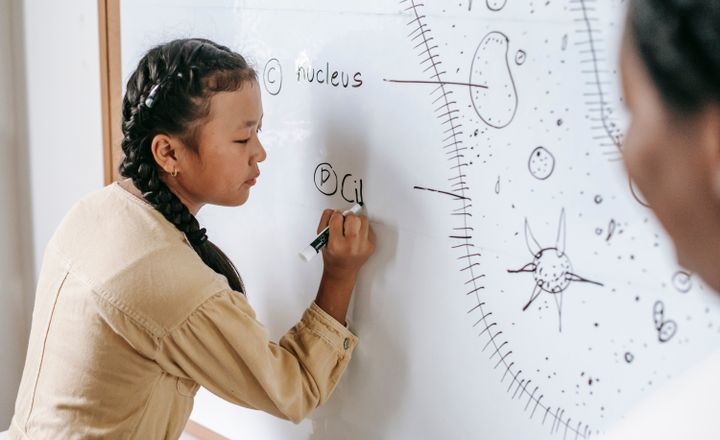
A student drawing a cell diagram on a whiteboard

Planning example

A student with strong biology grades

  1. Academic Foundation: End-of-semester academic planning meeting
  2. Academic Foundation: AP Environmental Science added next semester
  3. Profile Building: A stronger life sciences profile

At the end-of-semester academic planning meeting, the advisor and parents review the semester's performance and decide to add AP Environmental Science next semester to strengthen the student's profile in the life sciences.

One plan · 8 services

When Each EDUBUS College Planning Service Begins

The chart below shows a typical schedule. Light bars mark preparation periods, and dark bars mark periods of concentrated effort. Each plan is adjusted to the student's grade, academic record, and intended major, and an individualized version is provided after the initial assessment.

How the plan runs

The EDUBUS College Planning Schedule Keeps Parents Informed

A comprehensive plan does not end with a document written at the start of the school year. The advisor team follows up, reports, and adjusts on a fixed schedule, and parents are involved throughout.

  1. Every two weeksAcademic progress check

    The advisor reviews progress in each subject and adjusts tutoring arrangements promptly when grades slip.

  2. Every monthAssessment and written report

    A comprehensive academic assessment with feedback and a progress report covering grades in each subject, academic performance, and recommendations for improvement.

  3. Every semesterAcademic planning meeting

    A review of progress with the student and parents, adjustments to course selection, profile building, and application plans, and goals for the next stage.

  4. Application seasonApplication timeline management

    Materials and submissions for each school move forward on the timeline, application status is tracked, and the family receives help making the final choice once admission results arrive.

A student organizing textbooks and notes with a highlighter at a desk

Academic Foundation3 services · Grades 7–12

Grades, course selection, and standardized tests are the first things US college admissions officers review

Grades 9–12

Private Tutoring (GPA Package)

100 hours of private tutoring with experienced teachers, individually tailored, with ongoing tracking of the student's GPA.

  • Academic assessment and diagnosis: a review of transcripts, test performance, study habits, and study methods to identify weak areas
  • 100 hours of private tutoring with experienced teachers, individually tailored
  • Full support before, during, and after each class: preview, in-class help, and review
  • Targeted tutoring on specific difficulties, such as challenging math problems, physics labs, and chemistry formulas
  • Regular practice tests to build familiarity with exam formats
  • Training in study methods and time management, building habits of scheduled review and asking questions proactively
  • Ongoing monitoring of GPA changes, with a monthly progress report

Grades 7–12

High School Academic Planning

GPA is the foundation of an application to a US university. How to repair a weak GPA, and how to raise it within a short period, both require planning in advance.

  • Assessment of academic level to identify the most suitable subject direction
  • Individualized course selection: courses recommended by interest and goals, a balanced course load, and coordination of school and outside courses
  • Analysis of how each course affects college applications, and selection of appropriately challenging courses
  • A dedicated 1-on-1 mentor who resolves academic questions and provides emotional support during periods of heavy academic pressure
  • Recommendations for outside enrichment courses and academic programs during school breaks
  • Comprehensive GPA supervision, with a progress check every two weeks
  • An academic planning meeting each semester to set and adjust short-term and long-term goals

Grades 10–12

Standardized Test Planning (SAT / ACT)

Leading universities have been reinstating standardized testing requirements. An assessment comes first; the choice of test and the preparation plan follow from it.

  1. Precise assessmentReview the student's goals, current level, and available test dates to decide between the SAT and the ACT
  2. Individualized preparation planA study schedule, subject priorities, and review materials, adjusted regularly as the student progresses
  3. Multiple class formatsPrivate tutoring, group classes, and pre-test intensive courses, with targeted practice on weak areas
  4. Regular practice testsA detailed score analysis and recommendations for improvement after each practice test
  5. Test-taking strategies and techniquesTime management, question-type techniques, and managing pressure on test day
  6. Test dates and registrationSelection of suitable test dates that avoid AP exams and competitions, with help completing registration

International students can also plan for the TOEFL, the IELTS, and the Duolingo English Test.

A student wearing safety goggles observing a solution in a flask in a laboratory

Profile Building4 services · Grades 7–12

Many US college applicants have high GPAs; competitions, research, summer programs, and activities determine who stands out

Grades 7–11

Competition Planning

A 4.0 GPA is not enough on its own. Competition results are the most direct evidence of academic potential, and the key is choosing the right contests.

  • Assessment of competition readiness and a strategy for improvement
  • Precise choice of competition direction, selecting contests aligned with the intended major
  • Recommendations across multiple competition levels to build honors step by step
  • Customized competition training to improve the chance of winning awards
  • Scheduling guidance and recommended competition resources
  • EDUBUS competition coaches cover mathematics, physics, economics, biology, writing, and the humanities, among other areas

Grades 9–11

Top Summer Program Applications

Summer is an important part of a college application. Admission to leading summer programs is highly competitive, so the student's strengths are assessed first and then matched precisely to programs.

  • Assessment of the applicant's strengths and matching with suitable summer programs
  • A customized summer program application strategy
  • Guidance through the full application: forms, essays, and problem sets
  • Mock interview training
  • Recommendations for internships related to the student's interests and career goals, as well as summer and winter camps in the United States and abroad
  • Records of the student's performance in break programs, with feedback, to help present the experience in college applications
  • Summer program backup plan: after a review of the application materials, the student can apply to an additional backup program

Grades 10–11

Custom Research Projects

Leading universities place increasing weight on applicants' research ability. A customized 1-on-1 research project gives the application concrete research results.

  1. Foundational studyResearch methods, tools, and background knowledge
  2. Choosing a topic1-on-1 guidance from a mentor, with weekly discussions
  3. Conducting the researchThree to four months, meeting the mentor every week
  4. Final draftA completed paper or an entry in a science competition
  5. Recommended publicationBuilding a record of research experience
  6. Recommended top competitionsEntering competitions with the research results to strengthen the academic profile

The student chooses the topic independently, and the research results belong to the student. The results can appear in the Common App activities list, in the honors section, and in application essays; they can also be entered in research competitions, submitted to academic journals or conferences, or used as a school Capstone Project. Projects cover STEM, the social sciences, business, the humanities, architecture, the arts, and interdisciplinary fields.

Grades 7–12

Volunteering and Activities Planning

Activities carry weight when they are planned. Build a distinctive personal profile and develop leadership.

  • Recommendations for volunteer opportunities, selecting the projects best suited to the student
  • Community volunteering and student clubs through the partner nonprofit organization Project Next Foundation (PNF)
  • Help planning and organizing the student's own community service project, building management and execution experience
  • Guidance from experienced mentors on school club activities
  • Records of service experience with regular feedback, and help applying for the Congressional Award
  • Development of leadership, teamwork, and problem-solving skills
  • An individualized activities resume

PNF runs 12 student clubs, covering media and writing, public health, history, business and economics, mathematics, science, programming, the arts, robotics, community tutoring, senior services, and sports. Students have taken part in community projects such as the Irvine Global Village Festival, making handmade thank-you cards for Irvine police officers and firefighters, harvesting vegetables for a food bank, and teaching seniors at a senior apartment community how to use electronic devices.

A student writing application materials on a laptop in a library

Application Execution1 service · Grades 11–12

The work of middle and high school must finally become a clear and persuasive college application

Grades 11–12

College Application Service

The college application process is complex, and every step matters, from the school list to essays and interviews. One-stop support continues until the end of the application season.

  • Choosing schools and the intended major, with a school list strategy in three tiers: reach, match, and safety
  • Deciding the combination of Early Action (EA), Early Decision (ED), Regular Decision (RD), and rolling admission
  • An application timeline that tracks progress at every school
  • In-depth coaching on the personal statement and application essays
  • Guidance on choosing recommenders, with a Brag Sheet and advice for recommendation letters
  • Preparation and item-by-item review of application materials to ensure a complete submission
  • Mock interviews and interview skills training
  • Tracking of application status after submission, and help analyzing admission results and making the final choice
  • Analysis of current admissions trends
  • A dedicated counselor working with the team throughout the process

A school list in three tiers

A balanced school list includes all three types of schools, balancing ambition with security to give the student the best possible chance of admission to a preferred university.

Reach schools

The student's profile falls somewhat short of the school's admission standards. Admission rates are low and competition is intense, but the school is worth a full effort.

Recommendation: Highlight the student's strengths while assessing realistically, and do not let reach schools crowd out schools that are a better fit.

Match schools

The student's profile broadly meets the admission standards. Admission is reasonably likely but not certain, and these schools are usually the main targets.

Recommendation: Apply to several, and consider whether the location, academic programs, and campus culture are a good fit.

Safety schools

The student's profile clearly exceeds the admission standards. The chance of admission is high, and these schools ensure admission to at least one school.

Recommendation: Prepare the materials with equal care, and cover a range of regions and campus types.

Why EDUBUS

One EDUBUS Team Owns the College Admissions Plan From Start to Finish

One team coordinates the whole plan
Academics, standardized testing, competitions, research, summer programs, and activities are planned by the same advisor team, so each piece connects to the others instead of proceeding separately.
Tailored to each student
The application path is built around the student's characteristics, learning style, and intended major rather than a fixed template.
A fixed schedule with parents involved throughout
Progress checks every two weeks, a written report each month, and a planning meeting each semester keep parents informed of where the student stands at every step.
Targeted work on bottlenecks
Whichever area is holding the student back is addressed first, so limited time goes where it most affects admission.

How to start

College Admissions Planning Begins With an Initial Assessment

  1. Initial assessmentReview the student's current grades, interests, and intended major to identify the areas that most need attention.
  2. A comprehensive planSet out what the student will do each semester in academics, profile building, and applications, with each of the eight services added at the appropriate time as needed.
  3. Execution and follow-upCarry out the plan on a fixed schedule: academic progress checks every two weeks, a written report each month, and a review with the family each semester to adjust the plan, continuing through the end of the application season.

College Admissions: Frequently Asked Questions

In what grade should Irvine students begin college admissions planning?

Planning can begin in grades 7 and 8. This stage focuses on setting the academic path and the direction of activities. From grade 9, GPA supervision, competition planning, and activities planning begin; in grades 10 and 11, research, summer programs, and standardized testing are added. School selection begins in the second semester of grade 11, and applications are completed in grade 12. The earlier planning begins, the more room there is to adjust.

Can Irvine families choose only some of the services?

Services can be added as needed, but EDUBUS recommends beginning with a comprehensive plan. The eight services affect one another: course selection determines the order of AP courses, the competition direction should match the intended major, and summer programs and research topics work best when they form a single thread. The most effective approach is an initial assessment and a comprehensive plan first, followed by a decision on which services to add and when.

How can Irvine families follow the progress of the student's plan?

There are three fixed checkpoints. The advisor reviews progress in each subject every two weeks. Each month, a comprehensive academic assessment is completed and a written progress report is provided, covering grades in each subject, academic performance, and recommendations for improvement. Each semester, an academic planning meeting with the student and parents reviews progress and adjusts course selection, profile building, and application plans.

What can an Irvine public high school student do about a weak GPA?

Addressing it early still leaves room to improve. High school academic planning analyzes the courses where points were lost, determines which courses can still be remedied, and rebuilds course selection and weighting for the remaining semesters; when needed, it is combined with 100 hours of individualized private tutoring. Course and weighting rules at each school are in the Irvine High School Guides and the Orange County Top Public High School Guides.

How many competitions should an Irvine high school student enter?

The number matters less than the fit. Competition planning aims to select the right contests and win awards that carry weight, not to fill the calendar. Available contests and their requirements are in the competition library, and the complete math pathway is in the math competition track.

Do Irvine high school students still need to take the SAT?

Testing should be planned in advance. Leading universities have been reinstating standardized testing requirements in recent years. Standardized test planning begins with an assessment to decide between the SAT and the ACT, when to test, and how many times, and then arranges private tutoring, group classes, or intensive courses; test dates should avoid AP exams and competition schedules. Preparation courses are at SAT and TOEFL.

When should Irvine students begin writing college essays?

The recommended start is the summer after grade 11. The college application service covers the full process from the school list to essays and interviews; students who want to complete the main essay during the summer can join the two-week College Essay Boot Camp.

Start with an initial assessment, then build the comprehensive plan

Share the grade and the goal. An Irvine-based counselor reaches out within one business day with a first, actionable growth and admissions plan. Direction first, courses later.

  • EDUBUS WeChat QR code, WeChat ID EDUBUSer
    Scan to reach a counselor on WeChatHotline: (949) 383-4877WeChatEDUBUSerCopy the ID and add a counselor in WeChat

We reply within one business day. Your details are used only for this consultation. By submitting you confirm you have read our privacy policy.