
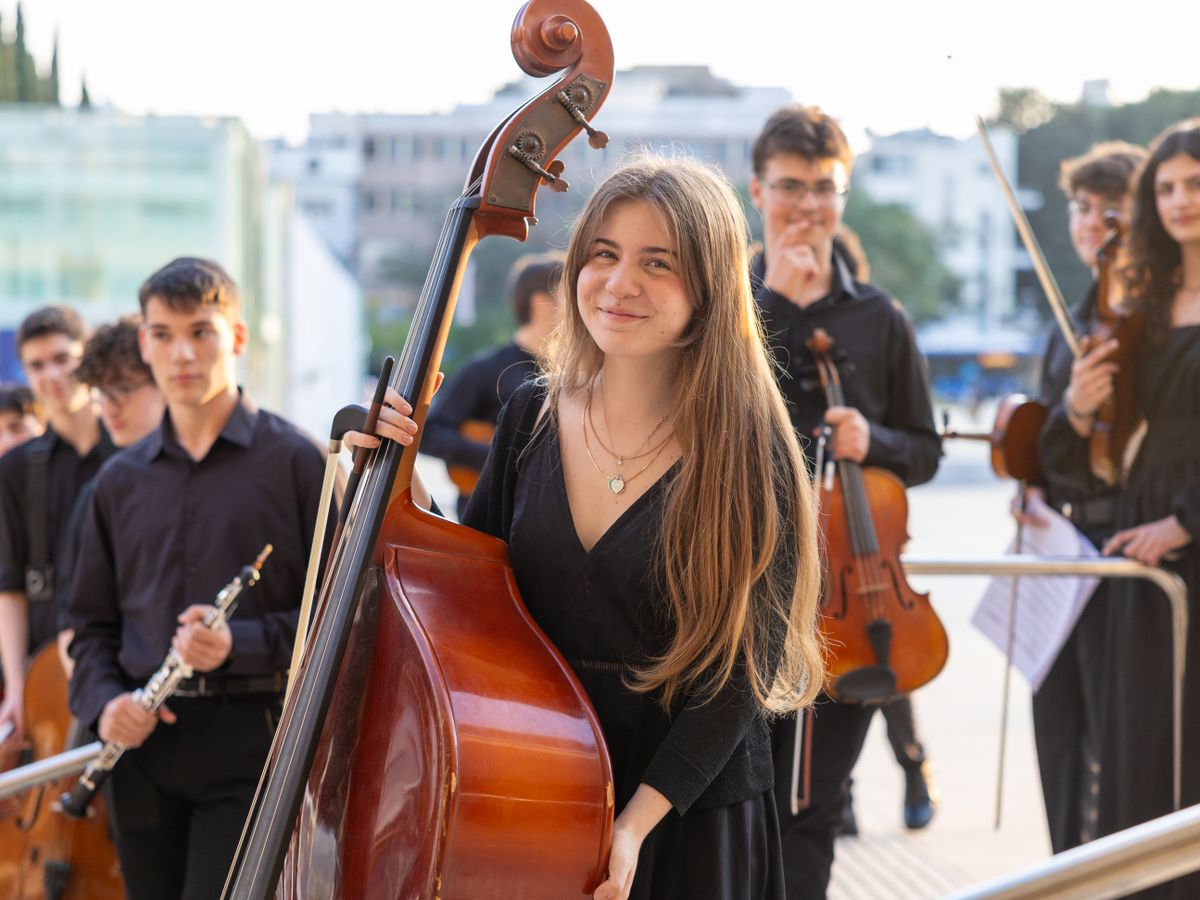
Sage Hill School is located in Newport Coast, Orange County, with its campus off Newport Coast Drive, between Newport Coast and Irvine. The school opened in 2000 and, according to its School Profile, was the first non-denominational, coeducational independent high school in Orange County, affiliated with neither the government nor any church. According to the School Profile 2025-2026, the school enrolled 597 students in grades 9 through 12 that year; grades 7 and 8 are added from 2026-27, and the school plans an enrollment of about 700 in grades 7 through 12. Three features stand out: upper school classes average 14 students, with a student-to-college-counselor ratio of 36:1; mathematics runs as far as Multivariable Calculus and Linear Algebra; and the school’s weighting rules almost match the UC rules, differing by only two courses. This page does not rate the school. It answers two questions: how to gain admission to the school, and how to plan once enrolled.
UC A-G refers to the seven subject areas (a through g) that the University of California and the California State University require of high school students; UC recognizes only the courses on a school’s A-G list. AP (Advanced Placement) is the College Board program of college-level courses, Honors courses are advanced courses designed by the school, and Post-AP courses are the level beyond AP.
The College Preparation Profile of Sage Hill School
The data the school publishes point to four characteristics.
First, the school is small and counseling is close. In 2025-26, grades 9 through 12 enrolled 166, 150, 139, and 142 students. The School Profile lists a college counseling office of 7 staff members, and the school states a student-to-college-counselor ratio of 36:1. The school does not compute class rank, citing its competitive admission and relatively small enrollment.
Second, the course ceiling is high. The school offers 20 AP and 3 Post-AP courses. Beyond AP Calculus, mathematics continues with Calculus C, Multivariable Calculus, Linear Algebra, and Advanced Topics in Mathematics. At the same time, the school strongly recommends that students take no more than 3 honors and AP courses combined each year; a schedule with more than 3 requires a parent-signed acknowledgment.
Third, standardized test scores are high. According to the School Profile, for the classes of 2024 through 2026, as of July 2025, the middle 50% SAT range was 1380 to 1530 (235 test takers, mean 1435), and the middle 50% ACT composite range was 30 to 35 (181 test takers, mean 32). The class of 2025 had 22 National Merit Semifinalists and 42 Commended Students, which the school describes as its largest number of Commended Students. The National Merit Scholarship Program selects students based on grade 11 PSAT scores.
Fourth, required programs outside the classroom run every year. Service Learning and Spring at Sage, the end-of-year seminar and travel program, are required every year from grade 7, and upper school students must also complete 4 Sage Center Designated Courses. The school has no religion courses.
How to Apply to Sage Hill School
The main entry points at Sage Hill School are grade 7 and grade 9; openings in grades 10 through 12 are very limited. The steps below follow the school’s published schedule for 2027-28 entry. The process is the same for grade 7 and grade 9.
Application steps for grade 7 and grade 9
- Complete the online inquiry form; from September 1, 2026, submit the application through the school's admission system, which is usually processed within 2 business days
- After processing, log in to the application portal to view the checklist: upload the birth certificate first; students born outside the United States also submit an English translation and a green card or valid visa
- Once the birth certificate is verified, schedule the interview on a first-come, first-served basis; the student interviews individually for about 1 hour, and parents applying for Flexible Tuition meet with the admission office during the same time slot
- Attend fall events: the Admission Open House on October 3, a Shadow Day booked between September 16 and February 3, and Academic Information Night on January 12
- Register for the ISEE or SSAT and have the testing organization send official scores directly to the school
- By January 31, 2027, submit transcripts, attendance and discipline records, three recommendation letters, and test scores; the Flexible Tuition application for new families is due the same day
- After admission, take the April math and world language placement tests, which set the course starting point at entry
| Admission test | All applicants to grades 7-12 must take either the ISEE (Independent School Entrance Exam) or the SSAT (Secondary School Admission Test). Official scores must be sent directly to the school by the testing organization before the January 31 deadline (ISEE school code 054282; SSAT school code 7039). Both test-center and at-home testing are accepted |
|---|---|
| Application cycle | Admission for 2027-28: the online application opens September 1, 2026, for grades 7-12; the application deadline is January 31, 2027, by which test scores, transcripts, and recommendations must be received |
| Entry grades | The main entry points are grades 7 and 9. The school strongly encourages students who want to attend the Upper School to apply for grade 9; openings in grades 10-12 are very limited |
| Admission events | Admission Open House on October 3, 2026 (for families of students in grades 5-11, 10 a.m. to 3 p.m., the largest event of the year); a campus tour before the Homecoming game on September 25; Academic Information Night on January 12, 2027. Shadow Days are open only to students who have submitted an application, with 12 dates between September 16, 2026, and February 3, 2027; a Shadow Day is optional |
| Application materials | Online inquiry form and admission application; Birth certificate; students born outside the United States also submit an English translation and a green card or an eligible visa (not F1, J1, or M1); Official ISEE or SSAT scores; Current and prior transcripts, attendance records, disciplinary records, and standardized test scores, uploaded by the current school through the application system; Three recommendations: one from the current principal, head-level administrator, counselor, or advisor; one from the current English teacher; and one from the current math teacher; Students who have not completed three full school years in the United States (2023-24, 2024-25, and 2025-26) must first submit English proficiency test scores |
| Interview | After the birth certificate is verified, an interview scheduling option appears in the application system, first come, first served. Students in grades 7-12 interview individually without parents present, for about one hour |
| English proficiency | Minimum English proficiency scores: Duolingo 125; IELTS 7.5; iTEP Slate Plus 4.5 on each section; TOEFL iBT 5.5 on both the overall score and Reading; TOEFL Essentials 10. Scores must be sent directly by the testing organization, and the Admission Office processes the application only after receiving them |
| Tuition and deposit (2026-27) | Upper School (grades 9-12) $58,100 per year; Middle School (grades 7-8) $49,500 per year. The enrollment deposit is $5,810 for the Upper School and $4,950 for the Middle School; it is non-refundable and is applied to the first tuition installment. Grade-level trips for grades 7 and 8 are included in Middle School tuition |
| Payment options | Tuition may be paid in full, in two installments (70% and 30%), or in 10 installments |
| Flexible Tuition aid | The school offers no merit, athletic, or arts scholarships; its only aid program is Flexible Tuition, which adjusts tuition according to family financial need. The school states that it commits about $5 million per year on average, that about 17% of students participate, and that awards range from about $5,000 to $58,100 (full tuition). New applicant families apply through the Clarity platform by January 31, 2027, with a $65 submission fee; the deadline for current families is November 13, 2026. Aid must be reapplied for each year, and late applications are placed in a waitlist pool |
| How aid is assessed | Families first submit the admission application; during the student interview, parents meet with the Admission Office's financial aid lead. Clarity provides a third-party financial assessment and recommendation, and the school's financial aid committee sets the award. When parents are divorced or separated, both must apply; any company, partnership, or trust in which the family holds a stake of 10% or more must upload its tax returns |
| Aid and admission decisions | The admission committee does not consider financial aid applications when making admission recommendations; however, the school states that in years when the aid budget is insufficient, admission may be more selective for students applying for aid |
| Religious affiliation | The school is a non-denominational independent school with no religion course or chapel requirement. Required every year are Service Learning and the end-of-year Spring at Sage program, and students must also complete 4 Sage Center Designated Courses |
| International students | The school's international student page states in capital letters that it does not issue I-20 forms and does not accept students on B, F1, J1, or M1 visas; it enrolls only students residing legally in the United States |
| School bus | Two bus routes: the Long Beach, Huntington Beach, and Newport Beach route departs at 6:35 a.m. from PCH and 2nd Street; the Santa Ana and Tustin route departs at 6:35 a.m. from The Wooden Floor, stopping at Jamboree and El Camino Real; both routes arrive at school at 7:30 a.m., and afternoon buses leave campus at 6:30 p.m. Fees: $2,271 per year round trip or $1,514 per year one way; $1,190 round trip or $757 one way for a second child; free for a third child; a 5-ride one-way pass is $81 |
The school’s public pages do not state the application fee or the date admission decisions are released. The relationship between aid and admission deserves attention: the school states that the admission committee does not consider whether a family applies for aid, but in years when the aid budget is insufficient, admission may be more selective for students who apply for aid.
Below are the 2027-28 application dates published on the school website, followed by EDUBUS advisors’ review of the application to this school.
Application TimelinePublished on the school website
- Online application opens for the 2027-28 school year (grades 7-12)Opens
- Shadow Days begin, open only to students who have applied (12 dates through February 3, 2027)
- Homecoming campus tours, 4:30-6:00 p.m.
- Admission Open House for grades 5-11, 10:00 a.m.-3:00 p.m.
- Academic Information Night
- Application deadline: ISEE or SSAT scores, transcripts and three recommendations due; Flexible Tuition deadline for new familiesDeadline
UC Applications Year by Year: Counts, Admission Rates, and GPA
The data below come from UC Infocenter, published by the University of California Office of the President, reported by source high school under the California private high school category and updated annually. They answer two questions: how many Sage Hill School students apply and are admitted each year, and what GPAs admitted students hold. GPA is the UC weighted, capped GPA, which counts only courses from grades 10 and 11. UC does not publish categories with fewer than 5 applicants or fewer than 3 admits or enrollees; these appear as a dash (—) in the tables.
The ten lines are hard to tell apart where they overlap. Hover over any campus name below to highlight that campus’s trend; click to keep it highlighted, and click again to clear it.Tap any campus name below to highlight that campus’s trend; tap again to clear it.
Official UC data · By high school of origin · 2014–2025
Year-by-year data for the top six UC campuses
Parents focus most on six campuses: UC Berkeley, UCLA, UC San Diego, UC Santa Barbara, UC Irvine, and UC Davis. The table lists, by year, the number of Sage Hill School students who applied to, were admitted to, and enrolled at each campus, along with average GPA; use the buttons to switch metrics. Cells shown as a dash (—) are data UC did not publish because the counts were too small.
From 2014 to 2025, the admit rate for Sage Hill School applicants to UC Los Angeles fell from 23% to 14%, and to UC Berkeley rose from 7% to 18%; the rate at UC Irvine rose from 27% to 54%.
This table has five data views. Use the buttons below to view admits, applicants, enrollees, admit GPA, and applicant GPA; the button for the current view is highlighted in yellow.
| Year | UC Berkeley | UC Los Angeles | UC San Diego | UC Santa Barbara | UC Irvine | UC Davis |
|---|---|---|---|---|---|---|
| 2025Latest | 21 (18%) | 17 (14%) | 26 (21%) | 64 (56%) | 58 (54%) | 37 (47%) |
| 2024 | 18 (19%) | 15 (14%) | 20 (20%) | 52 (51%) | 47 (54%) | 23 (32%) |
| 2023 | 17 (20%) | 12 (12%) | 18 (18%) | 42 (44%) | 37 (50%) | 31 (45%) |
| 2022 | 24 (26%) | 11 (11%) | 16 (17%) | 49 (55%) | 46 (71%) | 24 (45%) |
| 2021 | 19 (23%) | 13 (13%) | 19 (21%) | 36 (44%) | 38 (58%) | 16 (30%) |
| 2020 | 20 (28%) | 18 (21%) | 38 (48%) | 42 (58%) | 28 (47%) | 16 (44%) |
| 2019 | 23 (33%) | 13 (17%) | 20 (32%) | 25 (34%) | 13 (29%) | 12 (40%) |
| 2018 | 13 (24%) | 12 (18%) | 12 (22%) | 28 (47%) | 18 (45%) | 10 (37%) |
| 2017 | 19 (33%) | 12 (20%) | 16 (36%) | 16 (39%) | 13 (45%) | 9 (41%) |
| 2016 | 28 (41%) | 17 (28%) | 20 (38%) | 33 (62%) | 19 (43%) | 11 (41%) |
| 2015 | 15 (25%) | 14 (23%) | 19 (39%) | 23 (45%) | 12 (35%) | 7 (25%) |
| 2014 | 3 (7%) | 10 (23%) | 13 (33%) | 14 (42%) | 7 (27%) | 11 (50%) |
| Change, 2014–2025 | ▲ 7% → 18% | ▼ 23% → 14% | ▼ 33% → 21% | ▲ 42% → 56% | ▲ 27% → 54% | ▼ 50% → 47% |
| Year | UC Berkeley | UC Los Angeles | UC San Diego | UC Santa Barbara | UC Irvine | UC Davis |
|---|---|---|---|---|---|---|
| 2025Latest | 115 | 123 | 122 | 115 | 107 | 79 |
| 2024 | 95 | 105 | 101 | 102 | 87 | 71 |
| 2023 | 87 | 99 | 99 | 96 | 74 | 69 |
| 2022 | 91 | 99 | 93 | 89 | 65 | 53 |
| 2021 | 81 | 101 | 91 | 82 | 66 | 53 |
| 2020 | 72 | 86 | 79 | 73 | 60 | 36 |
| 2019 | 69 | 78 | 63 | 74 | 45 | 30 |
| 2018 | 55 | 66 | 55 | 60 | 40 | 27 |
| 2017 | 58 | 61 | 45 | 41 | 29 | 22 |
| 2016 | 68 | 60 | 52 | 53 | 44 | 27 |
| 2015 | 60 | 62 | 49 | 51 | 34 | 28 |
| 2014 | 43 | 44 | 40 | 33 | 26 | 22 |
| Change, 2014–2025 | ▲ 43 → 115 | ▲ 44 → 123 | ▲ 40 → 122 | ▲ 33 → 115 | ▲ 26 → 107 | ▲ 22 → 79 |
| Year | UC Berkeley | UC Los Angeles | UC San Diego | UC Santa Barbara | UC Irvine | UC Davis |
|---|---|---|---|---|---|---|
| 2025Latest | — | 5 | 3 | — | 6 | — |
| 2024 | 6 | 4 | — | 3 | 7 | — |
| 2023 | 6 | 5 | — | 8 | — | 3 |
| 2022 | 9 | 5 | — | 9 | 3 | — |
| 2021 | 7 | 3 | — | 7 | — | — |
| 2020 | 7 | — | 5 | 5 | 3 | — |
| 2019 | 11 | 6 | — | — | — | — |
| 2018 | 6 | 3 | — | — | 3 | — |
| 2017 | 7 | 3 | — | — | — | — |
| 2016 | 11 | 4 | — | — | — | — |
| 2015 | 4 | 3 | — | — | — | — |
| 2014 | — | — | — | — | — | — |
| Change, 2014–2025 | — | — | — | — | — | — |
| Year | UC Berkeley | UC Los Angeles | UC San Diego | UC Santa Barbara | UC Irvine | UC Davis |
|---|---|---|---|---|---|---|
| 2025Latest | 4.26 | 4.29 | 4.26 | 4.27 | 4.24 | 4.19 |
| 2024 | 4.25 | 4.26 | 4.26 | 4.26 | 4.25 | 4.24 |
| 2023 | 4.27 | 4.30 | 4.25 | 4.26 | 4.23 | 4.21 |
| 2022 | 4.25 | 4.29 | 4.28 | 4.26 | 4.24 | 4.27 |
| 2021 | 4.21 | 4.26 | 4.25 | 4.21 | 4.14 | 4.20 |
| 2020 | 4.24 | 4.28 | 4.24 | 4.22 | 4.25 | 4.24 |
| 2019 | 4.23 | 4.29 | 4.27 | 4.25 | 4.26 | 4.23 |
| 2018 | 4.14 | 4.20 | 4.16 | 4.15 | 4.10 | 4.17 |
| 2017 | 4.14 | 4.25 | 4.20 | 4.14 | 4.25 | 4.14 |
| 2016 | 4.13 | 4.19 | 4.19 | 4.06 | 4.13 | 4.16 |
| 2015 | 4.16 | 4.17 | 4.19 | 4.10 | 4.16 | 4.13 |
| 2014 | — | 4.11 | 4.12 | 3.97 | 4.08 | 4.07 |
| Change, 2014–2025 | — | ▲ 4.11 → 4.29 | ▲ 4.12 → 4.26 | ▲ 3.97 → 4.27 | ▲ 4.08 → 4.24 | ▲ 4.07 → 4.19 |
| Year | UC Berkeley | UC Los Angeles | UC San Diego | UC Santa Barbara | UC Irvine | UC Davis |
|---|---|---|---|---|---|---|
| 2025Latest | 4.15 | 4.14 | 4.14 | 4.13 | 4.13 | 4.12 |
| 2024 | 4.15 | 4.13 | 4.14 | 4.13 | 4.13 | 4.11 |
| 2023 | 4.20 | 4.19 | 4.18 | 4.18 | 4.16 | 4.17 |
| 2022 | 4.23 | 4.21 | 4.20 | 4.21 | 4.20 | 4.21 |
| 2021 | 4.10 | 4.06 | 4.04 | 4.03 | 4.01 | 4.02 |
| 2020 | 4.14 | 4.11 | 4.12 | 4.10 | 4.14 | 4.10 |
| 2019 | 4.07 | 4.03 | 4.05 | 3.99 | 3.94 | 3.95 |
| 2018 | 4.04 | 4.00 | 3.99 | 3.96 | 3.95 | 3.89 |
| 2017 | 4.01 | 3.96 | 3.91 | 3.89 | 3.94 | 3.88 |
| 2016 | 3.98 | 3.96 | 3.96 | 3.90 | 3.88 | 3.89 |
| 2015 | 3.98 | 3.98 | 3.96 | 3.88 | 3.90 | 3.79 |
| 2014 | 3.96 | 3.95 | 3.86 | 3.79 | 3.78 | 3.85 |
| Change, 2014–2025 | ▲ 3.96 → 4.15 | ▲ 3.95 → 4.14 | ▲ 3.86 → 4.14 | ▲ 3.79 → 4.13 | ▲ 3.78 → 4.13 | ▲ 3.85 → 4.12 |
Applications and Admits by Campus, Most Recent Year
| UC campus (fall 2025) | Applicants | Admits | Admit rate | Enrollees | Admit GPA |
|---|---|---|---|---|---|
| UC Berkeley | 115 | 21 | 18% | — | 4.26 |
| UC Los Angeles | 123 | 17 | 14% | 5 | 4.29 |
| UC San Diego | 122 | 26 | 21% | 3 | 4.26 |
| UC Davis | 79 | 37 | 47% | — | 4.19 |
| UC Irvine | 107 | 58 | 54% | 6 | 4.24 |
| UC Santa Barbara | 115 | 64 | 56% | — | 4.27 |
| UC Merced | 36 | 36 | 100% | — | 4.04 |
| UC Riverside | 74 | 70 | 95% | — | 4.12 |
| UC Santa Cruz | 73 | 60 | 82% | — | 4.17 |
College Destination Lists Published by the School
All content in this section comes from two lists that Sage Hill School publishes itself, compiled by the school, covering the classes of 2023 through 2026. Note the basis: the School Profile list includes every college that admitted a student, but only the colleges in bold had students enroll, and the numbers in parentheses are enrollment counts. The figures in the table are therefore three-year enrollment totals, not admission counts.
ScopeCollege list for the Classes of 2023 through 2025 from the School Profile 2025-2026. The list includes every college that admitted a student; the school marks in bold the colleges at least one graduate enrolled in, with the number of enrollees in parentheses. The figures below are therefore combined enrollment across the three classes, not admission counts. Colleges not in bold admitted students but enrolled none; the school does not publish admission counts by college. Source: School Profile 2025-2026 (College Matriculation 2023-2025) ↗
Classes of 2023-2025: colleges with the most enrollees
- New York University25
- Stanford University16
- University of Southern California15
- Washington University in St. Louis12
- Boston University11
- Northeastern University11
- University of Michigan11
- Cornell University10
Classes of 2023-2025: enrollment at Ivy League and selected top private universities
- Cornell University10
- University of Pennsylvania6
- Princeton University3
- Brown University2
- Dartmouth College2
- Harvard University2
- Yale University2
- Columbia University1
- Massachusetts Institute of Technology5
- California Institute of Technology3
- University of Chicago5
- Johns Hopkins University5
- Northwestern University6
- Vanderbilt University6
- Carnegie Mellon University6
- Duke University4
- Rice University4
Class of 2026 confirmed enrollment (as of June 8, 2026; figures are numbers of enrollees; colleges without a figure have 1)
- University of Southern California14
- New York University11
- Northeastern University6
- Cornell University5
- Northwestern University5
- Stanford University4
- University of Chicago4
- Boston University4
- Johns Hopkins University3
- University of Michigan3
- Harvard University2
- Brown University2
- Duke University2
- Carnegie Mellon University2
- Rice University2
- Columbia University
- Princeton University
- University of Pennsylvania
- Yale University
- United States Military Academy
- United States Air Force Academy
These two lists show two things. First, private university enrollment concentrates in a few institutions: across the classes of 2023 through 2025, 25 students enrolled at New York University, 16 at Stanford University, and 15 at the University of Southern California. Second, out-of-state colleges account for a large share: the school reports that only 40% of its 2022 through 2025 graduates attended college in California, with the rest spread across the Mid-Atlantic, the Midwest, the Northeast, and other regions. These are enrollment outcomes and cannot be used to estimate admission counts or admission rates at any particular university. For UC applications, admissions, and enrollment, the official UC data on this page are authoritative.
GPA Weighting: School Rules and UC Rules
This section addresses the calculation parents most often get wrong: how the school and UC each weight the same transcript. The school’s rules come first.
| School grading and weighting | The school grades on a 4.00 scale with pluses and minuses: A (93-100) 4.00, A- 3.67, B+ 3.33, B 3.00, B- 2.67, C+ 2.33, C 2.00, C- 1.67, D+ 1.33, D 1.00, D- 0.67, F 0. AP courses and designated honors courses add 1.0 to the grade points earned. Teachers do not round quarter or semester grades |
|---|---|
| Courses weighted | All AP courses (20 published by the school); 26 non-AP courses marked in bold in the course catalog: Honors English 11, Honors Ethnic Studies, Honors Algebra II and Trigonometry, Honors Precalculus, Calculus C, Linear Algebra, Multivariable Calculus, Advanced Topics in Mathematics, Advanced Topics in Computer Science, Honors Money Management, Honors Chemistry, Honors Biology, Honors Chinese IV, Honors French IV, Honors Latin IV, Honors Spanish III, Advanced Topics in Spanish, and 9 honors arts courses |
| Summer courses and repeats | A credit course taken in the school's Summer at Sage program receives a single grade but counts in the GPA as a full-year course, so it is effectively counted twice; when a course is repeated at the school, both grades count in the cumulative GPA, and the new grade does not replace the old one |
| Class rank | The school does not compute class rank. The School Profile cites the competitive admission process and the relatively small student body as the reasons |
| Number of honors and AP courses | The school strongly recommends that students take no more than 3 honors and AP courses combined each year. When a course request exceeds 3, the student and parents must sign a Balanced Schedule Acknowledgement Letter or revise the request; otherwise no schedule is issued |
| UC weighting rules | UC counts only A-G courses taken from the summer after grade 9 through the summer after grade 11, and ignores pluses and minuses (every A is 4 points). Only courses designated as honors on the A-G course list (AP courses and UC-certified honors courses) earn extra points: at most 1 point per course per semester, up to 8 points in total across grades 10 and 11, of which no more than 4 may come from grade 10; D and F grades earn no extra points |
| UC-approved honors courses at the school | On the UC 2026-27 A-G course list, the school has 45 UC-approved honors courses: 21 AP courses (AP Macroeconomics and AP Microeconomics listed separately) and 24 UC-certified honors courses |
A course-by-course check against the official UC A-G list shows that the following courses are weighted as honors at Sage Hill School but are not on the UC-approved honors list; they count as regular courses in UC applications.
| School honors course | Subject and notes |
|---|---|
| Honors Algebra II and Trigonometry | Mathematics; marked in bold in the course catalog and weighted 1.0 at the school. Typically taken in grade 9 or 10; taking it in grade 10 has the most direct effect on the UC GPA |
| Honors Chemistry | Science; a grade 9 course. UC does not count grade 9 grades, so it has no effect on the UC GPA |
At Sage Hill School, the two systems differ very little in which courses they weight: of the 46 courses weighted at school (20 AP and 26 non-AP courses), 44 are also UC-approved honors courses, including Post-AP courses such as Multivariable Calculus, Linear Algebra, and 9 honors arts courses. The only course that requires real attention is Honors Algebra II and Trigonometry: if a student who starts in Geometry takes this course in grade 10, it raises the school GPA but adds nothing to the UC GPA. The larger difference lies in grading. The school uses plus and minus marks, so an A- counts as 3.67; UC ignores plus and minus marks, so both A- and A count as 4, and UC does not count grade 9 grades. The school GPA and the UC GPA can therefore differ considerably, and not always in the same direction. EDUBUS recommends that grade 10 schedules give priority to UC-approved honors courses, such as Honors Biology, AP World History, or AP Chemistry. UC counts at most 4 honors points in grade 10, which equals two full-year honors courses and fits the school’s recommendation of no more than 3 per year.
Timeline from Grade 7 to Grade 12
Grade 6 or 8: applying
- September 1Online application opens for grades 7-12 (for 2027-28 admission)
- September to FebruaryShadow Days may be booked after applying; Admission Open House on October 3; Academic Information Night on January 12
- Fall to JanuarySchedule an interview after birth certificate verification; students interview individually for about 1 hour; take the ISEE or SSAT at least once
- January 31Test scores, transcripts, three recommendations, and Flexible Tuition applications from new families are all due
- April to MayAfter admission, take the math and world language placement tests (in 2026: Middle School April 11, Upper School April 25, makeup May 9)
- June to JulySummer at Sage credit courses available, one course per summer (June 22 to July 24 in 2026)
Grades 7-8: Middle School
- Early SeptemberGrade 7 trip to Camp Stevens; grade 8 trip to Washington, D.C.
- All yearFive core courses, two electives, and a team sport each season; Service Learning required every year
- OctoberERB testing on the school testing day (October 14 in 2026)
- Late MaySpring at Sage: on-campus seminars for grade 7; optional travel within California for grade 8
- End of grade 8After meeting the two-year Middle School promotion requirements, students move up to grade 9 without retaking math placement
Grade 9
- Early SeptemberThree-day class retreat; honors and AP add deadline September 1, general add/drop deadline September 14 (2026-27)
- All yearRequired Patterns of Civilization and Arts Survey; a physical health and wellness course occupies one block; may apply to Pre-SHIP
- All yearThe associate director of college counseling for grades 9-10 guides students in drafting a four-year academic plan
- SpringPresent history research projects at the grade 9 History Night; plan grade 10 courses with the advisor
Grade 10
- All yearThe UC GPA begins with the summer after grade 9; UC counts at most 4 honors points from this year
- OctoberPSAT on the school testing day
- All yearEnglish 10 is paired with Service Learning to tutor fourth graders at a partner elementary school
- SpringChoose grade 11 courses: Honors English 11 depends on an A- writing average in English 10; honors courses in math and world languages depend on teacher recommendation and placement
Grade 11
- AugustReception and college counseling information session for grade 11 and 12 parents (August 19 in 2026)
- OctoberPSAT scores are used for National Merit selection
- All yearAssigned a college counselor; individual family meetings to build the college list; last school year counted in the UC GPA
- MayAP exams (May 3 to 14 in 2027)
- SummerOptional essay and application workshops from the College Counseling Office
Grade 12
- OctoberThe school testing day is College Application Day
- FallAdmission officers from more than 140 colleges visit campus; college counselors check that transcripts and recommendations are sent on time
- All yearComplete 4 Sage Center Designated Courses; complete the fourth year of Service Learning
- SpringAfter admission decisions arrive, choose a college with the college counselor; students admitted Early Decision must withdraw all other applications
Three decision points shape the path. The first is the math and world language placement tests in April of the entry year, which set the math starting point and language level at entry and determine whether the student can reach AP Calculus in grade 10. The second is course selection in the spring of grade 10: Honors English 11 requires an A- writing average in English 10, and honors world language courses open only from grade 10. The third is grade 11: the school assigns each student a college counselor that year, and it is also the last year counted in the UC GPA. Students who enter in grade 7 have one more decision point: advancing in mathematics to Geometry or Algebra II during the two middle school years, so that no placement test is needed on entering grade 9.
Clubs and Academic Competitions
The school’s academic teams and clubs page states that Sage Hill School has more than 90 clubs each year; students may start their own clubs, each advised by a faculty or staff member. Student clubs with an academic or professional focus in 2025-26 include:
- Sage Hill Math Meet
- USABO & BBO Club (USA and British Biology Olympiad)
- ChemClub
- Quantum Club
- Science Scholars
- Sage Hill American Rocketry Club (SHARC)
- Micromouse Club
- Women in Engineering Club
- Youth Engineers Initiative
- AI and VR Innovation Club
- 3D Modeling and Design
- Coding for Equality
- MedX, Med-Talk, NeuroNex, GIDAS (medicine and neuroscience clubs)
- Business Club, Girls for Business, Marketing in Motion (business clubs)
- Sage Hill Chess Club
- Stoic Society
- Writing Club, Youth Prose Scholars (writing clubs)
The school also has academic teams led by coaches that require a larger time commitment and compete against schools across Orange County and California.
- Academic Decathlon: students compete on individual scores in art, language and literature, mathematics, music, science, and social science
- Science Olympiad
- Speech and Debate: competes from September through April in World Schools, Public Forum, and Lincoln-Douglas formats
- Model United Nations: founded in 2011
- Mock Trial
- Robotics
- DECA business competition team (Distributive Education Clubs of America)
- Junior Classical League
- Student newspaper The Bolt and yearbook Storm
Note that the school’s academic teams focus mainly on team competitions, and the math club and biology olympiad club are student-initiated clubs rather than school-led teams. Students who want to demonstrate ability through individual competition results, such as the American Mathematics Competitions (AMC) or the USA Biology Olympiad (USABO), need systematic training outside school.
Signature Programs
- Spring at Sage (end-of-year seminars and travel): Each year after AP and final exams, all students and teachers spend about a week in on-campus seminars or domestic and international travel; the program is required and credit-bearing every year in grades 7-12. Grade 7 takes part only in on-campus and local seminars, grade 8 may choose travel within California, and grades 9-12 may choose domestic or international travel (North America only for grade 9). The school's FAQ states that the program has visited 46 international destinations. The 2026-27 dates are May 24 to June 1, 2027
- Service Learning: Required and credit-bearing every year in grades 7-12; 6 of the 8 Sage Center Days each year are full days devoted to Service Learning. Each grade has its own theme: grade 7, foundations of service; grade 8, environmental responsibility; grade 9, understanding the Orange County community; grade 10, partnering with fourth graders at a partner elementary school; grades 11 and 12 may propose independent projects or join teacher-led projects
- Sage Hill Internship Program (SHIP): Grade 9 students may apply to the Pre-SHIP leadership program; students in grades 10-12 may voluntarily take SHIP Prep Level I and Level II, which include resume review, mock interviews, and career talks, and those who complete them receive a list of internship and job-shadowing opportunities in the Orange County area in April. The school states that 140 students completed the program the previous year
- Sage Center Designated Courses (SCD): Courses that build six competencies (the Six Cs): critical thinking, collaboration, communication, cross-cultural competency, creativity, and character, into instruction and assessment; some include Service Learning or off-campus fieldwork. Four are required for graduation
- Post-AP courses and Independent Study: Mathematics and computer science offer 3 Post-AP courses: Multivariable Calculus, Advanced Topics in Mathematics (introduction to proofs, set theory, number theory, and group theory), and Advanced Topics in Computer Science (C# and game development). Students in grades 11 and 12 who have completed all courses in a subject may apply for a year-long Independent Study, which earns a letter grade and one semester of credit on completion but does not count toward graduation requirements
- Sage Connected blended online courses: Online learning combined with regular in-person sessions on campus, open only to grades 11 and 12; a Sage Connected course may serve as a sixth or seventh course, limited to one per school year. In 2026-27 the offerings are the creative writing course Storytellers' Workshop and 3D Design, Modeling, and Fabrication
- Arts: The 30,000-square-foot Studio arts building includes a digital art lab, ceramics studio, instrumental, choral, and dance rooms, and a black box theater. New grade 9 students first take Arts Survey; students in grades 10-12 may enter honors arts courses by audition or portfolio review. Honors arts courses are weighted at the school and are also recognized as honors courses by UC
- Middle School (new in 2026-27): The first grade 7 and 8 students arrived on August 17, 2026. The Middle School has its own academic building, dining hall, and the Bolen Family gymnasium. Middle School students also take part in Service Learning and Spring at Sage, and choose from 16 electives including Model UN, debate, robotics, computer science, and Junior Classical League
Choosing a School: Total Tuition, Commute, and Visits
This section answers five questions parents often ask when choosing a school: which families the school suits, how much tuition totals through graduation, how students get to school from Irvine, what to ask during a visit, and which nearby schools are worth comparing.
Which Families the School Suits
Total Tuition Through Graduation
At 2026-27 tuition rates, attending from grade 7 through grade 12 takes 6 years: 2 middle school years at $49,500 per year and 4 upper school years at $58,100 per year, for total tuition of $331,400. Entering in grade 9 and attending for 4 years totals $232,400 in tuition. Tuition usually rises each year, so the actual total may exceed figures based on current rates. These amounts exclude the school bus, AP exam fees, and extracurricular program costs; the enrollment deposit is credited toward the first tuition payment and is not an additional cost. For families who apply for Flexible Tuition, the school sets the amount actually paid based on family finances.
Commuting from Irvine
The Sage Hill School campus is on Newport Coast Drive, close to southern Irvine. The table below shows straight-line distances to the school from several Irvine neighborhoods with large Chinese American communities, measured by EDUBUS from each neighborhood’s center point to the school address; actual driving times depend on navigation.
| Starting neighborhood | Straight-line distance to school |
|---|---|
| Turtle Rock | About 1.4 miles |
| Northwood | About 7.1 miles |
| Woodbury | About 7.3 miles |
| Portola Springs | About 8.7 miles |
Both fee-based bus routes arrive at school at 7:30 a.m. The stop closest to Irvine is at Jamboree Road and El Camino Real on the Santa Ana and Tustin route; families in other neighborhoods need to drive or carpool. EDUBUS recommends driving the route once during the morning arrival window on the day of a school visit.
Questions to Confirm During a Visit
The school’s public pages do not clearly answer the following questions, so families should confirm them in person during a visit or meeting.
- Application fee: the How to Apply, Admission Overview, and FAQ pages do not state it.
- Decision release date: the website publishes only the January 31, 2027 deadline, not the date decisions are released.
- Actual 2026-27 enrollment and middle school class sizes: the FAQ page states only a planned enrollment of about 700, and two pages give the average middle school class size as 14 and 16, respectively.
- Whether outside math courses can be used for advancement: the course catalog states that outside math courses other than Geometry are not used for advancement, while the school handbook requires prior written approval from the department chair.
- Costs beyond tuition: AP exam fees, school bus fees, and fees for the Summer at Sage credit courses.
Comparable Schools
Private schools in Orange County near Sage Hill School that serve the same or similar grades include the following; the main differences lie in religious affiliation and admission testing.
- Pacific Academy Irvine: in Irvine; also serves grades 7 through 12 with no religious affiliation; admission is based on an interview and writing, and students whose first language is not English take the iTEP.
- Pacifica Christian High School, Orange County: also in Newport Beach; a Christian school serving grades 9 through 12; admission requires the ISEE.
- Crean Lutheran High School: in Irvine; a Lutheran school serving grades 9 through 12; no written admission test.
- Mater Dei High School: in Santa Ana; a Catholic school serving grades 9 through 12; admission requires the HSPT.
- Ronald Reagan Secondary School: in Laguna Hills; serves grades 7 through 12 with no religious affiliation; no admission test required.
For each school’s tuition, application schedule, and courses, select the school name to view its page.
Schools to CompareNearby private high schools, nearest first
 Pacific Academy (Irvine Campus)
 Pacifica Christian High School, Orange County
 Crean Lutheran High School
 Mater Dei High School
 TVT Community Day School (Tarbut V'Torah)
 Newport Christian School
Using the College Counseling Office
This section explains what the school’s college counseling office provides and when to use each service.
| College counseling team | The School Profile 2025-2026 lists 7 staff in the College Counseling Office: Director of College Counseling Carolyn Blair, 1 associate director for grades 9-10, 3 associate directors, 1 college counseling coordinator, and 1 Registrar. The school states a student-to-college counselor ratio of 36:1 |
|---|---|
| Four-year process | College counseling begins in grade 9: the associate director for grades 9-10 leads group meetings and workshops, helps students draft a four-year academic plan, and revises it in individual family meetings. In grade 11, each student is assigned a college counselor to discuss standardized testing, college visits, and summer plans, and individual family meetings produce a college list. In the summer before grade 12 there are optional essay and application workshops; in the fall, admission officers from more than 140 colleges visit campus for small-group presentations |
| College planning platform | The college counseling page links to MaiaLearning |
| Recommendation letters | The school provides recommendations only when the student and parents waive their right to view them and the school sends them directly to colleges; families must first sign a release. Each student may ask at most two teachers for recommendations and must make sure those two letters satisfy the requirements of every college applied to. A college counselor's recommendation may be revised or withdrawn if the student violates school rules |
| Early Decision | Students admitted Early Decision I or II must immediately withdraw all other applications and may not submit new ones; otherwise the college counselor may notify the other colleges |
| Transcripts | Current students request transcripts from the college counseling coordinator; official transcripts for graduates are sent directly to colleges by the Registrar, requested by email |
| On-campus testing days | On the school testing day (October 14, 2026), grades 10 and 11 take the PSAT, grade 12 has College Application Day, and grades 7 and 8 take ERB testing |
MaiaLearning is a college planning platform on which students build college lists, research institutions, and manage application materials. For the grade levels and prerequisites of each course, see Courses and Course Selection; for the math sequence, see Math Pathway; and for AP courses and prerequisites, see AP Course List and Strategy.
Frequently Asked Questions
What tests do Irvine families need for Sage Hill School admission, and when is the deadline?
All applicants for grades 7 through 12 take either the ISEE (Independent School Entrance Examination) or the SSAT (Secondary School Admission Test); both test-center and at-home administrations are accepted. Applications for 2027-28 entry open on September 1, 2026, and test scores, transcripts, and three recommendation letters (one each from the current principal or counselor, the current English teacher, and the current mathematics teacher) must arrive by January 31, 2027. Each student also completes an individual on-campus interview of about 1 hour without parents present. Sage Hill School has not published its application fee or its decision release date.
How much does Sage Hill School cost each year for an Irvine family?
For 2026-27, Sage Hill School tuition is $58,100 for the upper school (grades 9 through 12) and $49,500 for the middle school (grades 7 and 8). The enrollment deposits are $5,810 and $4,950, respectively; they are nonrefundable and are credited toward the first tuition payment. The school offers no merit, athletic, or arts scholarships, only need-based Flexible Tuition: the school states that it invests about $5 million each year, that about 17% of students participate, and that awards range from about $5,000 to $58,100. New applicant families must apply through the Clarity platform by January 31, 2027, with a $65 submission fee.
How does school bus transportation work for Irvine students attending Sage Hill School?
The Sage Hill School campus is in Newport Coast, next to Irvine. The school runs two fee-based bus routes: a Long Beach, Huntington Beach, and Newport Beach route, and a Santa Ana and Tustin route. The stop closest to Irvine is on the Santa Ana and Tustin route at Jamboree Road and El Camino Real (in front of LensCrafters), with a 6:52 a.m. pickup and a 7:30 a.m. arrival at school; both routes leave the school at 6:30 p.m. A round-trip annual pass costs $2,271 and one-way service costs $1,514; a second student from the same family rides round-trip for $1,190, and a third rides free. Irvine families who do not live near a stop need to arrange their own transportation.
Irvine families often ask: do Sage Hill School honors courses receive extra weight in UC applications?
Most do. Sage Hill School adds 1.0 grade point in its own GPA for AP courses and for the 26 non-AP courses shown in bold in the course catalog. According to the UC A-G course list for 2026-27, the school has 45 UC-approved honors courses: 21 AP courses and 24 UC-certified honors courses. The two systems differ by only two courses: Honors Algebra II and Trigonometry and Honors Chemistry are weighted at school but count as regular courses in UC applications. Honors Chemistry is a grade 9 course, and UC does not count grade 9 grades in any case.
Should an Irvine student apply to Sage Hill School for grade 7 or for grade 9?
Both entry points are open. Sage Hill School opens a new middle school in 2026-27, enrolling 65 to 75 students in each of grades 7 and 8. The school states that more than half of its grade 9 students are new to the school, while openings in grades 10 through 12 are very limited. Entering in grade 7 adds two years to adjust and to prepare for math placement, and students who complete the school's middle school move into grade 9 without another math placement test; entering in grade 9 saves two years of tuition and offers more seats. EDUBUS recommends deciding based on the student's math progress and test preparation timeline. Both entry points require the ISEE or SSAT.
Can newly arrived Irvine families, or students on student visas, apply to Sage Hill School?
Students on student visas cannot. On its international student page, Sage Hill School states that it does not issue the I-20 and does not accept students holding B, F1, J1, or M1 visas; it enrolls only students residing lawfully in the United States. Students who have not completed all three school years of 2023-24, 2024-25, and 2025-26 in the United States must first submit English proficiency scores: Duolingo 125, IELTS 7.5, iTEP Slate Plus 4.5 on each section, TOEFL iBT 5.5 on both the total and the reading score, or TOEFL Essentials 10. The admission office accepts the application only after receiving the scores.
Irvine families want to know: which colleges do Sage Hill School graduates attend?
In its School Profile 2025-2026, Sage Hill School lists enrollment counts for the classes of 2023 through 2025: New York University 25, Stanford University 16, University of Southern California 15, and Washington University in St. Louis 12. Among confirmed destinations for the class of 2026 as of June 8, 2026, the University of Southern California had 14 and New York University 11, along with Harvard University, Princeton University, Yale University, Columbia University, the University of Pennsylvania, and others. These are enrollment counts reported by the school. UC admission counts come from the official University of California data by source high school: in fall 2025, 132 Sage Hill School students applied to the University of California and 116 were admitted to at least one campus, including 21 admitted to UC Berkeley and 17 admitted to UCLA.
Irvine families ask: what GPA does a Sage Hill School student need to apply to UC?
According to official data from the University of California Office of the President by source high school, the average weighted GPAs of admitted Sage Hill School students in fall 2025 were: UCLA 4.29, UC Santa Barbara 4.27, UC Berkeley 4.26, UC San Diego 4.26, UC Irvine 4.24, and UC Davis 4.19. This is the UC weighted, capped GPA for grades 10 and 11, which ignores plus and minus marks and adds points only for UC-approved honors courses. It is a different calculation from the school's own GPA, which uses plus and minus marks and includes grade 9. Year-by-year figures appear in the UC data section of this page and on the UC admission page.