
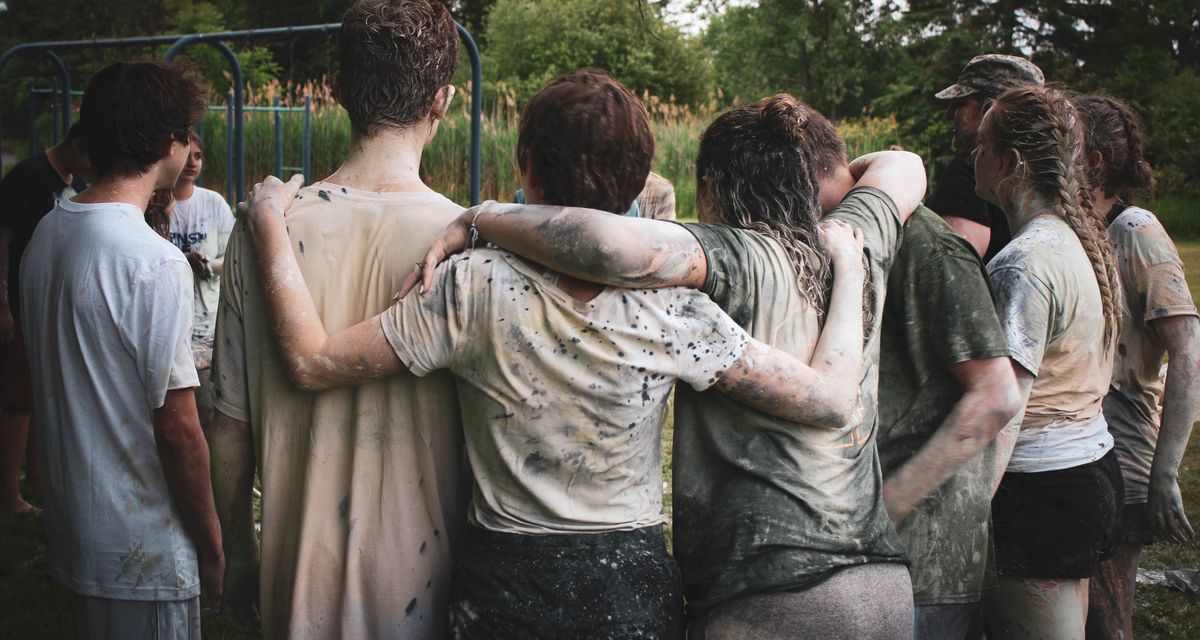
The Leadership Workshop uses structured study and a variety of interactive games to help students understand what leadership really means. It runs in two stages and meets on weekends, every other week.
The Two Stages of the Leadership Workshop
- Junior Leadership (G1–G3): students begin by taking turns in charge, expressing their ideas, and listening to peers. Games build the most basic sense of teamwork.
- Leadership Workshop (G6–G12): students work in real team situations and handle division of labor, disagreement, time pressure, and responsibility for results.
How the Leadership Workshop Teaches Leadership
The workshop relies on designed situations, not lectures. A typical activity gives a small group a task with constraints: too few materials, very little time, or information that only some members have. While completing the task, students run into problems on their own. What should the group do when someone does not take part? What happens when two people disagree? If the group finds halfway through that it is heading the wrong way, should it change course? The debrief after the activity is the most important part. Students look back at who drove the work, who was overlooked, and what they would do differently next time.
Is the Leadership Workshop Suitable for Quieter Children
Yes. A point the workshop makes repeatedly is that leadership does not mean being the best talker. Listening, breaking a task down clearly, and giving concrete help when someone is stuck are all explicitly recognized as leadership. Quieter students often stand out in observing and organizing roles, and the debrief makes a point of naming these contributions.
What to Take After the Leadership Workshop
Students who want to lead a team that delivers real results can continue with the Project Lead Challenge. Students who want to practice organizing in community affairs can continue with Cross-cultural Social Skills. Students who want to build their speaking skills as well can see Open Mic and TED Speaker.
The Leadership Workshop and Future Skills Membership
The Leadership Workshop is for Life Lab members. Every step is logged in the Human Skills record kept with our partner nonprofit, Project Next Foundation (PNF), and in high school points toward a formal Congressional Award application (age 13.5+).
Want to talk to a course advisor now?
Contact a course advisorLeadership Workshop: Frequently Asked Questions
Which grades go into each stage?
By grade. G1 to G3 attend Junior Leadership, and G6 to G12 attend the Leadership Workshop. Both stages meet on weekends, every other week, and both are open to Life Lab members only.
How is leadership actually taught?
Through structured study combined with a variety of interactive games. Students take different roles inside real activities rather than only hearing leadership explained, and each session closes with a debrief on who drove the work and who was left out.
Is this suitable for a quieter child?
Yes. Sessions run on interactive games where students take different roles inside a small group, so no one has to lead in front of a crowd on day one. Students in G6 and above who want more public speaking practice can add Open Mic.
Does this clash with Irvine high school commitments?
The workshop meets on weekends, every other week, and the dates are set at the start of the term. Irvine public high school students usually carry clubs, homework, and exams at the same time, so a fixed every-other-week rhythm is easier to plan a full term around.
What comes next for an Irvine student?
In high school, students can move to the Project Lead Challenge on the same leadership track, where a team of 3 to 5 delivers a public project. The project can be based in the Irvine community, which puts the workshop lessons on real work.
