
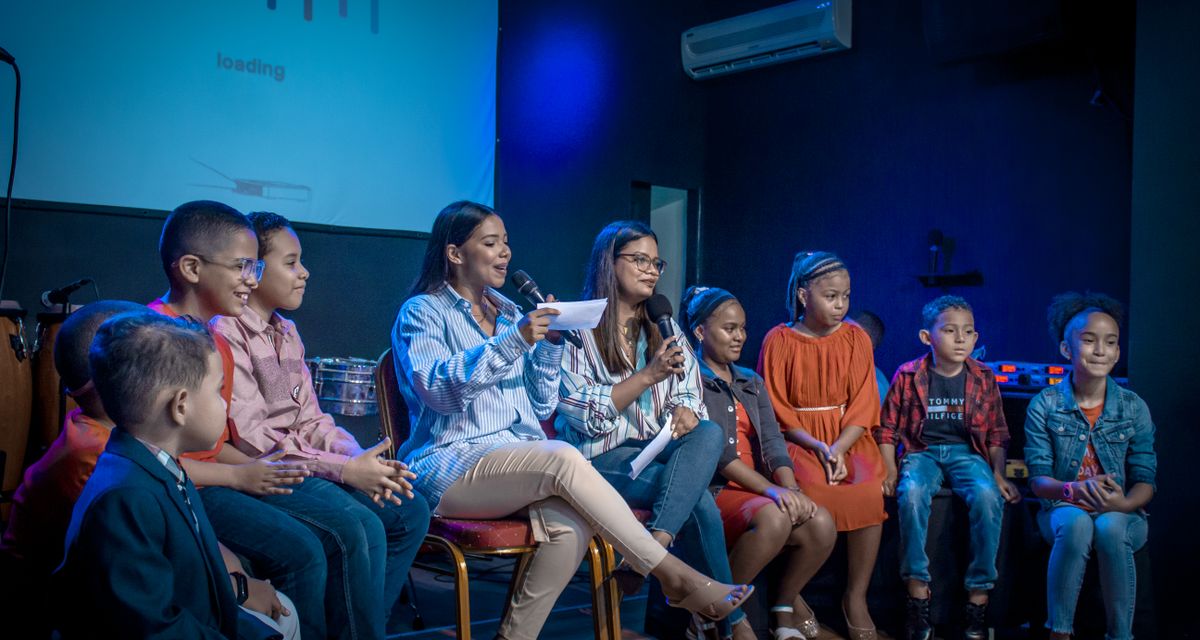
TED Speaker is for G9 to G12. Each student delivers a 6- to 8-minute TED-style talk in front of a real audience. It is a weekend activity on a rolling schedule. Unlike Open Mic, where students may stop whenever they like, every minute here has to be designed.
How a TED Speaker Talk Is Prepared
- Find an idea worth sharing: rather than picking a big topic, find a point the student truly has something to say about and that is valuable to others.
- Research: find evidence for the point, check the sources of any data, and learn what has already been said in the field.
- Structure the argument: decide where to begin, where to turn, and how to close, so the audience can follow the reasoning.
- Tell stories: ground abstract ideas in specific people and events. Most talks that fail are not wrong in their reasoning. They fail because they leave no image for the audience to remember.
- Stage delivery: pace, pauses, movement, and eye contact, and staying organized without a script.
- Rehearse repeatedly: revise the script and time it in round after round, until both the content and the timing are stable.
Is TED Speaker Suitable for Introverted Students
Yes, and they often gain the most. A TED-style talk depends on content and preparation, not on an outgoing personality. The program lets students move at their own pace. We suggest that students first speak at Open Mic a few times, so that being on stage feels ordinary, before starting full preparation for a talk.
What Students Take Away from TED Speaker
A complete video recording of the talk, a script refined through many drafts, and the experience of speaking to a real audience. The recording is a piece of work the student can keep for the long term, and it directly shows the quality of the student’s thinking and speaking.
Programs Related to TED Speaker
To practice interviewing and content production, see Podcast Creator and Newsroom. To apply speaking skills in competitions, see Speech & Debate Competitions.
TED Speaker and Future Skills Membership
TED Speaker is for Life Lab members. Every step is logged in the Human Skills record kept with our partner nonprofit, Project Next Foundation (PNF), and in high school points toward a formal Congressional Award application (age 13.5+).
Want to talk to a course advisor now?
Contact a course advisorTED Speaker: Frequently Asked Questions
Is this suitable for a quiet or introverted student?
Being introverted is not a barrier, but the program does end with a 6 to 8 minute talk in front of a live audience. A student who is unsure can start with Open Mic, where there is no script, no grading, and no obligation to finish, and move here afterward.
What goes into preparing a talk?
Four parts: research, argument, story, and stage presence. Students research the subject and build the case first, shape it into a story an audience can follow, and finally work on delivery and pacing on stage.
Where in Irvine do students give the talk?
Students deliver a 6 to 8 minute TED-style talk in front of a live audience at an in-person session in Irvine. It is a weekend activity on a rolling schedule and is open to Life Lab members only.
Which grade should an Irvine student join in?
G9 through G12. Students in G4 to G8 can build up through Podcast Creator, which starts from interviewing, scripting, and recording, and move into the speaking program in high school.
Does it help with a University of California application?
A finished talk can serve as source material for the activities section, and the work is logged in the Human Skills record kept with Project Next Foundation (PNF), which in high school points toward a Congressional Award application. When the topic sits on a question the student has followed for years, an Irvine applicant has a more consistent thread for the personal insight essays. Presentation is best planned with university planning.
