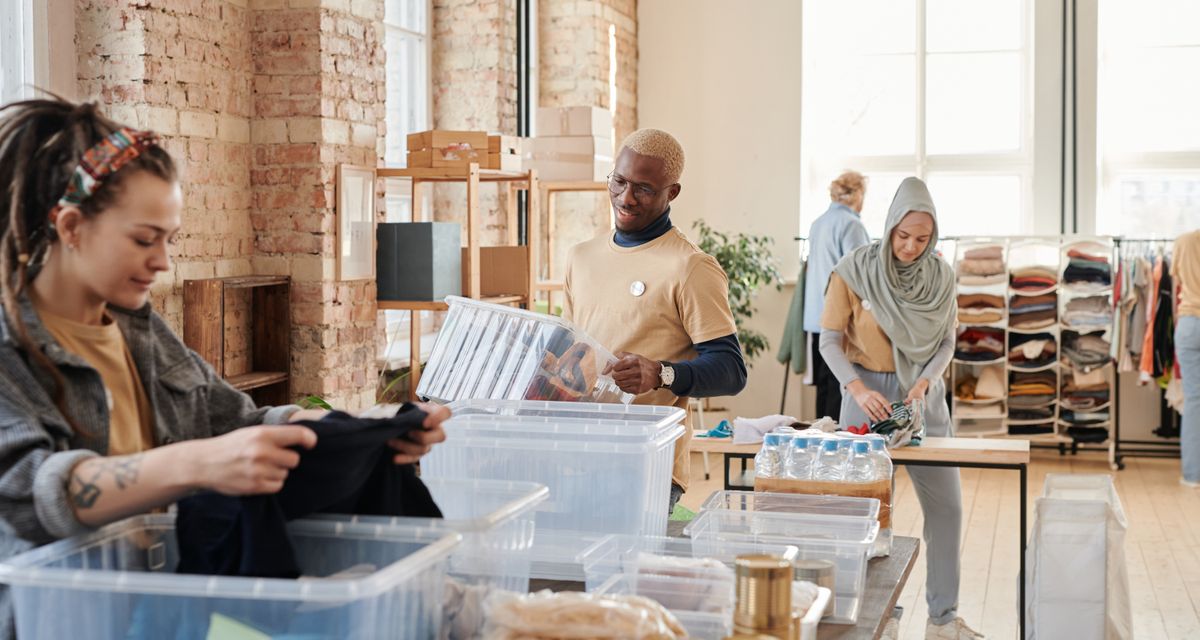
Irvine’s Chinese-American students often grow up in a homogeneous social circle. Many reach college or the workplace before they discover that they do not know how to connect with peers who are not Chinese-American. Our partner nonprofit, Project Next Foundation (PNF), gives members a platform to run themed activities with people from different cultural backgrounds in the community, in order to encourage communication and exchange. The program takes the form of organizing and preparing two large community service events a year, one in spring and one in fall.
Why Students in Cross-cultural Social Skills Organize Events Rather Than Simply Attend Them
A student who only attends an event still spends the time with familiar peers. Organizing an event is different. To get the work done, students must contact strangers, coordinate with people who work in different ways, and resolve disagreements as they arise. Real cross-cultural communication skills grow out of these concrete tasks, not out of a few lectures.
How One Cross-cultural Social Skills Event Is Prepared
- Set the theme and the beneficiaries: choose a topic based on what the community actually needs now, rather than starting from the format.
- Assign roles and set the schedule: publicity, supplies, on-site operations, and documentation each have a lead. Students claim their own roles and are accountable for the results.
- Outreach: communicate with community organizations, volunteers, and participants. This is the stage where students have the most contact with people from different cultural backgrounds.
- On-site execution: carry out the plan and handle situations the plan did not anticipate.
- Review: count attendance, assess the actual outcome, and record what to change next time.
What Students Take Away from Cross-cultural Social Skills
In addition to the activity entries in the growth report, students build a verifiable record of organizing experience: the role they held, the problems they solved, and how many people the event reached. In application materials, specific details like these are far more convincing than a line such as “took part in community service.”
How Cross-cultural Social Skills Fits with Other Programs
Students who want to strengthen their speaking at the same time can add Open Mic or TED Speaker. Students who want to practice leading a team and delivering results can continue with the Project Lead Challenge. For service combined with physical fitness, see WE GO! Outdoor Grit. Younger children start with the G1 to G3 interactive workshops in Life Lab Membership.
Cross-cultural Social Skills and Future Skills Membership
Cross-cultural Social Skills is for Life Lab members. Every step is logged in the Human Skills record kept with our partner nonprofit, Project Next Foundation (PNF), and in high school points toward a formal Congressional Award application (age 13.5+).
Want to talk to a course advisor now?
Contact a course advisorCross-cultural: Frequently Asked Questions
Does this help Irvine students who only mix with Chinese-American peers?
That is the problem the program was built around. Many Irvine students live in a homogeneous social circle and only meet peers from other backgrounds at college or at work. Project Next Foundation (PNF) builds a platform where members run themed activities with people from different cultural backgrounds in the community.
How many events does a member work on each year?
Two large community service events a year, one in spring and one in fall. Students take part in organizing and preparing the events rather than simply attending, which means working with participants from different backgrounds throughout the planning.
Does this fit an Irvine high school workload?
The two events fall in spring and in fall, and preparation is split across the team, so each student takes on a defined part. Irvine public high school students usually carry club and exam commitments at the same time, so it helps to settle roles at the start of the term.
Which grades is this for?
G5 through G12, and it is open to Life Lab members only. Younger children can start with the G1 to G3 exploratory workshops inside the membership and move into this program at G5. Every step a member takes is logged in the Human Skills record kept with Project Next Foundation (PNF).
How does this connect to a University of California application?
Organizing community service events becomes part of the growth report, and in high school the record points toward a formal Congressional Award application, which requires the student to be at least 13.5 years old. In a University of California personal insight essay, a concrete role and a problem solved reads stronger than general participation. How to present it is best planned with university planning.