
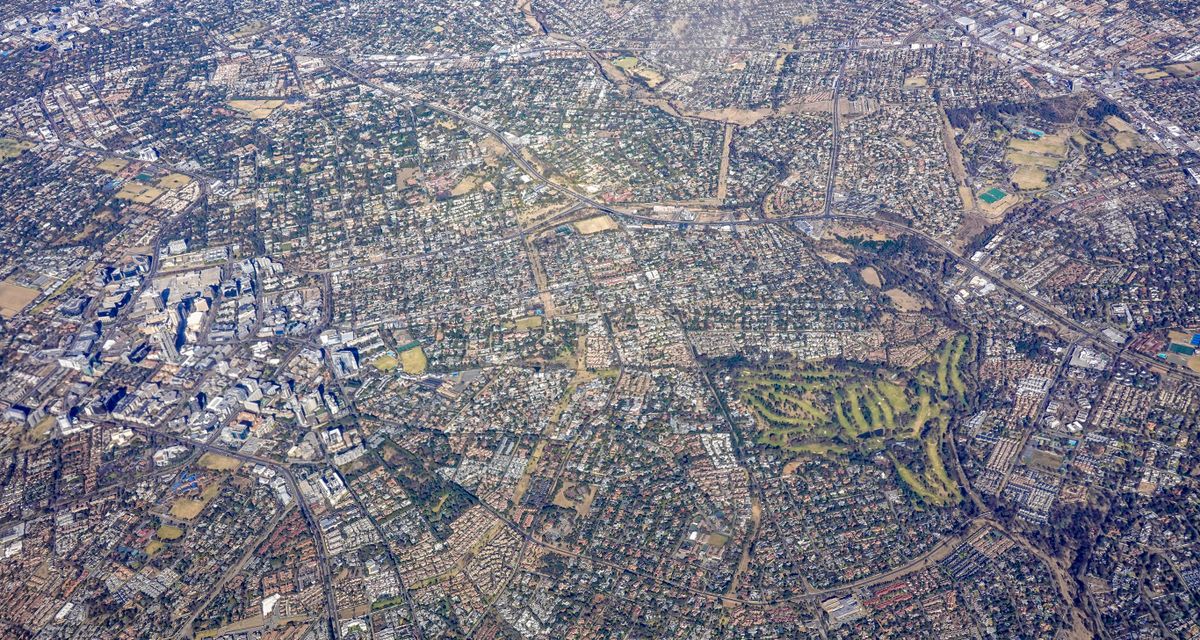
AP Human Geography is the first AP course that some Irvine Unified School District high schools allow students to take in grades 9 and 10. The course covers seven units: thinking geographically; population and migration patterns and processes; cultural patterns and processes; political patterns and processes; agriculture and rural land-use patterns and processes; cities and urban land-use patterns and processes; and industrial and economic development patterns and processes.
Why AP Human Geography Is Often a First AP
There are three reasons. It requires no prior subject knowledge, since the course builds from concepts. Its content relates to everyday life, so the entry barrier is lower than in science APs. The exam runs 2 hours 15 minutes, which is one of the shorter AP exams. For a grade 9 student, it is a chance to get used to the pace and scoring of an AP exam at a lower cost than a science AP.
AP Human Geography: An Easy Start Is Not an Easy Score
Multiple choice and free response each count for 50% of the exam. Free response has 3 questions: one with no stimulus, one with data or a map, and one with two stimuli. All of them require answers in subject terminology with examples. Students most often lose points in two ways. First, they explain a concept in everyday language instead of the terms the course defines. Second, when asked for an example, they give one that is not specific or does not match the concept. Apart from thinking geographically, the other six units each carry 12% to 17%, so the weights are close to even.
How EDUBUS Teaches AP Human Geography
The course moves unit by unit. Each concept is paired with one or two examples that can go straight into an answer, so students build their own bank of cases. Free response is trained by question type. Each task verb (identify, describe, explain, compare) calls for a different depth of answer, and this is where points are most directly gained and lost. In spring, the class moves to full timed practice exams.
AP Human Geography Course Planning
Before taking this course in grade 9, confirm whether the student’s high school allows it and whether it counts toward the weighted GPA. The grades at which each school opens AP courses, the entry requirements, and the weighting rules appear in the availability section below and in the Irvine Unified School District high school guide. Students whose writing is weak should take the high school writing seminar at the same time.
AP Human Geography Class Formats
6 to 8 student seminars with homework, 32 weeks, no spring break, ending before the AP exam; also 1-on-1, online or in person.
How to Start AP Human Geography at EDUBUS
Start with a placement assessment. We use it to set the level and class, then confirm the year plan with the family. For schedules, tuition, and bundle offers, request the 2026-27 program guide through the form below.
Want to talk to a course advisor now?
Contact a course advisorHow the AP Human Geography Exam Is Built
Sections drawn to their share of the score; the wider the block, the more practice it deserves.
| Section | Questions | Time | Weight |
|---|---|---|---|
| Multiple choice | 60 | 1 hr | 50% |
| Free response (text-only; data/image/map; two stimuli) | 3 | 1 hr 15 min | 50% |
AP Human Geography Units and Exam Weighting
Each ruler segment equals the unit’s midpoint exam weight. The yellow unit carries the most points and gets the most class time.
- 1Thinking Geographically8–10%
- 2Population and Migration Patterns and Processes12–17%
- 3Cultural Patterns and Processes12–17%
- 4Political Patterns and Processes12–17%
- 5Agriculture and Rural Land-Use Patterns and Processes12–17%
- 6Cities and Urban Land-Use Patterns and Processes12–17%
- 7Industrial and Economic Development Patterns and Processes12–17%
AP Human Geography Global Score Distribution 2026
Out of every 100 test takers.
AP Human Geography at Irvine Public High Schools
Whether each school offers it, which grades can enroll, the gate, and last year’s results. Updates with the school guides.
Irvine High School
Not offered · self-study exam possibleNorthwood High School
Not offered · self-study exam possiblePortola High School
University High School
Not offered · self-study exam possiblePrerequisitesNo matching course
Full school guide →IUSD Course-Selection Rules for AP Human Geography
Which grade can take this AP at each school, what the prerequisites are, and how weighted GPA is calculated. Confirm with the school's current course catalog before choosing.
- Irvine High School: Grade 9 may take AP World History, AP Computer Science Principles, and AP Computer Science A. AP Precalculus and AP Art History open in grade 10. AP Physics 1 is taken in grade 11 and the remaining AP science courses in grade 12; AP Psychology and AP Macroeconomics require enrollment in grade 11 or 12.
- Northwood High School: No AP courses are offered in grade 9. Grade 10 is limited to four: AP Art History, AP Computer Science Principles, AP Music Theory, and AP Precalculus, assigned as seats allow. The remaining AP courses are concentrated in grades 11 and 12, and most require a current teacher's signed recommendation on the course request form.
- Portola High School: Grade 10 has a single AP option, AP Human Geography, which the school calls the "grade 10 choice." The large majority of AP courses are for grades 11 and 12. AP Precalculus, AP Statistics, AP Computer Science Principles, and AP Computer Science A open from grade 10 subject to math prerequisites. Restricted to grade 12 are AP Physics C, AP English Language, AP United States Government together with Honors Political Economy, AP 3-D Design, and Honors Engineering Design and Development. Grade 9 students may not sit an AP exam at the school unless they have taken the course or the Irvine Unified School District GATE office approves it on the basis of existing preparation.
- University High School: No AP courses are offered in grade 9. From grade 10, students may take AP Precalculus, AP Computer Science Principles, AP Statistics, and AP Cybersecurity. AP United States History is offered in grade 10 on the condition that the student earned Honors Distinction in both semesters of World History. Most AP courses are concentrated in grades 11 and 12.
AP Human Geography: Frequently Asked Questions
Is this a good first AP for Irvine students?
Yes. The content is concrete and does not depend on math, and some Irvine Unified School District high schools open it to students in grades 9 and 10. Availability differs by campus; grade eligibility at each school appears in the Irvine public high schools section above.
Is grade 9 too early for Irvine students?
Writing ability matters more than grade level. Free response is 3 questions worth 50 percent of the exam and requires explaining phenomena with geographic concepts and comparing cases. Grade 9 students whose school English writing is already solid generally manage it.
What does the exam look like?
The exam runs 2 hours 15 minutes, one of the shorter AP exams. Multiple choice has 60 questions worth 50 percent; free response has 3 questions worth 50 percent: one text-only question, one with data, images, or maps, and one using two stimuli.
The content is easy — does that make a 5 easy for Irvine students?
No. In 2026, 66 percent scored 3 or higher and 19 percent scored 5. The concepts are approachable, but free response is scored point by point and requires precise terminology plus a concrete example. General answers earn little credit.
How are the units weighted?
Geographic thinking carries 8 to 10 percent. The other six units, population and migration, cultural patterns, political geography, agriculture and rural land use, cities and urban land use, and industry and economic development, each carry 12 to 17 percent. Class hours follow this distribution.