Physics · High school · UK

British Physics OlympiadBPhO

BPhO is the most authoritative physics competition in the UK system, built around problem solving rather than recall, and its certificates are well recognised by UK universities and international schools. For Irvine students applying to both UK (G5) and U.S. universities, a BPhO Gold serves both applications at once — and even as pure training, the Round 1 long questions are excellent practice in physics writing and derivation.

British Physics Olympiad (BPhO)
2026-27Latest season

Photo: Tannishq Giri / Pexels

  1. Registration opensTBA
  2. Registration deadlineTBA
  3. Contest datesOct 1 – Jan 212026
  4. ResultsTBA

Verified from the official site on September 20, 2026 · www.bpho.org.uk

Organizer
British Physics Olympiad (registered charity), based at the Department of Physics, University of Oxford
Eligibility
Round 0 and Round 1 are open to students in Year 13 and below (U.S. grade 12 and below), entered by a registered teacher on the official competition platform — students cannot enter themselves. International schools may sit Round 0 and Round 1 on slightly later dates; schools outside the UK and Europe register through the official partner ASEEDER/ASDAN. Round 2 is by invitation and restricted to students eligible for the UK team: attending a UK school and either a UK citizen or educated in the UK since Year 8 or earlier.
Format
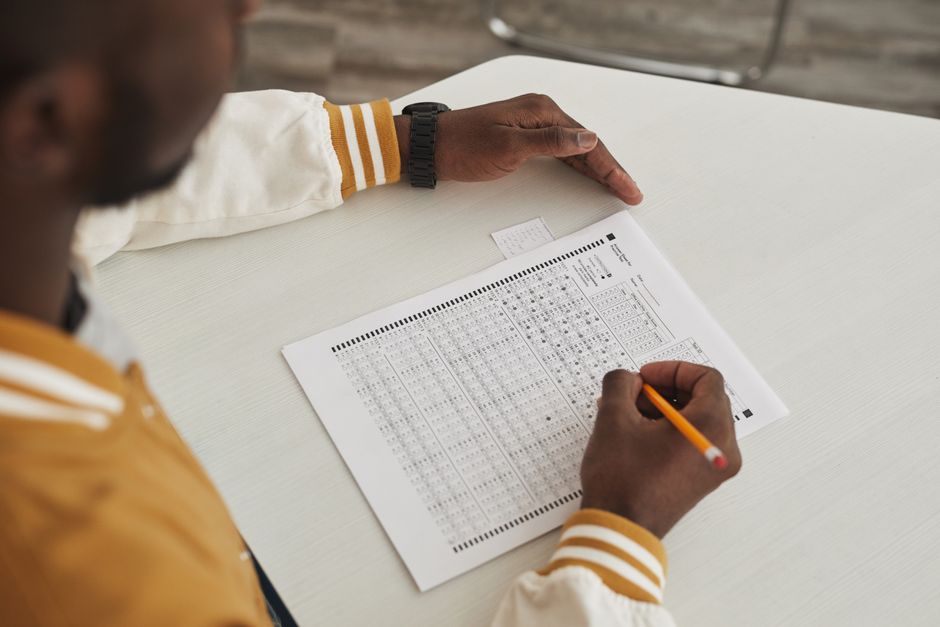
Round 0: a one-hour, 25-question multiple-choice paper, no calculator (the public-exam formula booklet is allowed), one mark per correct answer with no negative marking, drawn from Year 12 topics and excluding electric, magnetic and gravitational fields and particle physics. Round 1: two hours, with Section 1 short-answer questions (capped at 50 marks) and Section 2 requiring two of four 25-mark long questions; the two sections may be sat separately, and entry is by invitation from Round 0 results. Round 2: three hours and three to five much harder problems based on an extended A-level syllabus, by invitation only and limited to UK-team-eligible students. All papers are sat in school and scanned scripts are uploaded to BPhO for marking.
Contest dates
October 1, 2026 · November 12, 2026 · January 21, 2027
Fees
As published on the official site, Round 0 carries a whole-school entry fee of GBP 14 per school; Round 1 is GBP 18 per student, with 4 papers available free of charge to non-fee-paying schools in the United Kingdom; Round 2 and the rounds after it are free. International schools register through ASEEDER/ASDAN, and the fee is the one published by that partner.
Awards
Round 1 certificates are issued in approximately these numbers: about 150 Top Gold, 200 Gold, 400 Silver, 400 Bronze I, 400 Bronze II and 1000 Commendations, with book prizes generally going to Top Gold winners. In Round 2 gold, silver and bronze are each roughly a third of entrants. Combined Round 1 and Round 2 results select 14 students for the Easter training camp at Oxford, from which the UK team for the International Physics Olympiad is formed, with EuPhO attended when dates allow.

About the competition

BPhO is run by the British Physics Olympiad charity from the Department of Physics at Oxford, and its Round 1 paper has run since the 1980s as the backbone of UK selection for the IPhO.

Entries grew sharply in recent years — nearly 3,800 scripts arrived in November 2024 — so the organisers added Round 0 as a pre-selection: one hour, 25 multiple-choice questions, no calculator, ramping from mid A-level difficulty up to competition level, designed to let more students try while capping Round 1 at 1,500–2,000 papers.

Students invited from Round 0 sit Round 1 in November: two hours, with short-answer Section 1 and a choice of two of four long questions in Section 2. It rewards modeling and derivation rather than A-level recall — the organisers state plainly that an expected A* does not predict a top result, and team-level students typically score 70–80%.

Top Gold and selected Gold students are invited to the three-hour Round 2 in late January, which is limited to students eligible for the UK team. Marking is done by an experienced team at Oxford, with Round 1 results emailed to teachers by late December. For international-school students, BPhO offers a track parallel to F=ma/USAPhO that stays open to non-U.S. citizens well into its advanced papers.
How to prepare

  • Round 0 is multiple choice without a calculator, so train mental arithmetic and estimation separately; the official sample paper and the Isaac Science question bank are the organisers' own recommendations.
  • Answer Round 1 long questions as if writing for the marker: work in steps, name the laws used, and stay symbolic until the last line so most method marks survive a wrong final number.
  • The official past-paper database at papers.bpho.org.uk is sorted by question type and is more efficient than whole papers; two or three Section 2 questions a week with the official solutions works well.
  • Have a teacher register on the BPhO competition platform well in advance — students cannot enter themselves, last-minute registration often fails, and schools outside the UK and Europe normally go through ASEEDER/ASDAN.

Frequently Asked Questions

Can students in Irvine take the BPhO, and do they need UK citizenship?

Yes, and no citizenship is required. The official FAQ states that contestants in competitions up to and including Round 1 do not need to be UK citizens — they only need to meet each paper's year-group limit, and Round 0 and Round 1 are open to Year 13 and below, which is U.S. grade 12 and below. From Round 2 onward the competition becomes UK team selection and students not at UK schools cannot continue, so it is worth setting that expectation early.

How does a U.S. school register as a BPhO test center, and can students sign up themselves?

Students cannot enter themselves. A teacher at the school must register the school on the BPhO competition platform using a school email address — personal addresses are not accepted. The official FAQ says European schools should first email contact@bpho.org.uk, while schools outside the UK and Europe go through the partner ASEEDER. If an Irvine Unified school has not registered before, it is worth having the physics teacher email both routes early to confirm which applies.

What is the difference between BPhO Round 0 and Round 1, and where should a 10th grader start?

Round 0 is a one-hour, 25-question multiple-choice paper with no calculator and no negative marking, drawn from Year 12 topics and excluding electric, magnetic and gravitational fields and particle physics — the screening entry. Round 1 is two hours: Section 1 short answers capped at 50 marks, Section 2 two of four 25-mark long questions, entered by invitation from Round 0. A grade 10 student normally sits Round 0 first, then moves into written long-question practice for Round 1.

Can an Irvine student reach BPhO Round 2 or the UK team?

No. The official eligibility rule has two conditions that must both hold: attending a school inside the UK, and being either a UK citizen or having been educated mainly in the UK since Year 8 or earlier. Round 2 invitations go only to students who meet both. For students outside that pool, the realistic ceiling is the certificate level reached in Round 1, and the goal should be set there rather than at team selection.

Is a BPhO Gold hard to get, and how many are awarded?

The organisers publish approximate Round 1 certificate numbers: around 150 Top Gold, 200 Gold, 400 Silver, 400 Bronze I, 400 Bronze II and 1,000 Commendations, with book prizes generally going to Top Gold winners. That puts Gold and above at roughly 350 students. In Round 2 the picture is different — gold, silver and bronze are each about a third of entrants, but only because everyone in that room was invited on Round 1 performance.

How much does it cost an Irvine student to enter the BPhO?

The official prices are £14 per school for Round 0, £18 per student for Round 1 (with four free papers for UK non-fee-paying schools), and no charge for Round 2 and everything after it. International schools entering through ASEEDER or ASDAN pay whatever that partner publishes, which is normally higher than the direct BPhO price, so ask the partner for an itemized quote before committing.

What are the BPhO exam dates for 2026-27?

From the official calendar: Round 0 on 1 October 2026 (2 October for schools outside the UK); Round 1 on 12 November 2026, with 16 November for international schools and scanned scripts uploaded by 18 November; Round 2 on 21 January 2027; and the Oxford training and selection camp provisionally 5/6 to 10 April 2027. The upload deadline is firm — marking begins the following day — so schools should plan scanning time into the schedule.

Is the BPhO useful for an Irvine student's U.S. application, or only for UK universities?

Both, but differently. UK universities, including the G5, recognize BPhO certificates directly and read them as a clear plus for physics and engineering applicants. For U.S. admissions it is a less familiar name, so the value lies in having an international award at all, plus the fact that its long-question derivation practice transfers to USAPhO preparation. Students applying to the UK and the U.S. at the same time get the most out of one preparation effort.

Preparing for BPhO? Start with a 30-minute call

Share the grade and the goal. An Irvine-based course advisor reaches out within one business day with a first, actionable course and study plan. Direction first, courses later.

  • EDUBUS WeChat QR code, WeChat ID EDUBUSer
    Scan to reach a course advisor on WeChatHotline: (949) 383-4877WeChatEDUBUSerCopy the ID and add a course advisor in WeChat

We reply within one business day. Your details are used only for this consultation. By submitting you confirm you have read our privacy policy.