Physics · High school · UK

British Astronomy and Astrophysics OlympiadBAAO

BAAO is one of the few international-level competitions themed on astronomy and astrophysics that is built entirely on high school physics, which suits students drawn to space who have never taken a formal astronomy course. It shares BPhO's entry platform and calendar, so one preparation effort can yield results on two tracks — a distinctive differentiator for applicants to physics, astronomy or aerospace programs.

British Astronomy and Astrophysics Olympiad (BAAO)
2026-27Latest season

Photo: Yuting Gao / Pexels

  1. Registration opensTBA
  2. Registration deadlineTBA
  3. Contest datesNov 23 – Jan 262026
  4. ResultsTBA

Verified from the official site on September 20, 2026 · www.bpho.org.uk/baao

Organizer
British Physics Olympiad trust (BPhO), Department of Physics, University of Oxford
Eligibility
Aimed mainly at Years 12 and 13 (U.S. grades 11–12), though younger students may attempt it. Astro Round 1 is open to Year 13 and below, entered by a registered teacher on the official platform, and international schools may sit it at the same time as UK schools. Astro Round 2 is invitation-only (Top Gold in Astro Round 1 who are eligible for the UK team, or those already invited to BPhO Round 2), and the organisers state there is no paid entry route. The competition is syllabus-independent and assumes no specialist astronomy modules.
Format
The Astro Challenge (autumn, one hour) is an entry-level warm-up paper with a few observational-astronomy multiple-choice items. Astro Round 1 runs two hours: Section 1 is a bank of short questions capped at 40 marks, Section 2 offers four or five 20-mark long questions of which students choose two, one always on observational astronomy — the only place it is assessed — and the sections can be sat as two separate hours. Astro Round 2 is three hours of mixed astrophysics and physics problems, close to international level on a narrower syllabus, where an average around 25% is common. Core topics are celestial mechanics (circular and elliptical orbits), stellar evolution, black-body radiation and magnitudes (with logarithms), telescope optics, galactic physics and cosmology, and observational astronomy.
Contest dates
November 23, 2026 · November 27, 2026 · January 26, 2027
Fees
As published on the official site, Astro Round 1 is GBP 15 per student, with 4 papers available free of charge to non-fee-paying schools in the United Kingdom; Astro Round 2 is free and open to invited students only. Fees for the Astro Challenge and the Junior Astro Challenge appear on their own pages.
Awards
Certificates are awarded in every round, with book prizes when possible. Astro Round 2 boundaries are approximately 60%+ gold, 40%+ silver, 20%+ bronze and below 20% commendation. The strongest Astro Round 2 students — the top 14 — are invited to the Easter selection camp at Oxford, where an Astro Round 3 paper decides the five who represent the UK at the International Olympiad on Astronomy and Astrophysics (IOAA).

About the competition

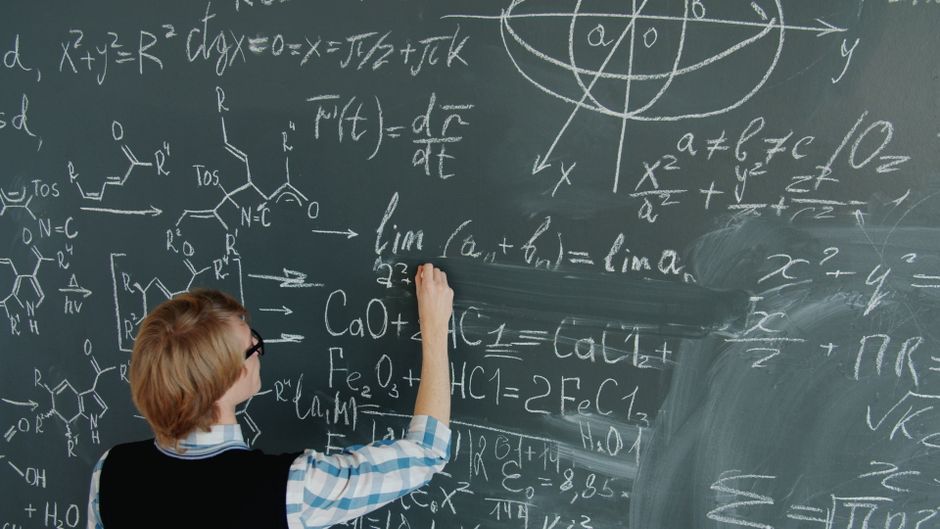
BAAO was created inside the BPhO trust in 2015 to select the UK team for the International Olympiad on Astronomy and Astrophysics. Its defining feature is that it does astronomy with physics: the organisers state that the competition is syllabus-independent and assumes no specialist astronomy modules, with any extra detail supplied in the question, so what is really tested is applying core physics at cosmic scale.

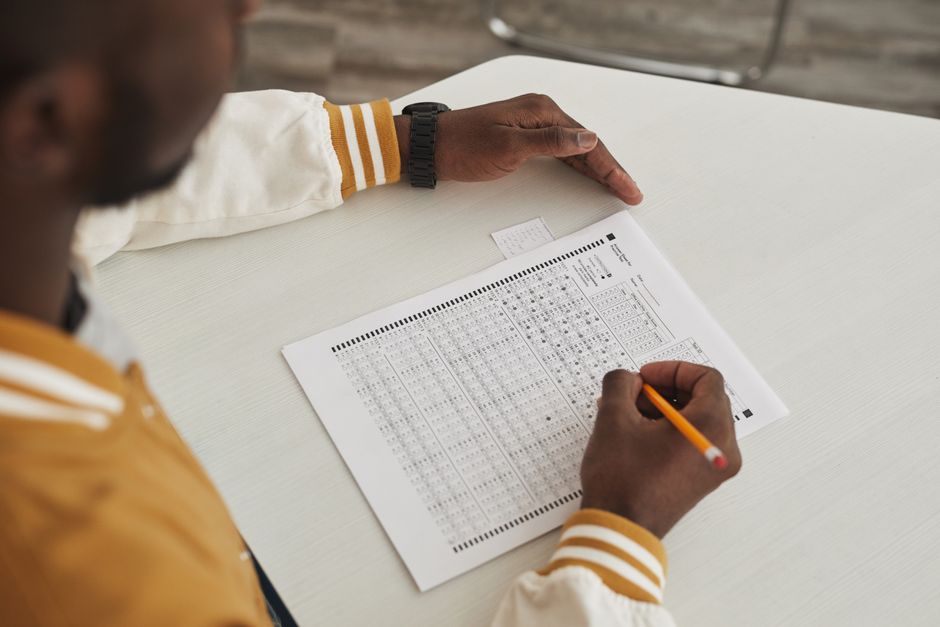
The season opens with a one-hour Astro Challenge in the autumn term; late November brings the two-hour Astro Round 1, where Section 1 is a bank of short questions capped at 40 marks and Section 2 asks for two of four or five 20-mark long questions, one of which is always observational astronomy.

Astro Round 2 in late January is three hours and sits close to international difficulty on a narrower syllabus, with average marks around 25%. Notably there are two routes into Round 2 — a Top Gold in Astro Round 1, or an existing invitation to BPhO Round 2 — so the physics and astro tracks feed each other. The top 14 then attend the Easter camp at Oxford, where an Astro Round 3 paper picks the five-student UK team.

Core topics are celestial mechanics, stellar evolution and magnitudes, telescope optics, galaxies and cosmology, and the official site publishes the syllabus with several self-study guides.
How to prepare

  • Start with the official BAAO syllabus and the two self-study guides (astrophysics and observational astronomy), drilling the astronomy-specific tools — magnitudes, distance modulus, logarithmic work — until they are automatic.
  • Section 2 always contains an observational astronomy question that many students skip, which makes it high-value: two focused weeks on the celestial sphere, diurnal motion and sidereal time pay off.
  • The organisers advise working through at least two or three past papers before checking solutions; the 10-mark items in past Astro Challenge papers are the best rehearsal for Round 1's short questions.
  • Enter BPhO Round 1 and BAAO Round 1 together: they share a platform and calendar, and a Top Gold in BPhO Round 1 is itself a ticket into Astro Round 2.

Frequently Asked Questions

Can students at Irvine's public high schools take the BAAO?

Yes. The official page states that international schools can sit Astro Round 1 at the same time as UK schools — 23 to 27 November for the 2026 cycle. Entry still goes through a teacher registering the school on the BPhO platform rather than students signing up themselves; if a school has not run it before, the physics teacher can email the organisers directly or register through the partner ASEEDER.

Does the BAAO require prior astronomy knowledge or telescope experience?

No. The organisers state the competition is syllabus-independent and that any specialist detail a question needs is given in the question itself; what it really tests is applying physics in astrophysical settings. Only one optional long question in Section 2 covers observational astronomy, and the official site publishes a dedicated self-study guide for it — a student who has never taken an astronomy course can prepare from scratch.

Can a student prepare for the BAAO and the BPhO in the same year?

Yes, and the organisers encourage it. The two share an entry platform and calendar — BPhO Round 1 on 12 November and BAAO Astro Round 1 on 23 to 27 November, a week or two apart. A student who has already finished AP Physics C saves real time on this overlap, since one preparation effort can produce results on both tracks at once.

How hard is BAAO Astro Round 1, and what counts as a good score?

The organisers describe it as a paper that can stump many A* candidates. Astro Round 1 runs two hours: Section 1 is a bank of short questions capped at 40 marks, and Section 2 offers four or five 20-mark long questions from which students pick two. BAAO does not publish a Round 1 cut score; the Astro Round 2 award boundaries listed on this page give a sense of the scale.

How much does the BAAO cost an Irvine student, and what grades can enter?

The official price for Astro Round 1 is £15 per student, with four free papers for UK non-fee-paying schools, and every subsequent round is free. On age, Astro Round 1 is open to Year 13 and below — U.S. grade 12 and below — and is aimed mainly at Years 12 and 13, equivalent to U.S. grades 11 and 12, though younger students may attempt it. International schools entering through ASEEDER or ASDAN pay that partner's published rate instead.

What is the ceiling for an Irvine student in the BAAO?

The ceiling is an Astro Round 1 certificate. Astro Round 2 is invitation-only for students eligible for the UK team, the organisers state plainly that there is no paid entry route, and the Oxford camp and UK IOAA team are further out of reach still. That said, an Astro Round 1 result is a genuine international competition credential to list, and it reads well for applicants to physics, astronomy or aerospace programs.

What are the key BAAO dates for the 2026-27 season?

From the official calendar: the Astro Challenge runs at a school-chosen time between September and December 2026; the Junior Astro Challenge from 30 October to 20 November; Astro Round 1 from 23 to 27 November, with scanned scripts uploaded by the end of 27 November; and Astro Round 2 on 26 January 2027. A student who wants to enter should confirm with the physics teacher early in the fall whether the school will register, rather than waiting until close to the deadline.

What materials do the organisers recommend for an Irvine student preparing for the BAAO?

Start with the official BAAO syllabus and the two self-study guides, one on astrophysics and one on observational astronomy, and drill the astronomy-specific tools — magnitudes, distance modulus, logarithmic work — until they are automatic. The organisers advise at least two or three full past papers before checking solutions, and the short items in past Astro Challenge papers are the best rehearsal for Round 1. EDUBUS is based in Irvine and runs small in-person classes alongside a synced online track, which is one option for working through these tools systematically.

Preparing for BAAO? Start with a 30-minute call

Share the grade and the goal. An Irvine-based course advisor reaches out within one business day with a first, actionable course and study plan. Direction first, courses later.

  • EDUBUS WeChat QR code, WeChat ID EDUBUSer
    Scan to reach a course advisor on WeChatHotline: (949) 383-4877WeChatEDUBUSerCopy the ID and add a course advisor in WeChat

We reply within one business day. Your details are used only for this consultation. By submitting you confirm you have read our privacy policy.