

Private schools admit more than a transcript; they admit a student and a family. Grades and test scores show how well the student has learned. Interviews, parent meetings, and Shadow Days, in which the applicant follows a current student through a day of classes, help the school judge two further questions: whether the student can learn and thrive at the school, and whether the family’s values align with those of the school.
Each School Handles Interviews Differently
Within a single admission season, the format of these conversations varies widely from school to school. The following arrangements are stated on the websites of several Orange County high schools (for fall 2027 entry):
Sage Hill School
Individual student interview
Applicants to grades 7 through 12 interview individually without parents; the interview usually lasts about one hour.
Servite High School
Student and parent on campus together
Every applicant must interview on campus with at least one parent; evening and Saturday time slots are available.
Rosary Academy
Applicant and family interview
Early application interviews take place December 7 to 10; students who complete early application receive an admission decision about one week after the interview.
Santa Margarita Catholic High School
Shadow Day
Shadow Day reservations open September 1; students follow a current student through a full day of classes.
JSerra Catholic High School
Shadow Day for 8th graders
Shadow Days are offered to students currently in 8th grade.
Before booking
Confirm four details first
Whether the interview is required, whether parents attend, whether it is online or on campus, and how long it takes.
The Student Interview: What Interviewers Want to Learn

Interviewers want to meet the real student
A student interview is usually a one-on-one conversation. It is more relaxed than an exam, but each question is designed to learn something specific. The student does not need perfect answers; the student needs to explain clearly what he or she has done and thought about.
- Answer with specific experiences rather than a list of strengths
- Listen carefully to each question and think before answering; there is no need to rush
- Prepare one or two questions the student genuinely wants to ask the school
Student interview questions generally fall into five categories. Behind each category, the interviewer wants to learn something specific:
Introducing yourself
“Please tell me about yourself.” “How would your friends describe you?”
Whether the student communicates clearly and naturally and understands himself or herself
Academics
“Which class is your favorite, and why?” “What have you read recently?”
Whether the interest in learning is genuine and the student can discuss specific content
Activities outside class
“What do you do in your free time?” “What difficulty have you faced, and how did you resolve it?”
Whether the student has committed to something, and how the student thinks and acts when facing difficulty
Choosing this school
“Why are you applying to our school?” “What would you like to join after enrolling?”
Whether the student truly understands the school and has pictured himself or herself there
The student's questions
“Do you have any questions for us?”
Whether the student has researched the school carefully and shows curiosity
The way to prepare is to answer with specific experiences. Preparing two or three real examples for each category is more effective, and sounds more natural, than memorizing complete answers:
Academics
I like science, and my grades have always been good.
In 7th grade, I ran an experiment testing the tap water at home. What I most wanted to understand was why the water quality differed at different times of day.
A specific experience gives the interviewer something to follow up on, and it is easier for the student to speak naturally.
Choosing this school
Your school is famous and academically strong.
I have competed in robotics, and I want to join the school's robotics team to continue working on automatic control projects.
Name specific courses or clubs at the school and connect them to your own experience.
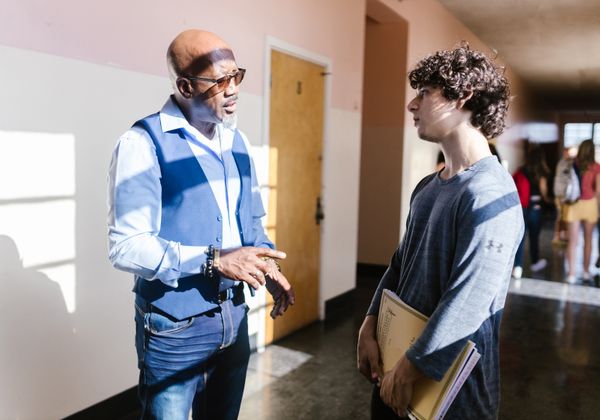
The Parent Meeting: What the School Wants to Learn

The school is also getting to know the family
Private schools value partnership between the family and the school. In the parent meeting, the school wants to know how the parents see their student, how they view education, and why they believe this school is right for their student.
What schools often ask
- What kind of person the student is: strengths, and areas where the student still needs support
- The family's educational values: how the family views learning, character, and growth
- Why the family chose this school: specific courses, programs, or school culture
- How the family can be involved: parent meetings, volunteer service, and school events
Key points for answering
- Describing honestly where the student needs support earns more trust from the school than describing only strengths
- Illustrate educational values with specific examples from the student's life rather than general statements
- Name specific programs from the school's website and explain how they relate to the student
- If English is not the parents' first language, prepare English versions of answers to several core questions in advance
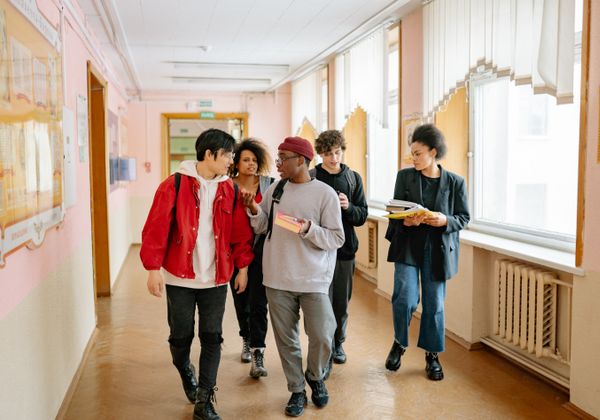
Shadow Days and Open Houses

- 1
The day before
Learn about the day's classes
Review the classes scheduled for that day and prepare one or two questions for current students.
- 2
That morning
Arrive on time
Arrive on time and dress according to the school's dress code.
- 3
During class
Participate normally
Take part in class discussion as usual; there is no need to try to stand out.
- 4
After returning home
Discuss impressions
Which class the student liked, how the student got along with classmates, and whether the student can picture spending four years there.
Impressions from the day are an important basis for comparing schools. When several schools schedule their Shadow Days in the same fall, it is best to write down impressions on the same day.
Common Problems in Preparation
Common problems
- Memorized answers: the student cannot continue once the interviewer asks a follow-up question
- Parents answering for the student: the school cannot see the student
- Too little knowledge of the school: the student cannot name specific courses or features
- Overstated experiences: exaggerated accounts do not hold up under follow-up questions
Better approaches
- Prepare real examples and practice answering follow-up questions naturally
- Parents do not interject during the student interview; in family meetings, each person answers his or her own part
- Reread the courses and mission statement on the school's website before the interview
- Describe experiences honestly and explain clearly what the student learned from them

Complete at least one mock interview before the real one
Ask a family member, teacher, or advisor to act as the interviewer, ask the questions in a realistic order, and then follow up on one or two of the student's answers. A mock interview is the best way to reveal signs of memorization and answers that lack specifics.
Preparation checklist for the week before the interview
Know the school
- Reread the school's website: curriculum, signature programs, clubs, and mission statement
- Prepare two or three questions for the school, ideally ones whose answers cannot be found on the website
Prepare content
- Prepare three to five specific experiences covering academics, activities outside class, and facing difficulty
- Complete a mock interview with a family member or teacher and practice answering follow-up questions
Confirm arrangements
- Confirm the time, location, and whether parents need to attend
- Confirm the dress code and whether any materials need to be brought