
Business & Economics · Middle school / High school · US

National Economics ChallengeNEC

NEC is the only nationwide high school economics team contest run by the Council for Economic Education, with affiliates in all fifty states, and admissions readers treat it as a genuine subject olympiad rather than a business camp. Because it tests micro, macro and current events together, it corroborates real depth behind an AP Economics score. For Irvine students aiming at business, economics or public policy, a state championship or a national semifinal berth is one of the strongest single lines on an activity list.

National Economics Challenge (NEC)
2025-26Latest season

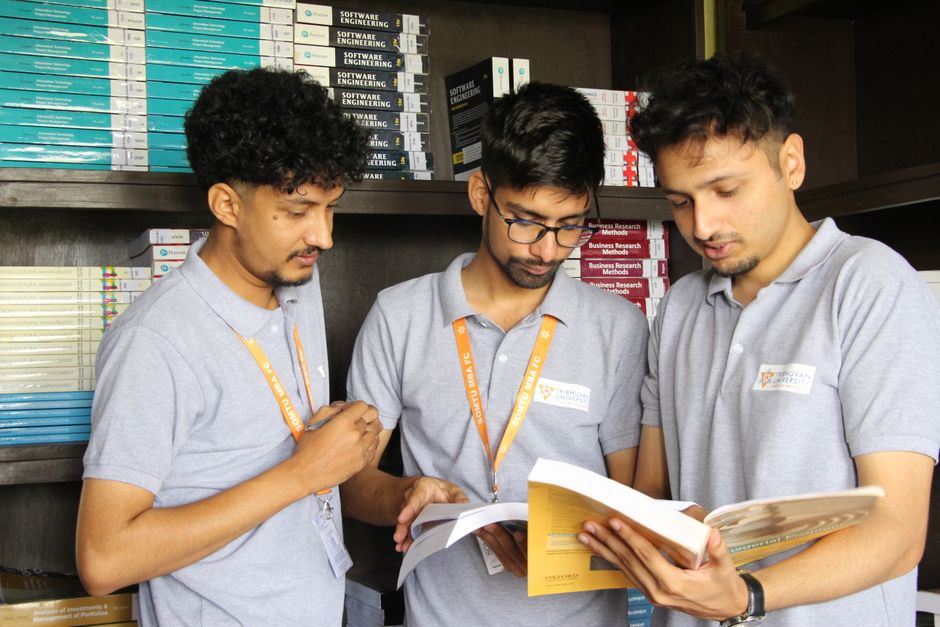
Photo: MBA Classroom / Pexels

  1. Registration opensJan 12026
  2. Registration deadlineApr 82026
  3. Contest datesApr 2 – May 292026
  4. ResultsTBA

Dates not yet published for this season; check the official site. · www.councilforeconed.org/national-economics-challenge

Organizer
Council for Economic Education (CEE)
Eligibility
U.S. high school students, entered in one of two divisions: the David Ricardo Division (first-time competitors who have taken no more than one general economics course) and the Adam Smith Division (AP, IB, honors or college-level economics students, plus any returning competitor). Teams have 3-4 students and must be registered, created and proctored by a teacher at their own school. California additionally runs a Middle School Division.
Format
The preliminary round is an online four-option multiple-choice exam: each student has 35 minutes, and every member of a team must finish within three hours of the first teammate starting. A team's score is the sum of its three highest individual scores, covering microeconomics, macroeconomics, international economics and current events. State champions advance to an online national semifinal of three consecutive rounds with no breaks, 45 questions in 45 minutes, with separate papers for each division. The top eight teams per division go to the in-person National Finals for a Critical Thinking Round, after which the leading teams play a Quiz Bowl buzzer round for the national title.
Contest dates
April 2, 2026 · April 6, 2026 · April 20, 2026 · May 28 – 29, 2026
Fees
The official site states that participation is free for teachers and students. For teams that reach the National Finals, CEE covers lodging and group meals for the team members and one coach; travel to and from the event is the family's responsibility.
Awards
At the National Finals each division receives trophies plus cash awards paid to every team member and the coach: $1,000 for first, $500 for second, $250 for third and $200 for fourth. Beyond that there are state champion titles, state-final placements, and score-based recognition from the online preliminary round.

About the competition

The National Economics Challenge, run by the Council for Economic Education, is the largest and longest-running high school economics team competition in the United States, drawing close to ten thousand students a year.

Entries are split into the David Ricardo Division for newcomers with little formal economics and the Adam Smith Division for AP, IB, honors and returning competitors, so both beginners and veterans have a fair lane. The pathway runs state round, online national semifinal, and in-person national final.

A teacher registers the school, builds teams of three or four, and proctors an online multiple-choice exam during an open window; a team scores the sum of its three best individual results. State champions sit a three-round online semifinal, and the top eight teams per division travel to the National Finals for a case-based Critical Thinking Round followed by a Quiz Bowl.

Content spans price theory and market structure, aggregate demand and supply, monetary and fiscal policy, trade and exchange rates, and the year’s economic news. California is administered by its state council, with autumn and spring testing windows and state finals typically hosted at Federal Reserve Bank of San Francisco locations, including the Los Angeles branch.


How to prepare

  • Treat the AP Micro and Macro textbooks as the floor, then add regular business-press reading; NEC's current-events questions reward using models to explain the news, not memorizing headlines.
  • Build the team with deliberately different strengths - one on macro and monetary policy, one on micro and game theory, one on trade and current events - because only the three best scores count.
  • The online round gives each student just 35 minutes for the full paper, so drill past papers against a timer until you average well under a minute per question without losing accuracy.
  • Once you reach the state final, switch to speaking practice: the Critical Thinking Round and Quiz Bowl reward fast verbal reasoning and whiteboard derivations, not more problem sets.

Frequently Asked Questions

NEC David Ricardo vs Adam Smith division - which one do we enter?

It is not a choice; the rules assign it. First-time competitors who have taken one general economics course or none enter the David Ricardo Division. Students in AP Micro or Macro, IB, honors, or two or more economics courses must enter the Adam Smith Division. Any student who has already competed at the state level or above moves to Adam Smith permanently, and no one may compete in David Ricardo for more than one year.

Can an Irvine student register for the NEC without a teacher?

No. A teacher at the student's own school must create the account, build the team and proctor the online round, so there is no individual registration path and outside programs cannot form the team. Portola High School in Irvine Unified already runs a National Economics Challenge club; if a student's own school doesn't have that resource yet, the practical first step is finding a teacher - economics, social studies or business - willing to be listed as coach and hold the login. Without one, the season is closed.

Can a middle schooler in Irvine compete in the NEC?

Yes. California runs a separate Middle School Division alongside the two high school divisions, and all California rounds are held online in real time. Registration usually opens around September 1, with one fall and one spring testing window each school year, and there is no cost to teachers or students. Check the California Council on Economic Education listing for the exact windows each year.

Is the NEC harder than AP Economics?

It is broader and much faster rather than deeper. The exam covers microeconomics, macroeconomics, international economics and current events, and each student gets only 35 minutes for the whole online multiple-choice round. AP Micro and Macro content carries most of the load, but the current-events questions ask students to explain the news with models, and international economics goes somewhat beyond the AP outline.

How many students are on an NEC team and how is the score calculated?

Teams have three or four students, and the team score is the sum of the three highest individual scores, so a fourth member is effectively a safety margin. Everyone on the team must finish their own 35-minute exam within three hours of the first teammate starting. It helps to divide preparation deliberately: one student on macro and monetary policy, one on micro, one on trade and current events.

Does the NEC cost an Irvine student anything, and who pays for nationals?

The official site states that participation is free for both teachers and students, with no entry fee. For teams that reach the in-person National Finals, the Council for Economic Education covers lodging and group meals for the competitors and one coach, while travel to the finals is the family's responsibility. State and earlier rounds are mostly online, so they add little cost.

How does a team advance in the NEC, and what happens at the National Finals?

The online preliminary determines state standings, and state champions move to an online national semifinal: three consecutive rounds with no breaks, 45 questions in 45 minutes, with separate papers per division. The top eight teams in each division travel to the in-person National Finals, where they first play a Critical Thinking Round of case analysis and presentation, and the leading teams then face a buzzer-style Quiz Bowl for the title.

How much does the NEC help an Irvine student's U.S. college applications?

It reads as a genuine academic subject competition rather than a business camp: run by the Council for Economic Education, covering all fifty states, with a tiered structure admissions readers recognize. A state title or a national berth is a strong line for economics, business or public policy applicants. Simply sitting the online preliminary without placing is better presented as honest evidence of interest.

Train for it with EDUBUSBusiness Competitions: NEC & Wharton InvestmentNEC intensives led by a gold-medal coach at EDUBUS's Irvine campus, plus Wharton Investment, FBLA, and DECA prep; several teams have reached the California finals.Learn More →

Preparing for NEC? Start with a 30-minute call

Share the grade and the goal. An Irvine-based course advisor reaches out within one business day with a first, actionable course and study plan. Direction first, courses later.

  • EDUBUS WeChat QR code, WeChat ID EDUBUSer
    Scan to reach a course advisor on WeChatHotline: (949) 383-4877WeChatEDUBUSerCopy the ID and add a course advisor in WeChat

We reply within one business day. Your details are used only for this consultation. By submitting you confirm you have read our privacy policy.