

In short: Duke University in Durham, North Carolina, enrolls 6,525 undergraduates. The Class of 2030 admit rate was about 4.7%, the SAT and ACT are optional for 2026-27, and Duke meets 100% of demonstrated need for every admitted student.
- Location
- Durham, NC 27708
- Founded
- 1838
- Acceptance Rate
- About 4.7% (Class of 2030: 61,935 applied, 2,930 admitted)
- Official Website
- www.duke.edu
Application timelineper school website
- Early Decision application, with the CSS Profile and FAFSADeadline
- Glimpse video for ED applicants (optional)Deadline
- First-quarter grades for ED applicantsDeadline
- ED decisions
- Regular Decision applicationDeadline
- RD CSS Profile and FAFSADeadline
- Midyear grades for RD applicantsDeadline
- RD decisions
Overview
Duke University is in Durham, North Carolina. Its predecessor, Trinity College, traces its roots to 1838, and it was expanded into Duke University in 1924. In fall 2025 Duke enrolled 6,525 undergraduates, with a 7:1 student-to-faculty ratio, a 96% six-year graduation rate, and a 97% first-year retention rate. The Class of 2030 comes from 49 US states and 62 other countries; 277 students are North Carolinians and 48 are from South Carolina, and California is among the states Duke expected to be most represented.
Two kinds of families tend to fit. In the first, the student has a sustained commitment in one area and also wants to explore across disciplines in college; more than 82% of Duke students complete a double major, a minor, or a certificate. In the second, the student has already settled on Duke as a first choice and can accept the binding commitment of Early Decision. For Irvine families, the first questions are whether to apply to Trinity or Pratt, the two undergraduate schools, and how Early Decision fits alongside the University of California; the last section of this page lays that out by grade.
Admissions data
- Regular Decision71%
- Early Decision and QuestBridge29%
Of the 847 admitted in December, 731 came through Early Decision and 116 through QuestBridge; Early Decision drew 6,159 applications.
- Trinity College of Arts & Sciences80%
- Pratt School of Engineering20%
Based on 1,428 and 358 expected first-year students.
The previous class profile is a useful reference. The Class of 2029 drew 58,712 applications; Duke admitted 2,855 students and 1,750 enrolled. The Early Decision admit rate was 12.6% and the Regular Decision rate 4.2%. Among enrolling students, 11% were international, 14% were first-generation college students, and 22% were Pell Grant eligible.
How to apply
Early Decision
ED- Deadline
- November 2
- Decisions
- Mid-December
- Binding; intended for students whose top choice is Duke
- No second binding program at the same time; other colleges through regular or early action are allowed
- Latest accepted tests: the November 7 SAT or the October 17 ACT
- First-quarter grades accepted through November 20
Regular Decision
RD- Deadline
- January 4
- Decisions
- Late March to early April
- December 5 SAT and December 12 ACT scores are accepted
- CSS Profile and FAFSA due February 1
- Midyear grades due February 15
- Glimpse video due January 11
Duke accepts the Common Application, and eligible students may also apply through QuestBridge. The application fee is $85, with waivers for qualifying students. Every applicant chooses either Trinity College of Arts & Sciences or the Pratt School of Engineering. Materials include the Common App personal essay, two required Duke short essays of up to 250 words each (“Why Duke” and “Communities”), one optional essay chosen from three prompts, the counselor’s Secondary School Report and recommendation, recommendations from two teachers in major academic subjects, and the transcript. Optional components are the Glimpse video, an arts supplement, and a personal recommendation. The arts supplement covers cinematic arts, dance, music, photography, theater, and visual arts, and is meant for work that reflects advanced training, public performance, original creative work, or state or national awards.
Duke is test-optional for first-year and transfer applicants in the 2026-27 cycle, and applying without scores carries no disadvantage. Students who submit may self-report scores; official score reports are required only from students who enroll. Students who apply without scores remain eligible for Duke’s merit scholarships, although Air Force, Army, and Navy ROTC scholarship programs require the SAT or ACT. Applicants whose first language is not English are encouraged, but not required, to submit an English proficiency test.
Alumni interviews are optional. The admissions office prioritizes them for applicants where more information would help, and not being offered one does not affect the chance of admission. Duke is need-blind for US citizens, permanent residents, and undocumented and DACA students, meaning an aid application never affects the admission decision. Aid for international students is limited, as described in the next section.
Cost and financial aid
- Tuition$73,740
- Fees$3,019
- Housing (double)$11,560
- Food$10,469
North and South Carolina residents: aid by family income
- $65,000 or lessTuition $0Full tuition grant plus help with housing, meals, and some course materials, without loans
- $65,000 to $150,000Tuition $0Full tuition grant
- Above $150,000Assessed on demonstrated need
Aid is need-based, and Duke meets 100% of each admitted student’s demonstrated need for eight semesters. The admissions office reports that 50% of undergraduates receive aid and 75% graduate debt-free, and the average grant offer to aid applicants in 2024-25 was about $68,000. Duke’s packages do include a loan component set by income: in 2025-26 it was $0 for families under $65,000 and $5,000 above $85,000. Early Decision applicants should file the CSS Profile and FAFSA with the application; the admissions checklist lists November 2 and the financial aid office lists November 3, so the earlier date is the safer target. International students can receive aid only if they indicated financial aid interest when applying, and Duke expects to enroll 20 to 25 international students each year whose full demonstrated need is met. International students admitted without aid interest cannot apply for aid in any later year.
Schools and fields of study
Duke University has 10 schools and colleges, but undergraduates enter through only two of them: Trinity College of Arts & Sciences and the Pratt School of Engineering. The law, medical, and Fuqua business schools are graduate and professional schools. Trinity offers 49 undergraduate majors, and Pratt offers six engineering majors (one of them a design-your-own interdisciplinary major) plus four engineering minors. Duke lists Computer Science, Economics, and Biology as its most popular undergraduate majors.
6fieldsEngineering (Pratt)Show all
- Biomedical Engineering
- Civil Engineering
- Electrical & Computer Engineering
- Environmental Engineering
- Mechanical Engineering
- IDEAS: Interdisciplinary Engineering & Applied Science
12fieldsNatural sciences and mathematicsShow all
- Biology
- Biophysics
- Chemistry
- Computer Science
- Earth & Climate Sciences
- Environmental Sciences
- Evolutionary Anthropology
- Marine Science & Conservation
- Mathematics
- Neuroscience
- Physics
- Statistical Science
11fieldsSocial sciencesShow all
- Cultural Anthropology
- Economics
- Environmental Sciences & Policy
- Gender, Sexuality, and Feminist Studies
- Global Health (co-major)
- International Comparative Studies
- Linguistics
- Political Science
- Psychology
- Public Policy Studies
- Sociology
24fieldsHumanities and artsShow all
- African & African American Studies
- Art History
- Asian & Middle Eastern Studies
- Brazilian & Global Portuguese
- Classical Languages
- Classical Civilization
- Dance
- English
- French & Francophone Studies
- German
- Global Cultural Studies
- History
- Italian & European Studies
- Medieval & Renaissance Studies
- Music
- Philosophy
- Religious Studies
- Romance Studies
- Russian
- Slavic & Eurasian Studies
- Spanish, Latin American & Latino/a Studies
- Theater Studies
- Visual Arts
- Visual & Media Studies
2fieldsInterdisciplinary and self-designedShow all
- Interdepartmental Major
- Program II
Trinity students who entered in fall 2025 or later follow the new Arts & Sciences Curriculum. In the first year, every student completes a First-Year Experience through Constellations or the FOCUS program: three interconnected courses on one theme, spanning several disciplines and taken with other first-year students in the same program. After that, students take two courses in each of six liberal arts categories (Creating and Engaging with Art; Humanistic Inquiry; Interpreting Institutions, Justice, and Power; Investigating the Natural World; Quantitative and Computational Reasoning; Social and Behavioral Analysis), three writing courses, and a language requirement. Trinity students may declare a major once they finish the first year and must do so by the fourth semester. They may complete one or two majors, with no more than three majors, minors, and certificates combined.
Pratt students declare a major in the summer after the first year, and each department-based engineering major is ABET accredited. Biomedical Engineering can be paired in a double major with civil, environmental, electrical and computer, or mechanical engineering, or with computer science, and Electrical & Computer Engineering students can add minors in machine learning and artificial intelligence or software engineering. Computer Science sits in Trinity, not Pratt, and an Irvine student interested in computing should be clear on that before choosing a school. At Duke, 54% of undergraduates study away from campus at some point.
Campus life
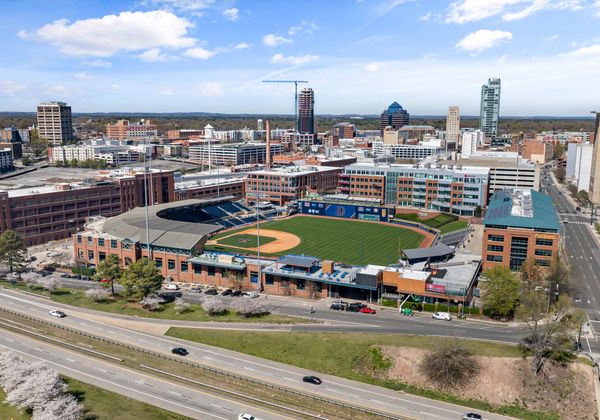


All first-year students live on East Campus, mostly in double rooms with a limited number of singles, and roommates are assigned randomly using lifestyle preferences from the housing application. Under QuadEx, Duke’s residential model, each East Campus residence hall is linked to one of seven West Campus Quads, so every student belongs to a Quad from the first day, and sophomores are required to live in their assigned Quad. Duke requires undergraduates to live on campus for three years. The Class of 2030 moved in on August 15, 2026.
A timeline for Irvine families
The five Irvine Unified high schools differ in when AP courses open, how weighting works, and how the math sequence accelerates, and those four years of scheduling shape the depth of an application. School-by-school rules are in the IUSD high school guides.
- Grade 9Set the path, find a direction
- Settle the math and science sequence
- Protect core grades
- Choose one or two activities that can run four years
- Grade 10Turn activities into results
- Take the first AP courses the school allows
- Produce competition results, performances, or work
- Students in the arts start building a portfolio
- Grade 11Test and choose a school
- SAT or ACT: first sitting in spring, second before summer ends
- Decide between Trinity and Pratt
- Choose two recommending teachers in major subjects
- Fall of grade 12Decide on ED
- ED: application and aid forms by November 2
- File the UC application in the same window
- Otherwise Regular Decision by January 4
Dates and registration deadlines are on the 2026-27 test calendar, and preparation options are on the SAT page.
How EDUBUS helps
EDUBUS college planning runs year by year from grade 9: a four-year course plan built around the rules of each Irvine high school, a testing schedule, a clear activities direction with results a reader can see, and in grade 12 a counselor review of every application component and Duke’s supplemental essays. Choosing between Trinity and Pratt, deciding on Early Decision, and preparing the CSS Profile and FAFSA are all part of the service. To see where a student stands relative to schools like Duke, start with a free assessment.
Frequently Asked Questions
Do students at Irvine high schools have to submit the SAT or ACT to Duke?
No. Duke is test-optional for first-year and transfer applicants in the 2026-27 cycle, and applicants who apply without scores are not at a disadvantage. Scores may be self-reported; official scores are required only from students who enroll. For reference, admitted students in the Class of 2029 who reported testing had a middle-50% SAT range of 1520 to 1570 and an ACT range of 34 to 36.
Is Duke Early Decision binding, and can I still apply to the University of California?
ED is binding and intended for students whose top choice is Duke. Duke's rule is that an applicant cannot apply to more than one binding program at the same time, but may apply to other colleges through regular or early action programs. The UC system has no early round, so submitting Duke ED on November 2 does not affect a UC application filed in the same season.
Can a California family qualify for Duke's tuition-free program?
Not directly. Duke's income-based tuition grants apply only to residents of North Carolina and South Carolina: families with total income of $150,000 or less receive full tuition grants, and families at $65,000 or less also receive help with housing, meals, and course materials without loans. Families from Irvine and other states are assessed on demonstrated need; Duke is need-blind for US citizens and permanent residents and meets 100% of demonstrated need for every admitted student.
Irvine parents ask: is a Duke alumni interview required?
No. Alumni interviews are optional, the admissions office prioritizes them for applicants where more information would help, and not being offered an interview does not affect the chance of admission. Students at US high schools may also submit an optional 60- to 90-second Glimpse video, due November 9 for ED and January 11 for RD.
What was the admit rate for Duke's Class of 2030?
About 4.7%. Duke received 61,935 applications and admitted 2,930 students: 847 through Early Decision and QuestBridge in December and 2,083 through Regular Decision. In August 2026 Duke expected 1,786 first-year students to enroll, 1,428 in Trinity College of Arts & Sciences and 358 in the Pratt School of Engineering.
An Irvine student wants to study computer science. Should they apply to Trinity or Pratt?
Every Duke applicant chooses one of the two undergraduate schools. Computer Science is a major in Trinity College of Arts & Sciences. The Pratt School of Engineering offers six engineering majors, including Electrical & Computer Engineering, which leans toward hardware and systems. A student should decide whether the interest is software or engineering before choosing a school.
Sources
Pages checked (26)
- admissions.duke.edu/apply/
- admissions.duke.edu/checklist/
- admissions.duke.edu/resources/
- admissions.duke.edu/
- admissions.duke.edu/financial-support/
- admissions.duke.edu/wp-content/uploads/2025/12/2029ClassProfile.pdf
- today.duke.edu/2025/12/duke-announces-first-members-class-2030
- today.duke.edu/2026/03/duke-welcomes-newest-members-class-2030
- today.duke.edu/2026/08/class-2030-arrives
- ir.provost.duke.edu/sites/default/files/Duke-2025-26-Factbook-FINAL.pdf
- facts.duke.edu/
- financialaid.duke.edu/
- financialaid.duke.edu/how-aid-calculated/cost-attendance/
- financialaid.duke.edu/apply-aid/
- financialaid.duke.edu/initiative-students-carolinas/
- financialaid.duke.edu/forms-resources/awarding-policy/
- financialaid.duke.edu/international-students/
- trinity.duke.edu/undergraduate/majors-minors
- trinity.duke.edu/curriculum
- trinity.duke.edu/first-year-experience
- trinity.duke.edu/undergraduate/majors-minors/4-things-to-know
- trinity.duke.edu/undergraduate/academic-policies/change-major-minor-certificate
- pratt.duke.edu/academics/undergrad/majors-minors/
- students.duke.edu/living/housing/first-year-housing/
- students.duke.edu/living/housing/quadex/
- www.usnews.com/best-colleges/rankings/national-universities