

In short: Columbia University in New York City, founded in 1754, enrolls 6,872 undergraduates. The Class of 2030 admit rate was about 4.2%, testing is optional in 2026-27 and required from 2027-28, and families earning under $150,000 pay no tuition.
- Location
- Hamilton Hall, 1130 Amsterdam Avenue, New York, NY 10027
- Founded
- 1754
- Acceptance Rate
- About 4.2% (Class of 2030: 61,031 applied, 2,585 admitted)
- Official Website
- www.columbia.edu
Application timelineper school website
- Early Decision and QuestBridge National College Match applicationsDeadline
- Early Decision financial aid applicationDeadline
- ED applicants who opt in report SAT or ACT scores on the status portalDeadline
- ED admission and financial aid decisions
- Regular Decision applicationDeadline
- Regular Decision financial aid applicationDeadline
- RD admission and financial aid decisions
- RD admitted students replyDeadline
Overview
Columbia University sits in Morningside Heights in Manhattan, New York City. It was founded in 1754 as King’s College. Undergraduates enroll in one of two schools, Columbia College (liberal arts) or Columbia Engineering, which together counted 6,872 degree-seeking undergraduates in fall 2025. The undergraduate student-to-faculty ratio is 6:1, the six-year graduation rate is 96%, and 98% of first-year students return for a second year. Of the 1,678 first-year students in the Class of 2030, 17% are international, from 83 countries.
Three kinds of families tend to fit. In the first, the student enjoys reading, writing, and discussion and wants to spend the first two years in a shared curriculum of primary texts. In the second, the student wants a large city at the doorstep, with internships and research within reach of campus. In the third, cost is a deciding factor: families earning under $150,000 pay no tuition. For Irvine families, the first questions are which testing policy applies to the student’s application year and whether the student is ready to spend a binding Early Decision on Columbia; the last section of this page lays that out by grade.
Admissions data
- Mid-Atlantic33%
- West22%
- South21%
- Midwest13%
- New England9%
- DC and territories2%
By home address, US students only, from 49 states. International students are a further 17% of the class.
- Social sciences29%
- Math and natural sciences26%
- Engineering24%
- Arts and humanities21%
- Undecided1%
Self-reported on the application; figures differ from the Common Data Set.
Among enrolling students, 21% are the first in their family to attend college and 23% receive the federal Pell Grant, which goes to students with the highest financial need. From schools that report rank, 96% were in the top 10% of their class. Columbia was test-optional for this class; among enrolling students who submitted scores, the middle 50% was 1510-1560 on the SAT and 34-36 on the ACT.
How to apply
Early Decision
ED- Deadline
- November 1
- Decisions
- Mid-December
- Binding: an admitted student must enroll and withdraw all other applications
- Release is granted only for financial reasons after consultation with the financial aid office
- Outcomes are admit, defer, or deny; deferred applicants hear by April 1
- Financial aid application due November 15; admitted students receive an aid estimate with the decision
Regular Decision
RD- Deadline
- January 1
- Decisions
- Late March
- Admitted students reply by May 1
- Financial aid application due February 15
- February SAT or ACT dates are the latest accepted
- Applicants opting in report scores by January 15
Columbia accepts the Common Application or the Coalition Application on Scoir, and QuestBridge Finalists may apply through QuestBridge. The application fee is $85, with an automatic waiver available through the application for families facing financial burden. Materials include the personal essay, the Columbia-specific questions (one list question of up to 100 words and six short answers of up to 150 words each), a secondary school report with transcript and counselor recommendation, two recommendations from teachers of academic subjects, and the midyear report. Applicants choose either Columbia College or Columbia Engineering, and for Engineering one teacher recommendation must come from a math or science teacher.
Testing policy comes in two stages. The 2026-27 cycle, for fall 2027 entry, is fully test-optional: applicants answer yes or no to having scores considered, a yes cannot be withdrawn after submission, and applicants who do not submit are not disadvantaged. Starting in August 2027, with the 2027-28 cycle, Columbia College and Columbia Engineering again require the SAT or ACT, and applicants facing financial hardship, lack of access to test sites, or similar obstacles may request a waiver. Under both policies Columbia superscores, taking the highest section scores across sittings.
Interviews are not part of the process; Columbia’s site refers to its announcement of May 18, 2023. Admission is need-blind for US citizens, eligible non-citizens, and undocumented students, meaning an aid application does not affect the decision. International students who apply for aid are reviewed in a need-aware process, and even strong international candidates applying for aid may be deferred from Early Decision to Regular Decision so the committee can see the full global pool.
Cost and financial aid
- Tuition$72,800
- Fees$4,160
- Housing$12,522
- Food$7,128
What a family actually pays, by income
- Under $66,000$0Expected parent contribution is zero
- $66,000 to $150,000Tuition $0Attend tuition-free
- Above $150,000Assessed case by case
Aid is need-based only; Columbia offers no academic, athletic, or talent-based scholarships. Packages combine grants and work-study with no loans, and Columbia meets 100% of demonstrated need for all four years. Grant recipients in the Class of 2030 received an average of $82,095, and 71% of them attend tuition-free. First-year students from low-income families also receive a $2,000 start-up grant. US students apply with the FAFSA (the federal aid form), the CSS Profile (the College Board’s form for institutional aid), and tax documents uploaded through IDOC; international students submit the CSS Profile and IDOC documents.
Schools and fields of study
Columbia University has 17 graduate and professional schools, but an undergraduate applies to one of two schools. Columbia College offers more than 80 areas of study across 58 academic departments. Columbia Engineering, formally The Fu Foundation School of Engineering and Applied Science and founded in 1864, offers the engineering and applied science majors. Students in both schools declare a major in sophomore year and are then matched with a faculty adviser in the department. Undergraduates may generally take up to four courses toward the degree in most of Columbia’s graduate and professional schools, with the exception of the Law School and the Medical Center.
16fieldsEngineering and applied science (Columbia Engineering)Show all
- Applied Mathematics
- Applied Physics
- Biomedical Engineering
- Chemical Engineering
- Civil Engineering
- Computer Engineering
- Computer Science
- Decision Science and Data Analytics
- Earth and Environmental Engineering
- Electrical Engineering
- Industrial Engineering
- Materials Science
- Mechanical Engineering
- Mining Engineering
- Operations Research
- Quantitative Finance and Financial Technology
26fieldsNatural sciences, math, and computingShow all
- Mathematics
- Applied Mathematics
- Statistics
- Mathematics-Statistics
- Computer Science
- Computer Science-Mathematics
- Data Science
- Information Science
- Physics
- Astronomy
- Astrophysics
- Chemistry
- Chemical Physics
- Biochemistry
- Biology
- Biophysics
- Computational Biology
- Neuroscience and Behavior
- Environmental Biology
- Evolutionary Biology of the Human Species
- Environmental Chemistry
- Environmental Science
- Earth Science
- Climate System Science
- Climate and Sustainability
- Sustainable Development
18fieldsSocial sciencesShow all
- Economics
- Financial Economics
- Economics-Mathematics
- Economics-Philosophy
- Economics-Political Science
- Economics-Statistics
- Political Science
- Political Science-Statistics
- Psychology
- Cognitive Science
- Sociology
- Anthropology
- Archaeology
- Linguistics
- Global Affairs and Public Policy
- Human Rights
- Urban Studies
- Education Studies
19fieldsHumanities and artsShow all
- English
- Creative Writing
- Comparative Literature and Society
- History
- Philosophy
- Religion
- Classics
- Classics: Greek
- Classics: Latin
- Art History
- Art History and Visual Arts
- Visual Arts
- Architecture
- History and Theory of Architecture
- Music
- Dance
- Drama and Theatre Arts
- Film and Media Studies
- Medical Humanities
16fieldsRegional, language, and ethnic studiesShow all
- African American Studies
- American Studies
- East Asian Studies
- Ethnicity and Race Studies
- French and Francophone Studies
- German Literature and Cultural History
- Hispanic Studies
- Italian
- Latin American and Caribbean Studies
- Middle Eastern, South Asian and African Studies
- Regional Studies
- Russian Language and Culture
- Russian Literature and Culture
- Slavic Studies
- Women's, Gender and Sexuality Studies
- Yiddish Studies
The defining element of Columbia College is the Core Curriculum, in place for more than 100 years, in which every student reads a common syllabus. It includes Literature Humanities, Contemporary Civilization, Art Humanities, Music Humanities, Frontiers of Science, and University Writing, plus requirements in the Global Core, a foreign language, science, and physical education. Core classes are discussion seminars capped at 25 students, and 74% of undergraduate classes at Columbia have 24 or fewer students.
Engineering students take roughly half of the College’s Core requirements alongside a technical core of The Art of Engineering, calculus, chemistry, computer science, and physics; The Art of Engineering is a hands-on first-year design course. Columbia College also offers special programs in Business Management, Public Health, and Urban Education, and accelerated options including a BA/MA with the Graduate School of Arts and Sciences, a five-year program with the School of International and Public Affairs, MS Express with Columbia Engineering, and a 4+1 MPH. Columbia Engineering offers an integrated BS/MS in Biomedical, Electrical, and Mechanical Engineering. There are more than 100 study abroad programs, and financial aid travels with the student during the academic year.
Campus life

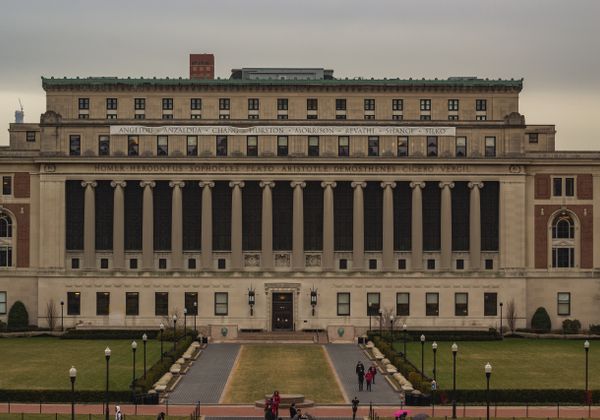

Columbia guarantees undergraduate housing for all four years. First-year students are required to live on campus, and nearly all undergraduates stay on campus through graduation. There are more than 35 undergraduate residence halls, from corridor-style to apartment-style. First-year students live in five halls: Carman, Furnald, John Jay, Wallach, and Wien. Students can join more than 500 clubs, organizations, and teams, and Columbia fields 32 NCAA Division I teams. Barnard College, a women’s liberal arts college, sits across Broadway, and Barnard and Columbia College students may take department-level classes with either faculty.
A timeline for Irvine families
The five Irvine Unified high schools differ in when AP courses open, how weighting works, and how the math sequence accelerates, and whether an Engineering applicant reaches calculus before senior year depends on where grade 9 starts. School-by-school rules are in the IUSD high school guides.
- Grade 9Set the path, protect grades
- Plan a math sequence that reaches calculus by grade 12
- Choose one world language to continue for three to four years
- Carry five academic courses each term
- Grade 10First AP courses
- Take the first AP courses the school allows
- Keep a record of reading outside class for the list question
- Consider an academic summer program or research
- Grade 11Finish testing
- SAT or ACT required from the 2027-28 cycle
- First sitting in spring, second before summer ends
- Choose two recommending teachers, including math or science for Engineering
- Fall of grade 12Decide on ED
- ED: application by November 1, aid materials by November 15
- File the UC application in the same window
- Otherwise Regular Decision by January 1
Dates and registration deadlines are on the 2026-27 test calendar, and preparation options are on the SAT page.
How EDUBUS helps
EDUBUS college planning runs year by year from grade 9: a four-year course plan built around the rules of each Irvine high school, a testing schedule, a clear activities direction, and in grade 12 a counselor review of the personal essay and every Columbia-specific question. Whether to use Early Decision should be settled together with a financial aid estimate, and preparing the CSS Profile and FAFSA is part of the service. To see where a student stands relative to schools like Columbia, start with a free assessment.
Frequently Asked Questions
Do current Irvine juniors need the SAT or ACT to apply to Columbia?
Yes. Columbia reinstates the SAT or ACT requirement for the 2027-28 cycle, which opens in August 2027, and that is the cycle current juniors will apply in. Applicants facing hardship or lack of test access may request a waiver with the application. Current seniors apply in the 2026-27 cycle, which remains test-optional. Early Decision applicants may use November test dates and Regular Decision applicants February dates.
Can I apply Early Decision to Columbia and still apply to the University of California?
You can submit both, but Early Decision is binding. The UC system has no early round, so the UC application can go in during the same season as Columbia ED on November 1. If admitted ED, a student must enroll and withdraw every other application; release is granted only for financial reasons after consultation with Columbia's financial aid office.
At what family income is Columbia tuition-free?
Under Columbia's published policy, families with incomes below $150,000 and typical assets attend tuition-free, and families below $66,000 have an expected parent contribution of zero. Aid is need-based only, loans are not included, 100% of demonstrated need is met, and there are no academic, athletic, or talent scholarships.
Irvine parents ask: does Columbia interview applicants?
No. Columbia states that interviews are not part of its admissions process and points to its announcement of May 18, 2023. Supplementary materials such as an arts portfolio or research abstract are optional as well.
What was the admit rate for the Class of 2030?
About 4.2%. Columbia received 61,031 applications and admitted 2,585 students; 1,678 enrolled, and 5,497 applications came through Early Decision. International students make up 17% of the class, and among enrolling students who submitted scores the middle 50% was 1510-1560 on the SAT and 34-36 on the ACT.
Which high school courses should an Irvine student take for Columbia Engineering?
Columbia Engineering advises four years of math through calculus and four years of laboratory science including a year each of chemistry and physics, preferably in the last two years of high school. One of the two teacher recommendations must come from a math or science teacher, and applicants must choose either Columbia College or Columbia Engineering, not both.
Sources
Pages checked (22)
- undergrad.admissions.columbia.edu/apply/firstyear
- undergrad.admissions.columbia.edu/apply/firstyear/early-decision
- undergrad.admissions.columbia.edu/apply/process/testing
- undergrad.admissions.columbia.edu/apply/process/columbia-questions
- undergrad.admissions.columbia.edu/apply/international
- undergrad.admissions.columbia.edu/faq
- undergrad.admissions.columbia.edu/apply/process/stats
- undergrad.admissions.columbia.edu/sites/default/files/2026-09/Class%20of%202030%
- undergrad.admissions.columbia.edu/affordability
- undergrad.admissions.columbia.edu/affordability/cost
- undergrad.admissions.columbia.edu/affordability/apply
- opir.columbia.edu/sites/opir.columbia.edu/files/content/Common%20Data%20Set/2025
- undergrad.admissions.columbia.edu/academics
- undergrad.admissions.columbia.edu/academics/college
- undergrad.admissions.columbia.edu/academics/college/core
- undergrad.admissions.columbia.edu/academics/college/majors
- undergrad.admissions.columbia.edu/academics/engineering
- undergrad.admissions.columbia.edu/academics/engineering/majors
- undergrad.admissions.columbia.edu/academics/engineering/experience
- undergrad.admissions.columbia.edu/life/here
- www.housing.columbia.edu/first-years
- www.usnews.com/best-colleges/columbia-university-2707