
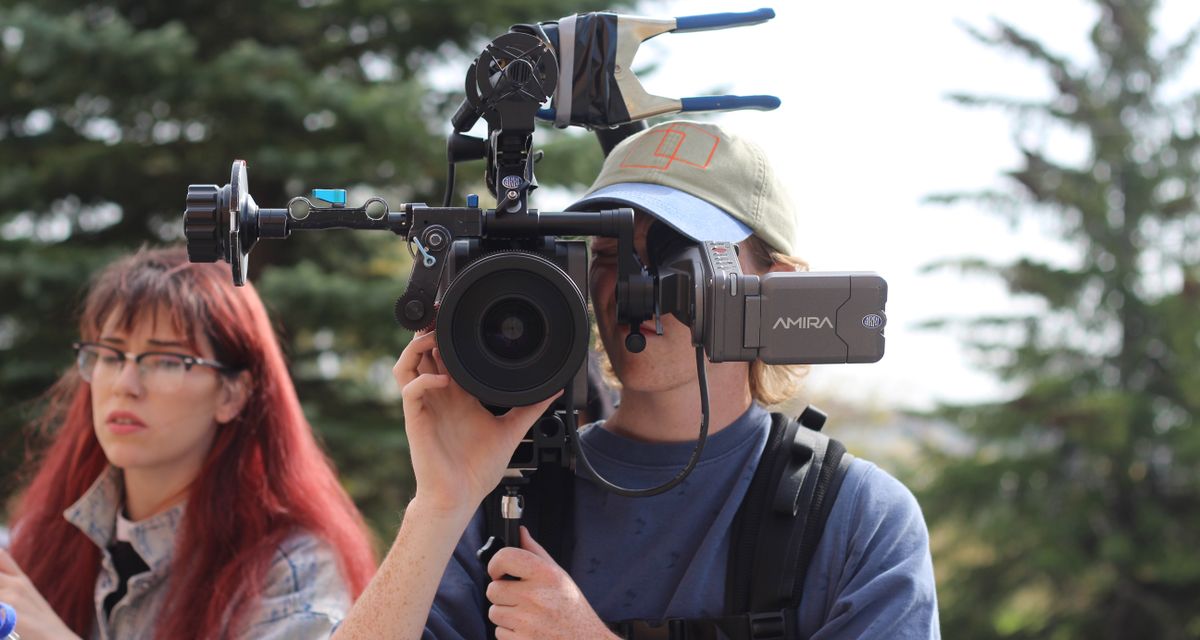
Photography & Film 101 is for middle and high school students. It extends from still photography to visual storytelling. In one term, students go through the complete process of making a short film, from idea to finished cut. At the end of the course, each student presents a film of their own.
What Happens in Photography & Film 101 Class
- From photos to shots: Students first build a sense of composition with still images. They then learn how a shot differs from a photo: time, movement, and sound.
- Camera movement and composition: Choosing shot sizes, deciding when to use a fixed shot or a moving shot, and using the order of shots to express emotion.
- Lighting: The basic principles of three-point lighting, and simplified approaches under real conditions such as classrooms and outdoor locations.
- Sound recording: Many students discover for the first time that audiences will tolerate rough images but not bad sound. The course covers microphone placement and how to deal with background noise.
- Editing: Organizing footage, joining shots, controlling pace, and basic color correction, using common editing software to complete the film.
Photography & Film 101 Final Project
Each student completes a short film. It can be a narrative short, a documentary segment, or an experimental piece. The course encourages students to shoot with whatever they have at hand, rather than waiting for ideal equipment and locations.
Choosing Between Photography & Film 101 and the Other Film and Media Classes
- To focus only on taking better photos: Youth Photography Lab
- To build a solid story and script first: News & Screen Script Writing 101
- To go through the full new media production process and experience a TV-station way of working: Hollywood 101: New Media Foundations
- To tell stories through animation rather than live action: Animation Story & Making 101
Photography & Film 101 Enrollment and Schedule
Creative workshops come in three enrollment units: full-year classes, term classes, and summer camps. This course runs as follows; dates follow the 2026-27 program guide.
- Term class: 7 to 8 weeks per term, with one finished piece per term.
- Switching direction: a creative workshop seat can move between directions, so a child can try 3 to 4 areas in a year, with finished work shown and discussed with parents at the end of each stage. To switch, confirm the transfer timing with a course advisor.
Want to talk to a course advisor now?
Contact a course advisorPhotography & Film 101: Frequently Asked Questions
Do Irvine students need photography experience first?
It starts from still photography and extends into visual storytelling, so no filmmaking background is assumed. The class meets in person in Irvine, with an online section running in parallel. Composition and camera movement come first, then lighting, sound and editing are added, and the sequence runs deliberately from single images toward moving pictures.
What does an Irvine student finish with?
A finished short film. The short requires a student to combine camera movement, composition, lighting, sound and editing in one piece of work rather than completing each as a separate exercise, which makes it a fair test of whether the earlier stages were actually absorbed.
Photography Lab or Photography & Film 101?
It depends on whether the goal is photographs or films. Both meet in person in Irvine: the Youth Photography Lab treats photography as an art form in its own right and ends in images, while this course ends in a short film and includes sound and editing.
Which grades in Irvine is it for?
Grades 6 to 12, meaning middle and high school students. Since the course asks a student to hold lighting, sound and editing together across a single project and see it through to a finished cut, the entry point is set at middle school rather than earlier. The grade-by-grade guide gives a broader view of scheduling around schoolwork.
What if a student wants to work on the script first?
News & Screen Script Writing 101 covers three-act structure and dialogue, and is also open to grades 6 to 12. Taken together, one course handles what gets written and this one handles how it gets shot, in whichever order suits the student.