
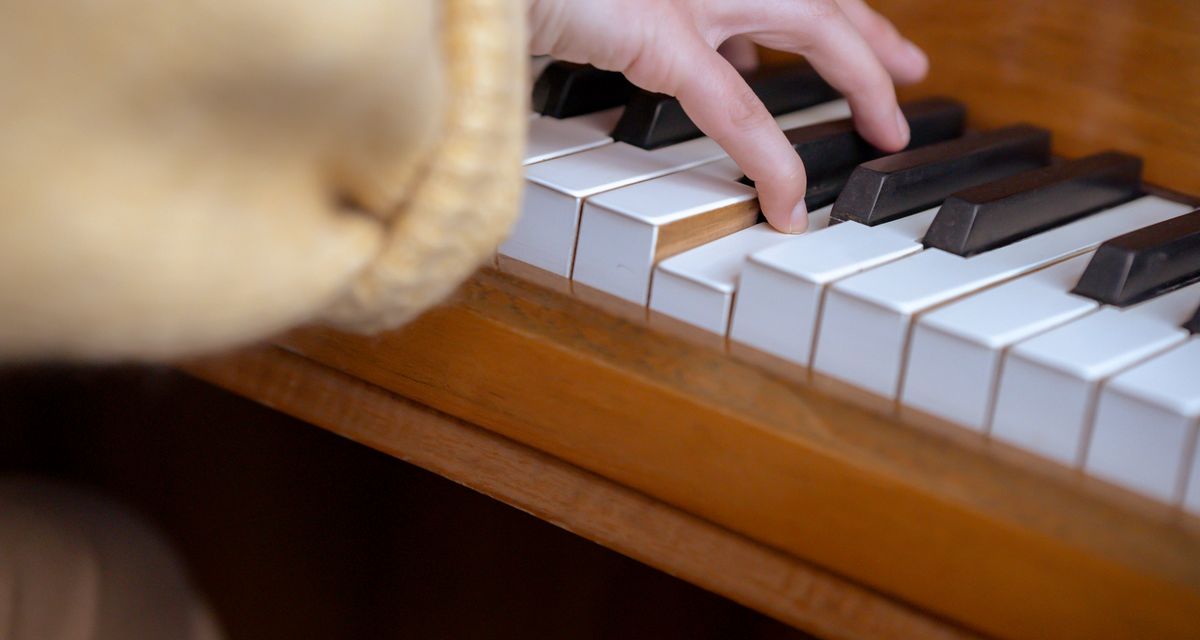
The Future Creators Composition Workshop is co-taught by EDUBUS and a well-known composer from the Beautiful Arts Center. It is for students who already have some musical background. The course addresses one specific shift: from playing other people’s music to writing one’s own. Classes are split into G4–G8 and G9–G12 sections, and the course runs 35 weeks a year.
What Happens in the Composition Workshop
The Composition Workshop is built around the basic elements of songwriting.
- Melody: How to write phrases that stay in the listener’s memory, and how to repeat and vary a motif (a short musical idea that recurs through a piece).
- Rhythm: How the choice of meter and groove changes the mood of the same melody.
- Harmony: Common chord progressions, and how to set one’s own melody with suitable harmony.
- Structure: Arranging verse, chorus, and bridge so that a short song rises and falls instead of staying flat.
- Writing exercises: Each part comes with writing exercises. Students turn their own ideas and feelings into music, rather than only analyzing theory.
What Students Finish With in the Composition Workshop
At the end of the course, each student completes an original melody or a short song and presents it in class. The presentation is also part of the training. Students explain why they wrote the piece the way they did, listen to feedback from others, and then decide whether to revise.
What Background the Composition Workshop Requires
Students need some musical background: the ability to read music, the ability to play an instrument, or prior structured music study. Students with no background who are interested in sound should start with Sound Lab, which does not require any musical background.
Choosing Between the Composition Workshop and Electronic Music Production
The composition workshop deals with the music itself: melody, harmony, and structure. Electronic Music Production & Mixing deals with producing and shaping sound: arrangement, timbre, and mixing. Students who want to write songs should choose the composition workshop. Students who want to make electronic music should choose electronic music production. Students can also try both, one after the other, within the same workshop seat. In summer, the course is offered as a two-week camp.
Composition Workshop Enrollment and Schedule
Creative workshops come in three enrollment units: full-year classes, term classes, and summer camps. This course runs as follows; dates follow the 2026-27 program guide.
- Full-year class: 35 weeks, August 31, 2026 to May 30, 2027; once a week, 90 minutes per session.
- Summer camp: two weeks per session; see the summer section above.
- Switching direction: a creative workshop seat can move between directions, so a child can try 3 to 4 areas in a year, with finished work shown and discussed with parents at the end of each stage. To switch, confirm the transfer timing with a course advisor.
Want to talk to a course advisor now?
Contact a course advisorComposition: Frequently Asked Questions
How much music background does an Irvine student need?
Some background is required. The class works directly with melody, rhythm, harmony and songwriting, and students need to be able to follow that material. A student starting from nothing is better served by Sound Lab, which asks for no prior training and is also open to students from Irvine and nearby communities.
What does an Irvine student finish with?
Each student completes an original melody or a short song of their own. The piece grows out of the term's exercises in melody, rhythm and harmony rather than appearing at the end, and it is presented in class, so students hear their own work performed in full.
Who teaches the course?
It is co-taught with a well-known composer from the Beautiful Arts Center, meeting in person in Irvine with an online section held in parallel. The material centers on the basic elements of songwriting, and the exercises are built so that a student's own ideas and feelings end up as music rather than as theory worked through on paper.
Composition or electronic music production?
Composition works on melody, rhythm and harmony themselves, and ends in an original melody or short song. Electronic Music Production & Mixing is aimed instead at producing a finished electronic track. Both assume some existing music background, so the choice comes down to the end product.
Is there a shorter summer option for Irvine students?
Yes, the course is offered as a concentrated two-week summer session, which suits a student who would rather try it once before committing. The year-long version runs 35 weeks, with separate sections for grades 4 to 8 and grades 9 to 12.
