
Robotics & Engineering · Middle school / High school · US

Science OlympiadDivision B & Division C

Science Olympiad is one of the most recognised team academic competitions in the United States and is read by STEM admissions officers as reliable evidence of both breadth and depth: placing consistently across 23 events requires self-directed study, real lab skill and disciplined teamwork at once. For Irvine families it also has a practical advantage - the path is clear and close to home. The Orange County regional is held at UC Irvine, the state tournament runs in April, and the 2027 National Tournament is at The Ohio State University on 14-15 May 2027, so a student can follow one continuous six-year track from middle school through high school.

Science Olympiad (Division B & Division C)
2026-27Latest season

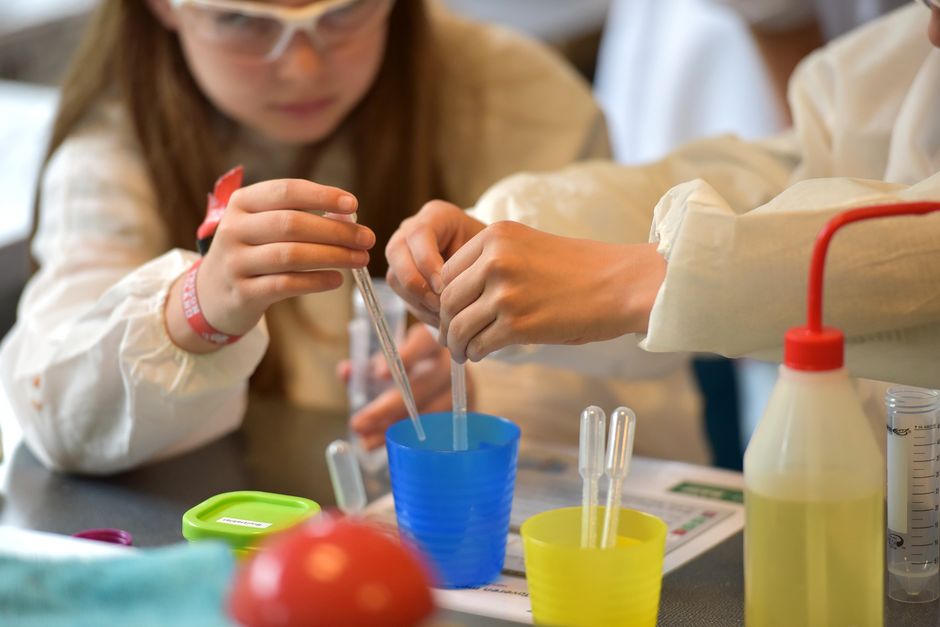
Photo: Arthur Krijgsman / Pexels

  1. Registration opensSep 82026
  2. Registration deadlineDec 22026
  3. Contest datesFeb 6 – May 152027
  4. ResultsTBA

Verified from the official site on September 20, 2026 · www.soinc.org

Organizer
Science Olympiad, Inc. (national); in Southern California, Southern California Science Olympiad (SoCal Science Olympiad) runs the regional and state tournaments
Eligibility
Teams are school-based with a maximum of 15 students. Division B is the middle school division covering grades 6-9, with at most five 9th graders per team; Division C is the high school division covering grades 9-12, with at most seven 12th graders per team. A Division A elementary division (grades 4-6) exists but does not feed the state series. In Southern California every team must register with Southern California Science Olympiad and pay membership dues, and for 2026-27 each school is limited to three teams at the regional tournament.
Format
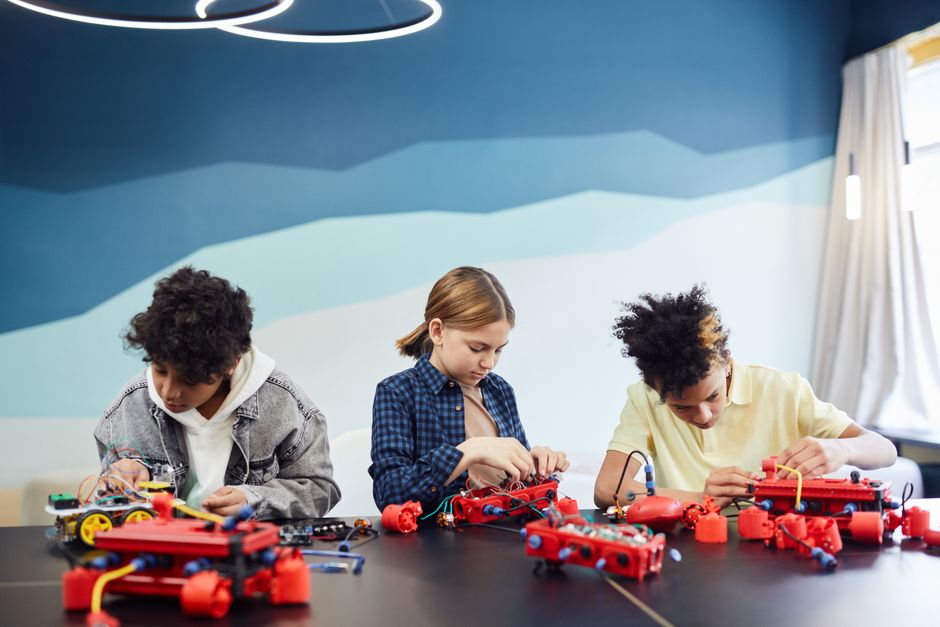
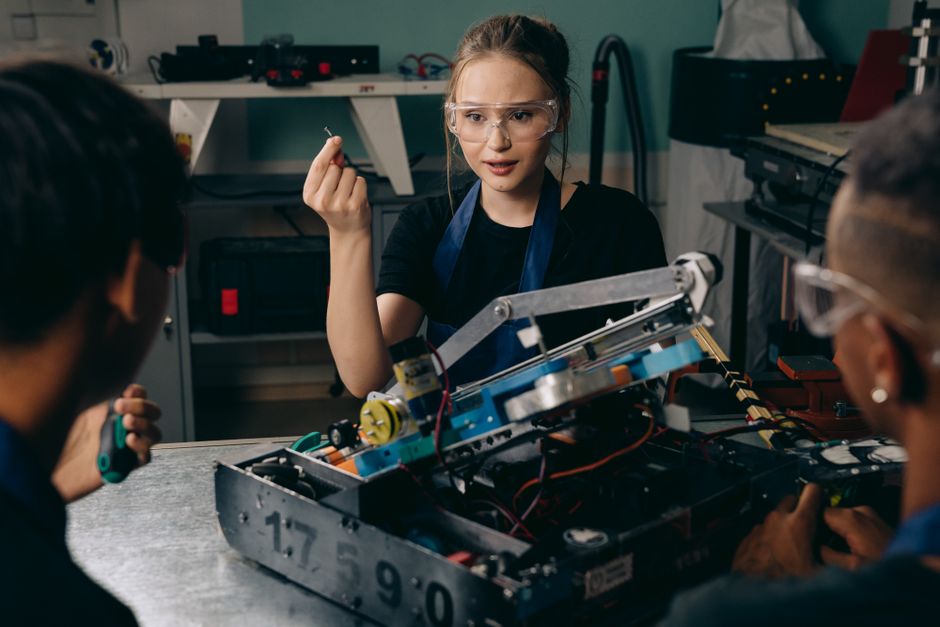
A Science Olympiad tournament works like an academic track meet: a 15-student team competes in 23 events in a single day, with students pairing off across events. Events span anatomy and biology, earth science, chemistry, physics, geology, mechanical and structural engineering, and technology, and come in three shapes - written tests (closed-book or with permitted resources), lab and hands-on events (running experiments, identifying specimens, analysing data), and build events where a device made in advance is brought in for testing, such as bridges, Boomilevers, launchers and robotic arms. Each event is scored by placement (first place scores 1 point), and the team with the lowest total across all 23 events wins. The event roster changes annually and the rules manuals are released in early September.
Contest dates
February 6, 2027 · March 13, 2027 · May 14 – 15, 2027
Fees
The national website does not publish a single registration fee; membership is handled through each state chapter. Southern California Science Olympiad states that registration is complete only after the online registration form, the principal's verification of the head coach, payment of membership dues and submission of the forms the regional tournament requires; the dues amount is sent directly to each team by Southern California Science Olympiad after the online form is submitted rather than posted publicly. Teams also supply their own materials for the engineering build events.
Awards
Medals are presented at the awards ceremony for the top placements in each event (typically top six), with trophies for the leading teams overall. Winning teams from each Southern California regional advance to the Southern California State Tournament in April, and the state champions represent Southern California at the National Tournament in May. Nationals crowns separate Division B and Division C national champions, awards event medals, and distributes a range of sponsor-funded scholarships and special awards.

About the competition

Science Olympiad, run by Science Olympiad, Inc., is a team academic competition reaching roughly 7,000 teams across all 50 states, often described as a track meet for science. Teams are school-based with up to 15 students, split into Division B (grades 6-9, at most five 9th graders) and Division C (grades 9-12, at most seven 12th graders).

Each season’s 23 events are published with the rules manuals in early September - the 2027 rules were released on 8 September 2026 - and rotate annually across anatomy, genetics, chemistry, physics, astronomy, geology, forensics, structural engineering, coding and robotics.

On competition day a team distributes its 15 students across all 23 events running in parallel, and because each event scores by placement with the lowest total winning, roster strategy is itself a skill.

The Southern California path is well defined: teams register through Southern California Science Olympiad in the fall (opening the Tuesday after Labor Day and closing 2 December 2026, with a three-team-per-school limit for 2026-27), compete at their county regional in winter or spring - Orange County at UC Irvine, San Diego on 6 February 2027, Inland Empire on 13 March 2027 at Etiwanda High School - then advance to the Southern California State Tournament in April, with state champions representing SoCal at the National Tournament at The Ohio State University on 14-15 May 2027.
How to prepare

  • Lock in event assignments as soon as the September rules drop. Give each student three or four related events (for example Anatomy plus Disease Detectives plus Microbe Mission) plus one build event, so study material compounds and scheduling conflicts are easier to solve.
  • Start build events - bridges, Boomilevers, launchers - early. They are won by repeated testing to failure and logged data; starting two weeks out almost guarantees a poor placement, and build events are often where team totals separate.
  • Treat the binder or cheat sheet as a team asset. Many events allow a one-page sheet or a binder, and a resource library that alumni iterate on year over year is the core of sustained results and the fastest way to onboard new members.
  • Enter invitationals. Southern California hosts eight or more each season, and they are the only chance before the regional to make mistakes under real timing and real proctoring. Treat them as formal dress rehearsals, not optional extras.

Frequently Asked Questions

Should an Irvine 9th grader compete in Division B or Division C?

Division B covers grades 6-9 (middle school) and Division C covers grades 9-12 (high school), so 9th grade overlaps. The rules cap a Division B team at five 9th graders and a Division C team at seven 12th graders. In practice a 9th grader competes with the school they actually attend — still at a K-8 school means Division B, already in high school means Division C — and a student may compete in only one division per year. An Irvine Unified School District student follows the same rule based on the school they attend, moving into Division C the year they start high school without any separate application.

What if a student's school has no Science Olympiad team?

No. Science Olympiad is school-based: a team is up to 15 students who must come from the member school, and recruiting from neighbouring schools or districts is explicitly not allowed — public school students may compete only with the team at the school they attend. The realistic route is to find a teacher or parent willing to coach and start a team at your own school. Homeschoolers form teams under Science Olympiad's separate homeschool policy.

What is the Science Olympiad path for an Irvine student?

Orange County Division B and C teams compete at the Orange County regional held at UC Irvine (the 2026-27 date has not been posted yet). Winning teams advance to the Southern California State Tournament in April, and the state champions represent SoCal at the National Tournament, which is at The Ohio State University on May 14-15, 2027.

When does Science Olympiad registration open and close?

Southern California Science Olympiad opens registration the Tuesday after Labor Day — September 8, 2026 for this season — and closes at 11:59 pm on December 2, 2026, or when regional spots fill, whichever comes first, with a limit of three teams per school at the regional. Registration counts as complete only after the online form, principal verification of the head coach, payment of dues and any regional forms. Start in the first week of September.

What does a Science Olympiad season cost an Irvine team?

National Science Olympiad does not publish a single fee; membership runs through each state chapter. In Southern California the dues amount is sent to each team after the online registration form is submitted rather than posted publicly. Beyond dues, the main costs are materials for build events plus entry fees and travel for invitationals. The rules manuals themselves are free PDFs, so there is no required book to buy.

What does a Science Olympiad tournament day look like, and how do 15 students cover 23 events?

It works like a track meet for science: a team of up to 15 students competes in 23 events in one day, pairing off in twos and threes while written tests, lab events and device testing run in parallel. Each event scores by placement (first place scores 1 point) and the lowest team total wins, so roster strategy is itself a skill. Teams typically give each student three or four related events plus one build event.

Does Science Olympiad help with US college applications?

Yes, and it is highly legible to STEM readers. Admissions officers treat it as reliable evidence of both breadth and depth: placing consistently across 23 events requires self-directed study, real lab skill and disciplined teamwork at once. Nationals also distributes sponsor-funded scholarships and special awards. For Irvine families there is a practical bonus — the path is close to home and runs six straight years, from Division B in middle school to Division C in high school.

How should a first-year Science Olympiad team prepare?

Three things. Lock in event assignments as soon as the rules manuals drop in September, so study material compounds and schedules don't collide. Start build events — bridges, Boomilevers, launchers — early; they are won by repeated testing to failure and logged data, and starting two weeks out almost guarantees a poor placement. And enter invitationals: Southern California hosts eight or more a season, and they are the only chance to make mistakes under real timing and proctoring before the regional.

Train for it with EDUBUSVEX IQ Robotics CompetitionA VEX IQ competition team led by coaches in small Irvine classes: 30 sessions plus 4 tournaments building problem solving, teamwork, and leadership through robotics.Learn More →

Preparing for SO / SciOly? Start with a 30-minute call

Share the grade and the goal. An Irvine-based course advisor reaches out within one business day with a first, actionable course and study plan. Direction first, courses later.

  • EDUBUS WeChat QR code, WeChat ID EDUBUSer
    Scan to reach a course advisor on WeChatHotline: (949) 383-4877WeChatEDUBUSerCopy the ID and add a course advisor in WeChat

We reply within one business day. Your details are used only for this consultation. By submitting you confirm you have read our privacy policy.