Computer Science · Elementary / Middle school / High school · INTL

American Computer Science League

Founded in 1978, ACSL is one of the oldest K-12 computer science competitions in the United States, and its value lies in being low-barrier, season-long and cumulative: four contests spread across the school year let a student build up number systems, Boolean algebra, recursion, graph theory and bit strings through real competition rather than one make-or-break sitting. For Irvine families it is the most sensible first formal CS competition for elementary and middle schoolers, producing concrete results such as state-level certificates and a Finals invitation while acting as a smooth on-ramp to USACO.

American Computer Science League
2026-27Latest season

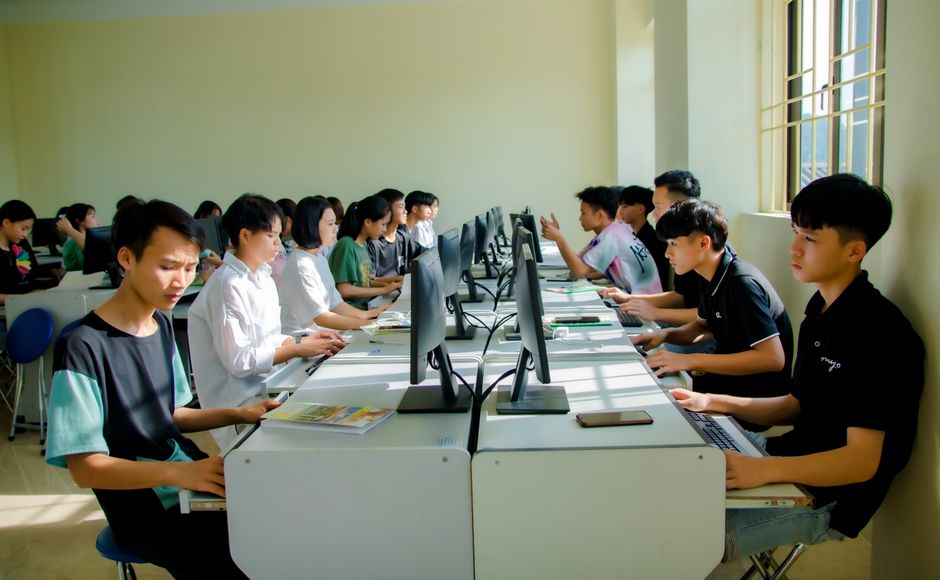
Photo: Thành Đỗ / Pexels

  1. Registration opensSep 12026
  2. Registration deadlineDec 312026
  3. Contest datesOct 19 – May 292026
  4. ResultsTBA

Verified from the official site on September 20, 2026 · www.acsl.org

Organizer
American Computer Science League (ACSL)
Eligibility
Open to K-12 students, sorted by ability and grade into five divisions: Senior (high schoolers with programming experience), Intermediate (high schoolers with little programming background plus advanced junior high students), Junior (junior high and grade 9 or below), Classroom (all grades, suited to AP CSP courses) and Elementary (grades 3-6). Entry is by team, registered by an adult advisor who may be a teacher, a parent or any adult with some CS experience. Students in afterschool or weekend programs may compete, though full-time school students must compete with their own school's team. An unlimited number of students may sit each contest.
Format
A season is divided into four regular contests plus an online Finals. In the Senior, Intermediate and Junior divisions each contest has an online 30-minute, six-question short-answer test plus one programming problem with a 72-hour completion window. The Classroom division takes a 50-minute, ten-question short-answer test with no programming, and the Elementary division a 30-minute, six-question non-programming test covering a single topic per contest. Each contest stays open for several weeks and the advisor schedules and proctors it within that window. Teams register as either 5-score (up to 10 students) or 3-score (up to 6 students), and the team total is the sum of its top scores.
Contest dates
October 19, 2026 · January 4, 2027 · February 1, 2027 · March 1, 2027 · May 29, 2027
Fees
Fees are charged per team: $175 per team for the Senior, Intermediate, Junior and Classroom divisions, and $125 per team for the Elementary division. Additional teams from the same school are charged separately, with additional Elementary teams at $100. The Finals carries a separate per-student registration fee, which the official site describes as nominal.
Awards
Advisors receive team certificates, and the top-scoring students in each division in each state or country receive individual certificates. Students whose cumulative score across the four regular contests clears the published cutoff (28 points for Junior/Intermediate/Senior, 24 for Classroom, 14 for Elementary) are invited to the online Finals, where top individual performers receive prizes and certificates. ACSL also maintains a public leaderboard spanning 21 countries on six continents.

About the competition

The American Computer Science League, founded in 1978, has run continuously for nearly fifty years and now reaches schools and programs in 21 countries across six continents. Unlike USACO, which tests only algorithmic programming, ACSL uses a dual track of computer science fundamentals plus implementation.

Each contest begins with a short online written test covering topics such as number systems and base conversion, Boolean algebra and digital circuits, recursive functions, graph theory, data structures, bit-string operations, LISP expressions, regular expressions and assembly language. A programming problem follows, which students may solve in any language within a 72-hour window.

A season has four regular contests: in 2026-27 they open on October 19, 2026 and January 4, February 1 and March 1, 2027, each staying open for several weeks. Students whose cumulative score clears the division cutoff are invited to the online Finals on May 29, 2027. Five divisions (Senior, Intermediate, Junior, Classroom and Elementary) give appropriate difficulty from grade 3 through grade 12.

An adult advisor registers teams; registration for 2026-27 opened September 1 and closes December 31, 2026. As a pathway, ACSL picks up where Bebras leaves off, adds genuine CS concepts, and leads naturally into USACO algorithm training, while its written questions overlap closely with AP Computer Science Principles and A.


How to prepare

  • The short-answer test is where points come easiest. ACSL publishes each contest's topics in advance, so work through them one at a time (number systems, Boolean algebra, recursion, graph theory, bit strings, LISP, regular expressions, assembly) using past papers until a 30-minute six-question test is reliably high-scoring.
  • The programming problem has a 72-hour window, so do not leave it to the last hour. On day one pin down the input/output format and edge cases, verify with a few self-made test inputs, and use the remaining time to optimize and debug.
  • Finals invitations are based on the cumulative score across all four regular contests, so contest #1 matters as much as the last one. Train on a steady schedule through the season rather than cramming.
  • If the student is also preparing for USACO, treat ACSL as a diagnostic of fundamentals: the recursion, bit-manipulation and graph-theory gaps the written test exposes are exactly what stalls people at USACO Silver and Gold.

Frequently Asked Questions

Our Irvine school has no ACSL team — can my child still compete?

Yes. An ACSL advisor does not have to be a schoolteacher: any teacher, parent or other adult with some CS background can register a team, and afterschool or weekend programs may form teams too. Among Irvine's public high schools, only Portola High School currently fields an ACSL team (the list is above on this page); a student attending that school must compete with it, but students elsewhere can be registered on a separate team by a parent or outside instructor.

How much does ACSL cost, and is the fee per student or per team for an Irvine school?

The fee is per team: $175 for Senior, Intermediate, Junior and Classroom teams and $125 for an Elementary team, with additional Elementary teams at $100 and further charges for extra teams in other divisions. Students invited to the Finals pay a separate per-student registration fee. Once a team is registered, an unlimited number of students may sit the regular-season contests.

Which ACSL division fits an Irvine middle schooler?

Choose by ability, not just grade. Senior suits high schoolers with programming experience, typically AP CS students. Intermediate is for high schoolers with little or no programming background plus strong middle schoolers. Junior is restricted to grade 9 and below and aimed at students still learning to code. Classroom is open to all grades, has no programming, and fits AP CS Principles classes. Elementary is grades 3-6 and also has no programming. A middle schooler just starting to code usually fits Junior, while one with a stronger programming background can try Intermediate.

What is actually on an ACSL contest, and what is the format?

For Senior, Intermediate and Junior each contest has two parts: a 30-minute, 6-question short-answer test on announced topics such as number systems, Boolean algebra, recursion, graph theory, bit strings and regular expressions, plus one programming problem with a 72-hour window that may be solved in Python 3, Java or C++. Classroom is a 50-minute, 10-question short-answer test with no programming, and Elementary is 30 minutes and 6 questions on a single topic per contest.

When does ACSL registration open, and when are the four 2026-27 contests?

Registration opens on September 1, 2026; the advisor signs in on the ACSL site, creates teams and adds students. The four regular-season contests then open in sequence: Contest 1 from October 19, 2026, Contest 2 from January 4, 2027, Contest 3 from February 1, 2027, and Contest 4 from March 1, 2027. Each stays open for several weeks, and the advisor schedules and proctors within that window.

How do you qualify for the ACSL Finals?

Invitations go to individuals based on their cumulative score across the four regular-season contests, not on team standing. The published cutoffs are 28 points or more for Junior, Intermediate and Senior, 24 for Classroom and 14 for Elementary; qualifiers are invited to the online Finals in May. This means the first contest matters — points dropped early are hard to make up later.

Should an Irvine student start with ACSL or USACO?

They are not either-or; stack them. Upper-elementary and middle schoolers build fundamentals in ACSL's Elementary or Junior divisions, then in high school enter Senior while making USACO Silver or Gold the main target. AP Computer Science A at Irvine public high schools overlaps closely with ACSL's short-answer topics, which makes the transition smoother. ACSL's short-answer topics — recursion, bit manipulation, graph theory — are exactly the gaps that stall students at USACO Silver and Gold, and the two schedules largely avoid each other.

How much does an Irvine student's ACSL score help with UC applications?

ACSL is a broad-participation, team-registered league, so simply taking part carries limited admissions weight. What is distinctive is individual recognition: the certificates for the top scorer in a division in each state or country, and qualifying for and winning awards at the Finals. For an Irvine student ACSL is best framed as foundation-building and continuity of interest, with USACO carrying the weight for UC applications.

Train for it with EDUBUSUSA AI Olympiad SprintAdvanced prep for USAAIO and other top AI competitions, grades 9 to 11, taught in small in-person classes based in Irvine alongside regular coursework.Learn More →

Preparing for ACSL? Start with a 30-minute call

Share the grade and the goal. An Irvine-based course advisor reaches out within one business day with a first, actionable course and study plan. Direction first, courses later.

  • EDUBUS WeChat QR code, WeChat ID EDUBUSer
    Scan to reach a course advisor on WeChatHotline: (949) 383-4877WeChatEDUBUSerCopy the ID and add a course advisor in WeChat

We reply within one business day. Your details are used only for this consultation. By submitting you confirm you have read our privacy policy.