
Chemistry · High school · US

U.S. National Chemistry Olympiad

USNCO is the most credible chemistry competition in the U.S. pipeline, run directly by the American Chemical Society rather than by a commercial organiser, and admissions readers recognise what it signals. Simply qualifying for the National Exam demonstrates top-tier chemistry ability against national peers, while Honors, High Honors or a Study Camp invitation becomes a powerful academic marker for applications to selective STEM programs in chemistry, biochemistry, chemical engineering and pre-med. For families in Irvine there is a practical advantage too: Southern California's ACS local sections are well established and many local high schools already participate, so the first two rounds can be completed close to home.

U.S. National Chemistry Olympiad
2026-27Latest season

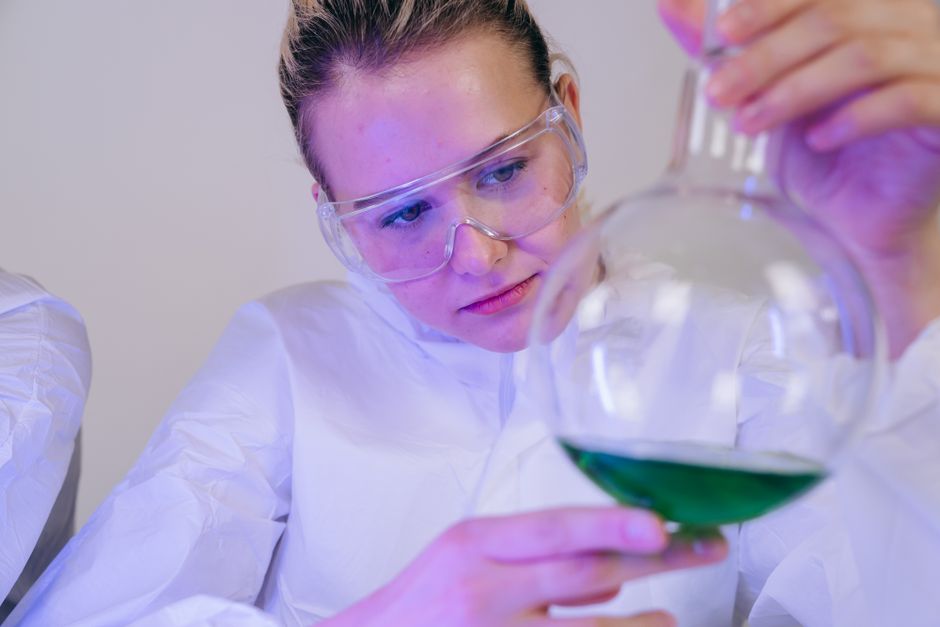
Photo: Mikhail Nilov / Pexels

  1. Registration opensTBA
  2. Registration deadlineTBA
  3. Contest datesTBA
  4. ResultsTBA

Dates not yet published for this season; check the official site. · www.acs.org/education/olympiad.html

Organizer
American Chemical Society (ACS)
Eligibility
Open to students in grades 9-12 who are U.S. citizens or lawful permanent residents (green-card holders), have been enrolled in an American school for at least one year, and are under 20 years old. Students cannot sign up individually; entry is arranged through the school's chemistry teacher and the regional ACS Local Section.
Format
Three tiers. Tier 1 is the Local Section Exam (typically March): a 60-question, four-option multiple-choice paper scheduled by each ACS Local Section, which then nominates top students. Tier 2 is the National Exam, administered by sections within a fixed window each April to roughly a thousand students, in three parts: Part I, 60 multiple-choice questions (90 minutes); Part II, written free-response problems (105 minutes); Part III, a laboratory practical with two hands-on tasks (90 minutes). Tier 3 is the two-week Study Camp each June for the 20 top national scorers, from which four students are selected as the U.S. team for the International Chemistry Olympiad (IChO).
Fees
The ACS website publishes no standard student entry fee; participation is organized jointly by the local ACS section and the school, so whether there is a charge and how much it is follow the local section's notice.
Awards
Strong Local Section scorers are nominated for the National Exam. National Exam performers are recognised at High Honors and Honors levels; the top 20 nationally are invited to the June Study Camp, and the four best camp performers form the U.S. team that competes for gold, silver and bronze medals at the IChO.

About the competition

USNCO, run by the American Chemical Society, is the official U.S. selection pathway to the International Chemistry Olympiad and the most authoritative chemistry competition open to American high schoolers. It advances through four stages: Local Section Exam, National Exam, Study Camp, and the IChO team.

The local round, usually held in March and organised by the student’s regional ACS section, is a 60-question multiple-choice paper spanning stoichiometry, atomic structure and periodicity, bonding, gases and solutions, thermodynamics, kinetics, equilibrium, acid-base and redox chemistry, electrochemistry, and introductory organic and biochemistry — broadly AP Chemistry content and beyond, but demanding far more speed and precision.

Sections nominate their strongest students for the April National Exam, taken by roughly a thousand students nationwide.

That exam is the real dividing line: 90 minutes of multiple choice, 105 minutes of written free-response problems requiring full derivations, and a 90-minute laboratory practical with two hands-on tasks covering titration, observation, data handling and experimental reasoning — the part international-background students most often underestimate.

Top scorers earn Honors or High Honors recognition, the 20 highest are invited to a two-week June Study Camp, and four are chosen for the U.S. IChO team. Eligibility is restrictive: U.S. citizenship or permanent residency, at least one year in an American school, under 20, and entry only through a school and local section.

How to prepare

  • Build a solid AP Chemistry foundation first: most local-round questions are accelerated AP content, and shaky fundamentals collapse under time pressure.
  • Work through the past Local and National papers (Parts I, II and III) published on the ACS site under strict timing, then sort your errors by topic — thermodynamics, kinetics, equilibrium, organic — to find the weak blocks.
  • Train in the lab early: Part III is a genuine practical, so practise titration, weighing, data recording and error analysis under supervision, and rehearse writing up conclusions clearly in English.
  • Talk to your school chemistry teacher well in advance to confirm the school is connected to its ACS Local Section — registration runs through the school and section, and a missed section exam date cannot be made up.

Frequently Asked Questions

Can a student register for USNCO directly, or must it go through the school?

Both steps are required. In recent seasons ACS has required a parent or guardian to register the student on the official USNCO Registration Platform at usncoreg.acs.org. The exam itself is then arranged by the regional ACS Local Section together with the school's chemistry teacher, who normally nominates which students sit the Local Section exam. A student cannot complete the whole process alone.

If an Irvine school has no USNCO-related club, can a student still compete?

Yes, but the family needs to approach the local section directly. Entry is controlled by the ACS Local Section and practice varies: some accept only teacher-nominated students, while others — Orange County among them — also let students sign up via a registration form. Among the local public high schools, only Portola High School currently runs a matching Chemistry Olympiad club (the list is above on this page); students at the other schools can still compete, and it helps to have the chemistry teacher contact the section's USNCO coordinator first.

Can international or F-1 visa students take USNCO?

No. ACS requires entrants to be US citizens or lawful permanent residents who have attended an American school for at least one continuous year, are under 20, and are in grades 9 through 12. Students studying on a student visa are not eligible, and this is checked strictly when students advance to the National Exam and toward team selection.

Where do students in Irvine and Orange County sit the USNCO exam?

Orange County falls under the OCACS local section, which has recently held its Local Section exam at Irvine Valley College in Irvine — in 2026 on the morning of February 28. That year 237 students from 37 county high schools took it and the top 13 advanced to the National Exam, which in 2026 was hosted at the University of California, Irvine. Venues can change year to year, so confirm with the section.

Have the 2026-27 USNCO exam dates been published?

Not at the time we checked, and the ACS site restricts automated access, so the reliable sources are your teacher and your local section. The usual pattern is a Local Section exam on a date each section picks inside a late-February-to-mid-March window, the National Exam in April, and the study camp for the national top 20 in June. For reference, the 2026 local window ran February 27 to March 16 and the National Exam was April 18.

What is the difference between the USNCO local and national exams?

The Local Section exam is 60 multiple-choice questions in roughly 110 minutes, essentially accelerated AP Chemistry. The National Exam is a large step up and has three parts: Part I is 60 multiple-choice questions in 90 minutes, Part II is written free-response and problem-solving in 105 minutes, and Part III is a hands-on lab practical with two tasks in 90 minutes. National-level students must genuinely perform lab work and write up reasoning properly.

My Irvine student has taken AP Chemistry — what else is needed for USNCO?

AP Chemistry is the necessary base but not sufficient. AP Chemistry courses at local public high schools cover most of the local-round multiple-choice content, but reaching the National Exam requires deeper thermodynamics, kinetics, equilibrium and organic chemistry, plus real lab practice. The most effective preparation is working systematically through the past Local and National exams ACS publishes, strictly timed, sorting mistakes by topic.

What USNCO result actually matters for an Irvine student applying to UC?

The tiers are clear. Sitting the Local Section exam shows interest but carries limited weight. Being nominated by your section for the National Exam — roughly a thousand students nationwide — is a real differentiator. Earning Honors or High Honors on the National Exam counts for more. Placing in the national top 20 and being invited to the June study camp, or making the four-member US team for the IChO, puts a student in the national elite and makes a strong academic marker for UC applications.

Train for it with EDUBUS1-on-1 Tutoring: AP, ISEE & All SubjectsOn-demand private tutoring covering twenty-plus AP subjects and full ISEE prep with an online system, popular with Irvine families for K-12 GPA support.Learn More →

Preparing for USNCO? Start with a 30-minute call

Share the grade and the goal. An Irvine-based course advisor reaches out within one business day with a first, actionable course and study plan. Direction first, courses later.

  • EDUBUS WeChat QR code, WeChat ID EDUBUSer
    Scan to reach a course advisor on WeChatHotline: (949) 383-4877WeChatEDUBUSerCopy the ID and add a course advisor in WeChat

We reply within one business day. Your details are used only for this consultation. By submitting you confirm you have read our privacy policy.